
Lead
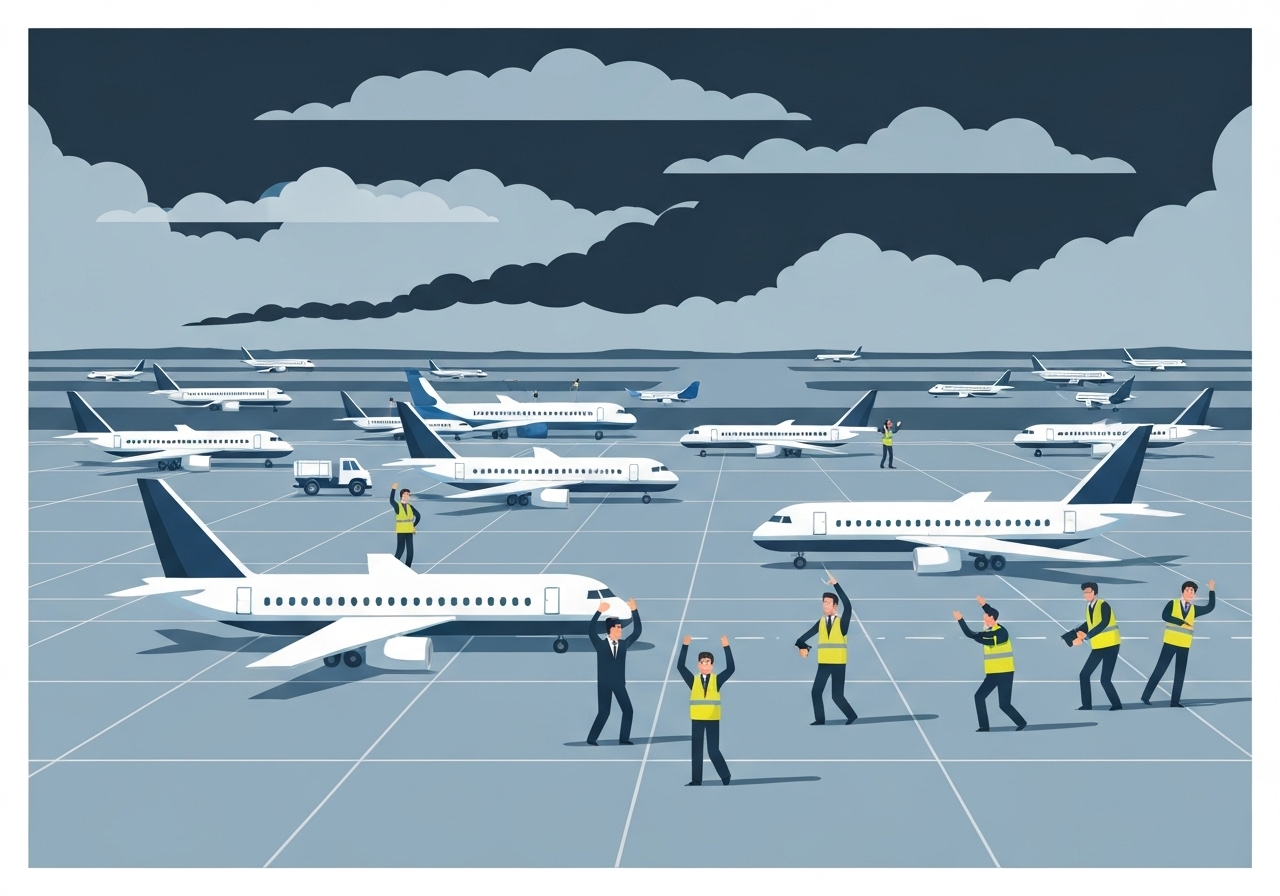
On Saturday, 8 November 2025, U.S. airlines canceled more than 1,000 flights for a second consecutive day after the Federal Aviation Administration (FAA) ordered reductions in air traffic because of the ongoing federal government shutdown. Charlotte Douglas International was the hardest-hit airport by midday, with about 120 cancellations, while other major hubs including Atlanta, Chicago, Dallas, Denver and Orlando also saw disruptions. The FAA has begun by cutting roughly 4% of flights at 40 targeted airports and has signaled staged increases this week; officials warn the impact could grow as Thanksgiving approaches. Passengers and local economies that depend on tourism and air freight are already feeling strains, and industry groups say further workforce shortages among air traffic controllers could deepen the effect.
Key Takeaways
- Flight cancellations topped 1,000 on both Friday and Saturday, per FlightAware, marking a sustained slowdown tied to an FAA traffic-reduction order.
- By midday Saturday, Charlotte reported roughly 120 canceled arrivals and departures; Atlanta, Chicago, Dallas, Denver and Orlando also recorded elevated disruption levels.
- The FAA’s initial cuts remove about 4% of flights at 40 airports, with a planned increase before the week ends and a target of 10% reductions by Friday if conditions persist.
- Air traffic controllers have worked without pay for nearly a month, prompting higher sick-call rates and mandatory overtime, according to NATCA.
- So far, longer international services have largely continued, and many cancelled passengers were rebooked quickly; broader supply-chain effects remain a rising concern.
- About half of U.S. air freight travels in passenger-plane bellies, raising the prospect of shipping delays and higher consumer prices if cuts widen, industry academics warn.
Background
The disruptions stem from the longest federal government shutdown in U.S. history, during which many air traffic controllers have gone without pay for almost a month. As paychecks stopped, the National Air Traffic Controllers Association (NATCA) reported increased absences and fatigue among controllers who continue to work mandatory overtime to keep traffic moving. The FAA responded by issuing a targeted slowdown at 40 busy airports to match reduced staffing levels and maintain safety margins.
Air travel in November typically ramps up toward Thanksgiving, increasing the stakes for both passengers and businesses that rely on predictable schedules. Passenger delays can ripple into air freight, since nearly 50% of U.S. air cargo is transported in the bellies of passenger aircraft. Cities that depend on tourism revenue — hotels, restaurants and municipal hotel taxes — and companies that rely on tight supply chains could see measurable economic effects if the slowdown expands.
Main Event
On Saturday, the second day of the FAA’s traffic-reduction order, airlines again posted more than 1,000 cancellations nationwide, according to FlightAware data. Charlotte Douglas International experienced the largest single-airport impact, with about 120 flights canceled by midday, driven in part by controller staffing shortfalls. Other major hubs — Atlanta Hartsfield-Jackson, Chicago O’Hare, Dallas/Fort Worth, Denver International and Orlando — reported notable disruption counts as well.
FAA officials set the initial reduction at approximately 4% of scheduled flights at the 40 designated airports, with plans to increase limits in stages this week and reach a potential 10% cap by Friday if controller availability does not improve. Transportation Secretary Sean Duffy warned that further cuts might become necessary if the shutdown continues and more controllers do not report to work. The FAA framed the action as a safety-driven adjustment to match on-duty staffing with traffic volumes.
Passengers described mixed experiences at affected airports. Many travelers were able to rebook quickly, and longer international flights remained relatively intact during the first two days of reductions. However, those without resources to absorb last-minute hotel or transportation costs reported acute hardship, and rental-car firms noted a spike in one-way reservations as travelers adjusted plans.
Analysis & Implications
Economically, the slowdown threatens to amplify costs well beyond air travel. Because a significant share of air freight moves on passenger flights, sustained cancellations could raise shipping times and costs, which businesses may pass on as higher retail prices during the holiday season. Professor Patrick Penfield of Syracuse University warns that shipping interruptions ahead of Thanksgiving could compress the window for retailers to get goods on shelves.
Tourism-reliant cities face lost revenue from reduced arrivals and lower hotel occupancy; municipal tax receipts tied to lodging and sales could decline if disruptions persist through peak travel weeks. Greg Raiff, CEO of Elevate Aviation Group, described the situation as cascading: fewer flights mean fewer tourists, lower hotel taxes and potential downstream hits to restaurants and local services.
Politically, pressure will mount on lawmakers as visible travel problems accumulate. Transportation leaders and unions are framing the issue as a worker-pay and operational-resilience problem, while elected officials weigh options to end the shutdown or to provide targeted relief for critical federal staff. If cuts escalate toward the FAA’s 10% threshold, the policymaking calculus will likely intensify, with increased scrutiny of contingency plans and budget negotiations.
Comparison & Data
| Day | Reported Cancellations (FlightAware) | Notable Airport Impact |
|---|---|---|
| Friday, 7 Nov 2025 | 1,000+ cancellations | Multiple hubs affected |
| Saturday, 8 Nov 2025 | 1,000+ cancellations | Charlotte ~120 cancellations by midday |
| FAA ordered reductions (start) | ~4% of flights at 40 airports | Planned increase to 10% by Friday if needed |
The table above summarizes early reporting for the FAA slowdown’s first two days and the agency’s staged reduction plan. While the cancellations represent a small slice of the nation’s daily flights, timing matters: repeated daily cuts ahead of Thanksgiving could aggregate into thousands of disrupted itineraries and substantial freight capacity loss in passenger aircraft bellies.
Reactions & Quotes
“We all travel. We all have somewhere to be,” said a Miami traveler heading to the Dominican Republic, describing frustration at sudden cancellations and uncertainty about upcoming connections.
Emmy Holguin, passenger
“Travel is stressful enough; last-minute cancellations make it far harder for people without spare funds for hotels or rentals,” said another passenger who had just disembarked a cruise and faced rebooking challenges.
Heather Xu, passenger
“If controller absences continue, more reductions could be required to preserve safe operations,” a transportation official cautioned while outlining the FAA’s staged cut plan.
U.S. Department of Transportation official (Sean Duffy)
Unconfirmed
- Whether cancellations will reach the FAA’s 10% reduction target across the 40 airports by Friday remains contingent on controller staffing and has not been independently confirmed.
- The full scale and timing of any air-freight backlogs or retail-price effects ahead of Thanksgiving are projected risks but not yet observed systemwide.
- Specific city-level economic losses tied directly to these two days of cancellations have not been quantified and require further data.
Bottom Line
The FAA’s staged reductions have produced more than 1,000 cancellations on consecutive days, highlighting how a workforce squeeze at a critical federal agency can ripple into travel, freight and local economies. Early impacts have been concentrated at specific hubs, with Charlotte notably disrupted, but the scheduled increases in cut percentages this week create risk of wider disruption as holiday travel ramps up.
For travelers: expect possible cancellations and plan contingencies now — allow extra time, check airline rebooking policies, and consider travel insurance where appropriate. For policymakers and businesses: the next few days will be decisive; resolving staffing and pay issues for controllers will be central to preventing deeper economic and operational fallout in the run-up to Thanksgiving.