
Lead
At least seven more countries said on Sunday they had been invited to join President Donald Trump’s newly proposed “Board of Peace,” a group intended to oversee the next phase in Gaza after the Oct. 10 ceasefire. Two nations, Hungary and Vietnam, confirmed they accepted invitations; other recipients include India, Jordan, Greece, Cyprus and Pakistan, according to officials and public statements. A U.S. official who spoke on condition of anonymity said a $1 billion contribution would secure a permanent seat on the board, while a standard founding appointment lasts three years and carries no contribution requirement. The official said funds raised would be directed to Gaza reconstruction, but the charter and full membership list have not been published.
Key Takeaways
- Multiple invitations: The United States has invited numerous governments to be founding members of the “Board of Peace,” with public confirmations from Hungary and Vietnam.
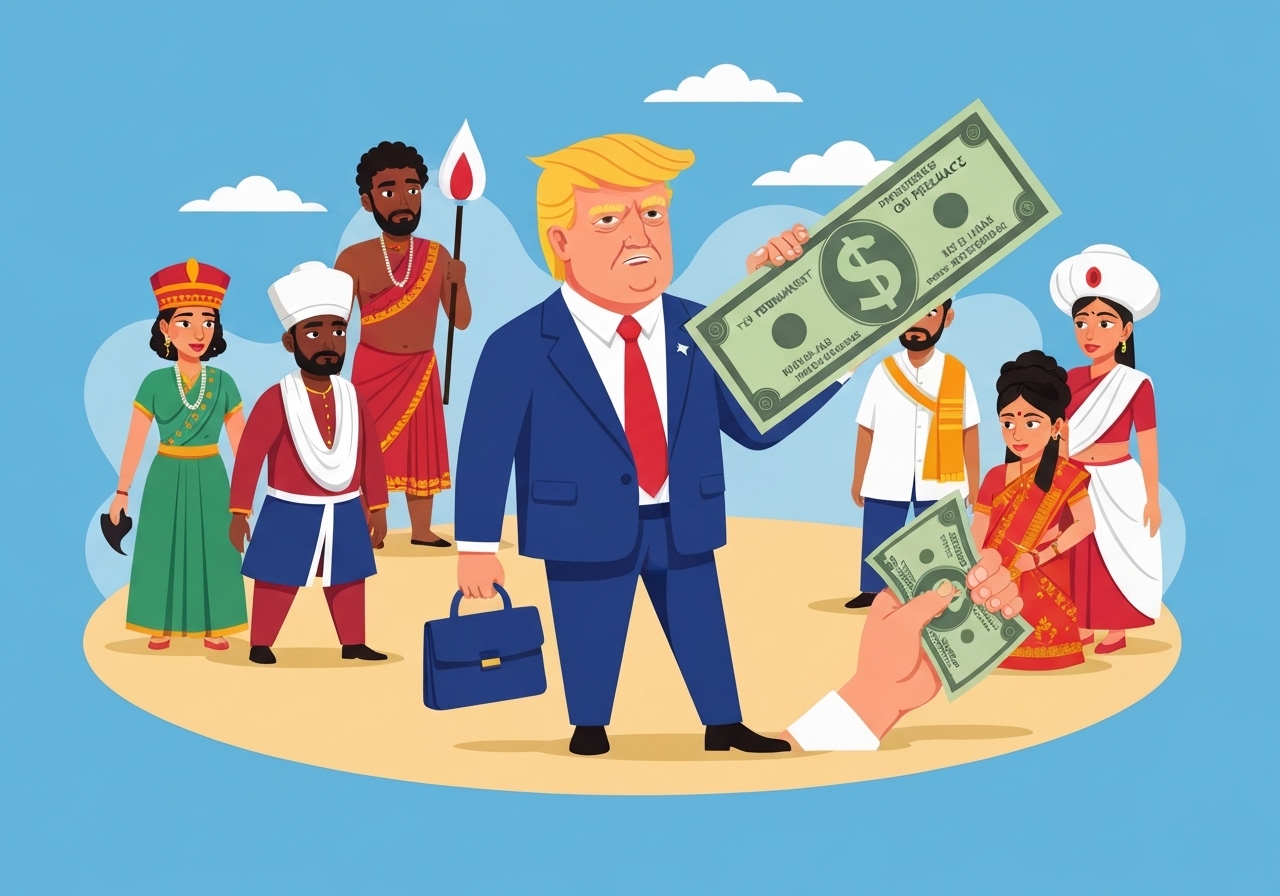
- Permanent seat for $1 billion: A U.S. official told reporters that a $1 billion contribution would buy a permanent seat instead of a three-year appointment that requires no payment.
- Invited countries named: India, Jordan, Greece, Cyprus and Pakistan said they received invitations; Canada, Turkey, Egypt, Paraguay, Argentina and Albania had previously acknowledged invitations.
- Timing and rollout: Washington is expected to publish an official membership list in the coming days, possibly at the World Economic Forum in Davos.
- Mandate for Gaza: The board would help oversee Gaza’s next phase — including a Palestinian committee in Gaza, an international security force, Hamas disarmament and reconstruction.
- Executive committee named: A separate executive committee was announced; it includes several high-profile figures and representatives of Qatar, Egypt and Turkey as ceasefire monitors.
- Israel’s objection: Prime Minister Benjamin Netanyahu’s office said the executive committee “was not coordinated with Israel and is contrary to its policy.”
- Charter and details limited: The governing charter has not been released publicly, leaving several operational questions unanswered.
Background
The Board of Peace was proposed within the context of the Gaza ceasefire that took effect on Oct. 10. The United States has promoted a 20-point Gaza plan that envisions phased steps including a Palestinian committee inside Gaza, deployment of international security forces, disarmament of Hamas and long-term reconstruction. That plan was endorsed by the U.N. Security Council in part, but the council has faced paralysis at times and has been criticized for limited progress on ending the conflict.
President Trump has framed the board as a new multilateral instrument to manage the Gaza transition, signaling ambitions beyond a single reconstruction task. The proposal comes after tensions between Washington and several traditional international institutions, including funding cuts and diplomatic disputes that have reduced some multilateral leverage. Some invited leaders are longstanding Trump allies, while others have complex regional relationships that could shape the board’s influence.
Main Event
On Friday, letters were sent to world leaders inviting them to be “founding members” of the Board of Peace; some invitees publicly posted the letters on social media. A U.S. official, speaking anonymously because the charter was not public, told reporters a $1 billion donation would secure a permanent seat on the board versus the default three-year founding membership with no donation requirement. The official added that funds would be allocated to Gaza’s rebuilding.
Hungarian Prime Minister Viktor Orbán accepted the invitation, Foreign Minister Péter Szijjártó said on state radio, signaling Budapest’s alignment with the initiative and with President Trump. Vietnam’s Communist Party chief To Lam also confirmed acceptance in a foreign ministry statement. India acknowledged receipt of an invitation via a senior government official who spoke on customary anonymity because the government had not publicly declared its position.
Other governments — Jordan, Greece, Cyprus and Pakistan — said they had received invitations, while Canada, Turkey, Egypt, Paraguay, Argentina and Albania had earlier confirmed invitations. U.S. officials expect to release a formal membership roster soon, with some Western diplomats anticipating an announcement at the World Economic Forum in Davos, Switzerland.
Analysis & Implications
The creation of the Board of Peace reflects a U.S. attempt to shape Gaza’s post-ceasefire architecture and to build a coalition that can implement reconstruction and security measures without relying solely on established multilateral mechanisms. If contributors can effectively fund and coordinate reconstruction, the board could accelerate rebuilding in Gaza — but that outcome depends on robust oversight, transparent governance and broad acceptance by Palestinian stakeholders.
Designating a permanent seat in exchange for a $1 billion contribution raises questions about influence, equity and precedent. Wealthier states or private donors able to make large contributions could gain outsized sway in policymaking, prompting concerns among smaller or less-resourced partners about transparency and accountability in reconstruction decisions.
Geopolitically, the board could be framed as an alternative to the U.N. Security Council for certain operational roles, especially given the council’s frequent deadlocks. That shift might appeal to supporters who view current institutions as ineffective, but it risks fragmenting global governance if key regional actors or international organizations are excluded from meaningful participation.
Regionally, inclusion of countries like Turkey, Qatar and Egypt — each with unique ties to Hamas and Gaza — could be critical to persuading armed groups to disarm and to sustain ceasefire monitoring. Conversely, perceived marginalization of Israeli security concerns, as signaled by Israel’s public objection to the executive committee, could complicate cooperation and reduce the board’s practical leverage on the ground.
Comparison & Data
| Body | Seats/Membership | Veto/Decision Power |
|---|---|---|
| UN Security Council | 15 (5 permanent with veto) | Permanent members hold veto power |
| Proposed Board of Peace | Founding members (size TBD) | Charter not public; permanent seat linked to $1B contribution |
The table underscores a key distinction: the Security Council’s authority is codified by the U.N. Charter and includes five permanent veto holders; the Board of Peace’s membership rules, decisionmaking authority and enforcement mechanisms are not yet publicly available. That lack of transparency makes it difficult to project how the board would operate relative to established institutions.
Reactions & Quotes
“Hungary has accepted the invitation to join the Board of Peace,”
Foreign Minister Péter Szijjártó (state radio), on Viktor Orbán’s acceptance
Szijjártó’s remark signaled Budapest’s public endorsement; Orbán is a prominent European supporter of President Trump. The Hungarian confirmation came quickly after invitations circulated.
“The committee was not coordinated with Israel and is contrary to its policy,”
Prime Minister Benjamin Netanyahu’s office (official statement)
Netanyahu’s office criticized the executive committee’s formation, underscoring friction with Washington despite close bilateral ties. The statement did not provide further operational details.
“A $1 billion contribution secures a permanent seat rather than a three-year founding appointment,”
U.S. official (anonymously, on the board charter)
The anonymous U.S. official provided the most specific financial detail to date, but also stressed the charter itself had not been released for public review.
Unconfirmed
- The exact total number of invitations issued and the final membership list have not been published and remain unconfirmed.
- Whether India will accept a seat has not been publicly confirmed by New Delhi at the time of reporting.
- The governing charter’s full text, operational rules and oversight mechanisms have not been released for independent review.
Bottom Line
The Board of Peace represents a U.S.-led attempt to create a new multilateral vehicle to manage Gaza’s fragile post-ceasefire transition and reconstruction. The proposal’s effectiveness will hinge on clear governance, transparent financing and the willingness of regional actors and Palestinian representatives to cooperate on security and political arrangements.
Key open questions — including the board’s final membership, the implications of linking permanent seats to large financial contributions, and how the new body will work alongside or in place of U.N. mechanisms — must be resolved for the initiative to gain broad legitimacy. Observers should watch for the formal membership announcement, expected around the World Economic Forum in Davos, for further detail.
Sources
- Associated Press — News organization reporting original details and quotes