
Lead
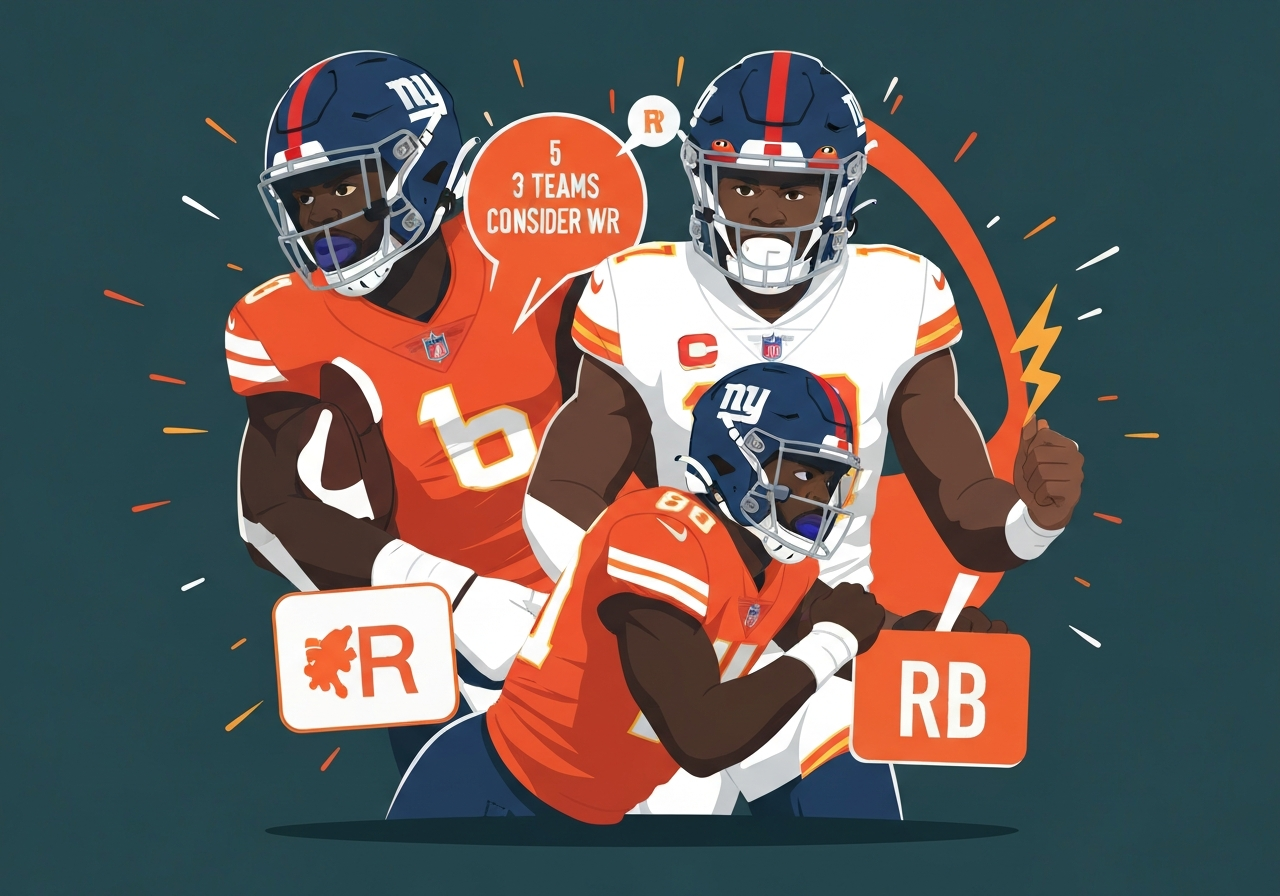
With the 2026 NFL Scouting Combine imminent, Daniel Jeremiah released his second Round 1 projection, mapping how teams might address immediate needs and upside on the board. The mock — published on NFL.com ahead of Combine coverage that begins Feb. 26 — features only one quarterback in Round 1 but highlights a strong class of edge rushers and wide receivers. Jeremiah slots the Raiders at No. 1 with a quarterback and has the Giants taking a receiver at No. 5, one of six clubs he predicts will select a wideout in Round 1. The Chiefs are projected to select a running back at No. 9, answering a long‑standing offensive need.
Key Takeaways
- Daniel Jeremiah’s Round 1 mock was released ahead of the NFL Scouting Combine, which begins Feb. 26 and receives live coverage on NFL Network and NFL+.
- Only one quarterback appears in Jeremiah’s mock Round 1; the Raiders take a QB at No. 1 to pair with their new coach.
- The Giants pick a wide receiver at No. 5 (Tate), and Jeremiah projects six teams in total to take a receiver in Round 1.
- The Chiefs address the backfield at No. 9, taking Love as an elite running back to support Patrick Mahomes.
- Early first‑round winners in the mock include edge rushers at Nos. 2 and 7 (Bailey, Reese), and multiple teams prioritizing offensive line help at Nos. 3, 6 and 24 (Mauigoa, Fano, Freeling).
- Several teams with impending free agents (e.g., Cowboys, Browns, Dolphins) are shown targeting positions where depth or starters could depart in free agency.
- Jeremiah flags players with multi‑role traits — for example, Reese has split time between edge and off‑ball linebacker — as higher upside but harder to project.
Background
The NFL Scouting Combine and Senior Bowl together create a two‑week window each offseason where prospects rise and fall on draft boards. Evaluators use game tape, interviews and on‑field testing to reconcile medical checks, scheme fit and measurable traits. Jeremiah’s mock arrives at the start of that process for 2026, offering a snapshot before the Combine’s workout numbers and interviews can materially alter team boards.
This year’s conversation has clustered around two positional groups: edge rushers and wide receivers. Teams facing salary, age or contractual decisions at cornerback, offensive line and running back are especially active in offseason planning, and those roster pressures shape early Round 1 thinking. Jeremiah’s selections reflect a mix of best‑player‑available calls and clear need fills for teams with imminent roster gaps.
Main Event
Jeremiah opens his board by projecting the Raiders will take a quarterback at No. 1, matching a perceived scheme fit between the new coach and the player’s skill set. The projection underscores the Raiders’ priority to pair their coaching direction with an ascending passer. At No. 2 the Jets are shown choosing an explosive edge rusher, and at No. 3 a right tackle (Mauigoa) is slotted to immediately upgrade a struggling offensive line.
At No. 4 Jeremiah pairs Bain with Tennessee’s Jeffery Simmons as a complementary defensive piece, then places Tate at No. 5 for the Giants, giving the Jaxson Dart‑led offense another vertical option opposite Malik Nabers if Nabers is healthy. Cleveland is projected to use No. 6 on Spencer Fano to bolster the Browns’ line early, while Washington’s No. 7 pick (Reese) is presented as a high‑upside, multi‑position pass‑rusher/linebacker hybrid.
Of particular note is the Chiefs’ No. 9 selection of Love at running back — a move Jeremiah frames as the long‑anticipated acquisition of an elite runner for Patrick Mahomes. Denver, Cincinnati and Miami are among other clubs in the mock that prioritize defensive stability and depth, with picks aimed at linebackers, cornerbacks and safeties through the middle of Round 1.
Analysis & Implications
Jeremiah’s board balances need and upside, but the Combine could reconfigure several outcomes. Teams without clear starters at certain positions often trade up or down depending on their read of a player’s interview and testing profile; that fluidity makes mid‑round projections especially sensitive to pre‑draft movement. The single QB in Jeremiah’s mock suggests he currently views the 2026 QB depth as thin for Round 1 worthiness outside his top choice.
Positional clustering in Round 1 — multiple edge rushers and wide receivers — has roster‑level implications. If six teams select receivers early, other clubs may pivot to alternative investments in tight ends, running backs or offensive line help, shifting the market and contract leverage for those players. For the Chiefs, selecting a top back alters complementary roster planning: it could reduce immediate need for a receiving‑back or change passing game personnel decisions.
Offensive line volatility is another theme. Jeremiah slots several tackles and interior linemen in the top 24 to address teams with aging starters or impending free agents. Those picks reflect the premium franchises place on protecting franchise quarterbacks and establishing a physical run game; successful early OL selections often have outsized influence on team performance over the following 2–3 seasons.
Comparison & Data
| Pick | Team | Player | Primary role (per mock) |
|---|---|---|---|
| 1 | Raiders | Mendoza | Quarterback — franchise starter |
| 2 | Jets | Bailey | Explosive edge rusher |
| 3 | — | Mauigoa | Right tackle — OL upgrade |
| 5 | Giants | Tate | Vertical wide receiver |
| 9 | Chiefs | Love | Elite running back |
This snapshot highlights how the mock mixes immediate need picks (QB, OL, RB) with high‑ceiling defensive players (edge rushers) and pass catchers. It also shows why Combine testing and interviews are so influential: measurable traits can validate or undermine projection certainty for early selections.
Reactions & Quotes
Coverage around Jeremiah’s mock has focused on the balance between scheme fits and upside bets. Observers note the mock’s blend of projected need fills and best‑player‑available selections, especially in the trenches and at edge.
“Edge rushers and receivers are generating a lot of buzz entering the Combine.”
Daniel Jeremiah, NFL analyst
The Chiefs‑at‑No. 9 running back pick prompted discussion about how an elite back changes an AFC West offense; some analysts emphasized the strategic value of adding a three‑down back to pair with a generational passer.
“If the Chiefs add an elite runner, it forces defenses to respect the ground game and opens more in the passing attack.”
League offensive analyst (paraphrased)
On social platforms, fans and local beat writers quickly debated the Giants’ selection of Tate at No. 5, splitting opinion on whether the pick addresses the team’s most pressing needs.
“Giants fans are split on investing a top‑five pick in a vertical threat versus other roster holes.”
Fan reaction, social media summary
Unconfirmed
- Whether two quarterbacks will be chosen in Round 1 remains unresolved; Jeremiah currently has only one QB in his mock.
- Trade scenarios mentioned in context (for example, a hypothetical Cowboys‑Chiefs swap around Trent McDuffie) are speculative and not confirmed by team sources.
- Individual teams’ intentions (e.g., Lane Johnson’s retirement timeline, exact free‑agency moves) are still fluid going into the Combine and free‑agency window.
Bottom Line
Jeremiah’s 2.0 mock provides a considered baseline for Round 1 projections before the NFL Scouting Combine and the start of free agency. It emphasizes a deep edge and receiver class, a likely single QB in Round 1 as of this projection, and several teams prioritizing immediate roster fixes on the offensive line and in the secondary.
Readers should treat the mock as a working roadmap: the Combine’s measurable data, team meetings and ensuing free‑agency moves can—and often do—reshape boards materially. For fans and evaluators, the key takeaway is to watch which prospects validate their tape in Indianapolis, because those performances will determine how many of Jeremiah’s projections hold up on draft night.
Sources
- Daniel Jeremiah 2026 NFL mock draft 2.0 — NFL.com (media/analyst piece; primary source for this analysis)
- NFL Scouting Combine coverage and schedule — NFL (official event information; broadcast notice)