
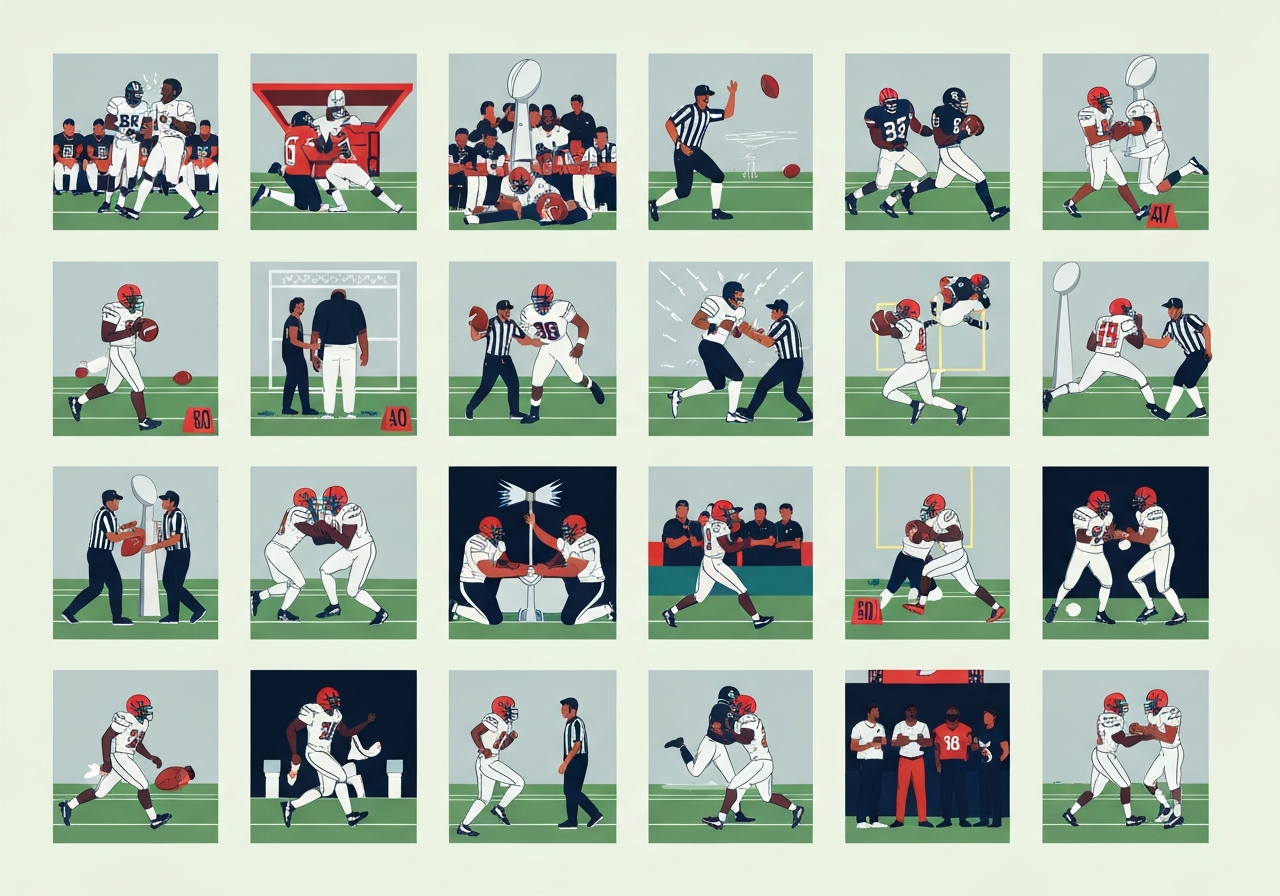
Lead: In February, the Super Bowl marks its 60th edition when Super Bowl LX is staged at Levi’s Stadium in Santa Clara, California. Before kickoff, Sports Illustrated convened a 23-member blue ribbon panel to rank the most unforgettable plays, performances and turning points from the game that began as the AFL-NFL World Championship Game in January 1967. The list captures the sport’s competitive highs, cultural milestones and the handful of plays that altered franchises and legacies. At the top of the ranking sit recent and historic turning points, from Malcolm Butler’s interception at Super Bowl XLIX to the Helmet Catch of XLII and Joe Namath’s guarantee in Super Bowl III.
Key Takeaways
- Sports Illustrated assembled a 23-person panel of reporters, Hall of Fame voters, former executives and analysts who ranked moments from a longlist of more than 100 entries into a final top 60.
- The list spans six decades, beginning with the inaugural game in January 1967 at the LA Memorial Coliseum and culminating with recent championship finishes such as Super Bowl LVIII and LVII.
- Panel methodology asked each voter to rank moments 1 through 60; rankings were compiled into a master ordering that emphasizes impact on championships, cultural reach and lasting memory.
- Top three moments in the final ranking are Super Bowl XLIX interception by Malcolm Butler at the 1, Super Bowl XLII Helmet Catch by David Tyree, and Joe Namath’s upset of the Colts in Super Bowl III.
- Several plays on the list are defensive or special teams scores, underlining how game-defining non-offensive moments can be, including a safety to open Super Bowl XLVIII and three Buccaneer pick-sixes in Super Bowl XXXVII.
- The list balances dramatic finishes, such as the Patriots’ comeback in Super Bowl LI and the Rams’ last-minute march in Super Bowl XXXIV, with cultural moments like Whitney Houston’s national anthem before Super Bowl XXV and Prince’s rain-tinged halftime at Super Bowl XLI.
- Selections highlight repeat themes: quarterback heroics across eras, the influence of coaching decisions at critical moments, and the way single plays can reshape narratives about players and franchises.
Background
The Super Bowl began as a matchup between champions of two rival leagues, played on Jan 15, 1967, in the LA Memorial Coliseum. Early games were framed as proof points in the merger era, with figures like Vince Lombardi and Hank Stram symbolizing the NFL and AFL rivalry. Over time the event expanded from a championship football game into a national media spectacle with cultural trappings beyond the final score.
Television exposure, sponsorship dollars and halftime production investments gradually transformed Super Bowl Sunday into a seasonal holiday. Bowl weekend now draws audiences for the commercials, halftime performances and celebrity appearances as much as for the on-field competition. Those changes mean memorable plays matter not only for championships but for their resonance in broader popular culture.
Main Event
Sports Illustrated’s panel worked from a longlist of more than 100 moments and used ranked ballots to produce the top 60. The final compilation mixes close finishes, single plays that decided titles, breakthrough individual performances and off-field events that magnified the game’s national profile. Examples from the compiled list include early landmark plays such as Max McGee’s first Super Bowl touchdown in Super Bowl I, defensive masterclasses like Rod Martin’s three interceptions in Super Bowl XV, and defining quarterback nights like Joe Montana’s five-touchdown performance in Super Bowl XXIV.
Recent decades feature a concentration of quarterback-led high drama: Tom Brady’s multiple Super Bowl triumphs, Patrick Mahomes’s late-game heroics and Kurt Warner’s improbable run with the Rams. Iconic special teams and defensive plays also appear prominently, from Devin Hester’s 92-yard return to open Super Bowl XLI to James Harrison’s 100-yard interception return in Super Bowl XLIII, the longest scoring play in Super Bowl history.
Some selections reflect cultural crossover rather than pure competitive import. Whitney Houston’s rendition of the national anthem at Super Bowl XXV and Prince’s rain-soaked halftime at Super Bowl XLI are included because they became defining national images tied to a particular contest and moment in U.S. history. The list therefore reads as both a football canon and a chronicle of how the game intersected with music, politics and television.
Analysis & Implications
Why do single plays resonate decades later? The panel weighted three dimensions: immediate impact on a championship result, how a moment altered a player’s or franchise’s narrative, and the cultural afterlife of the play. Malcolm Butler’s interception at Super Bowl XLIX ranks highest because it changed the championship outcome and because the decision to pass from the 1-yard line generated intense debate about coaching and situational choices.
Historic upsets such as Super Bowl III and Super Bowl XLII are ranked highly because they reshaped perceptions of competitive balance. Namath’s guarantee and the Jets’ upset of the Colts gave the AFL credibility and accelerated the merger narrative, while the Giants’ win over a previously unbeaten Patriots team interrupted a historic season and produced a single play, the Helmet Catch, that still symbolizes improbable comebacks.
The persistence of defensive and special teams plays in the top selections suggests that even in an era dominated by offensive statistics and quarterback valuation, championship basketball-style possessions remain decisive. This has implications for roster construction, as front offices balance expensive offensive talent with investments in defense and special teams that can swing one game.
As the Super Bowl continues to evolve, future moment lists may look different. Streaming platforms, international broadcasts and shifting viewer habits will change how quickly moments enter the cultural vernacular, but the core dynamic remains: a few seconds on the field can reshape decades of history for teams, coaches and players.
Comparison & Data
| Rank | Super Bowl | Moment | Score / Result |
|---|---|---|---|
| 1 | XLIX | Malcolm Butler interception at the 1 | Patriots 28, Seahawks 24 |
| 2 | XLII | David Tyree Helmet Catch | Giants 17, Patriots 14 |
| 3 | III | Joe Namath and the Jets upset | Jets 16, Colts 7 |
| 4 | LI | Patriots come back from 28-3 | Patriots 34, Falcons 28 (OT) |
| 5 | XLVIII | Safety on first play; Seahawks rout | Seahawks 43, Broncos 8 |
That sample table illustrates how the panel mixed eras and types of moments. The five examples above include an opening-play special teams score, an upset, a defensive game-sealing play, a record comeback and an iconic catch. Placing them side by side highlights how the panel prioritized both contest-defining sequence and enduring cultural recall.
Reactions & Quotes
The selection process aimed to balance game-changing significance with lasting public memory, according to the panel’s organizing note.
Sports Illustrated panel summary
Analysts at the Pro Football Hall of Fame emphasize that moments which change championship outcomes often accelerate Hall of Fame discussion for players and coaches.
Pro Football Hall of Fame commentary
Fans across social media highlighted the emotional weight of halftime performances and anthem renditions as essential Super Bowl memories beyond the final score.
Fan response on social platforms
Unconfirmed
- Debate remains about the precise ranking order, since panel selection involves subjective weighting of cultural vs competitive importance.
- There is no universal metric that converts cultural resonance into a numeric ranking, so different panels or fan votes would likely alter the list substantially.
Bottom Line
The Sports Illustrated top 60 catalog is both a history lesson and a reminder that the Super Bowl is more than a championship game. It is a collection of pivot points that determined titles, created or ended careers, and produced images that outlived the players who made them. From Malcolm Butler’s game-saving interception in Super Bowl XLIX to Joe Namath’s audacious guarantee in Super Bowl III, the moments that rise to the top do so because they combined immediate consequence with enduring storytelling value.
As Super Bowl LX approaches in Santa Clara, fans can expect new moments to join this canon. The list serves as a framework for assessing future plays: did they decide a game, shift a franchise’s arc, or embed themselves in popular memory? Those criteria will continue to govern how we remember the game’s defining seconds.
Sources
- Sports Illustrated — media feature and panel results
- Pro Football Hall of Fame — archive and historical context, official/archival
- NFL — official game records and box scores, league archive