
Lead
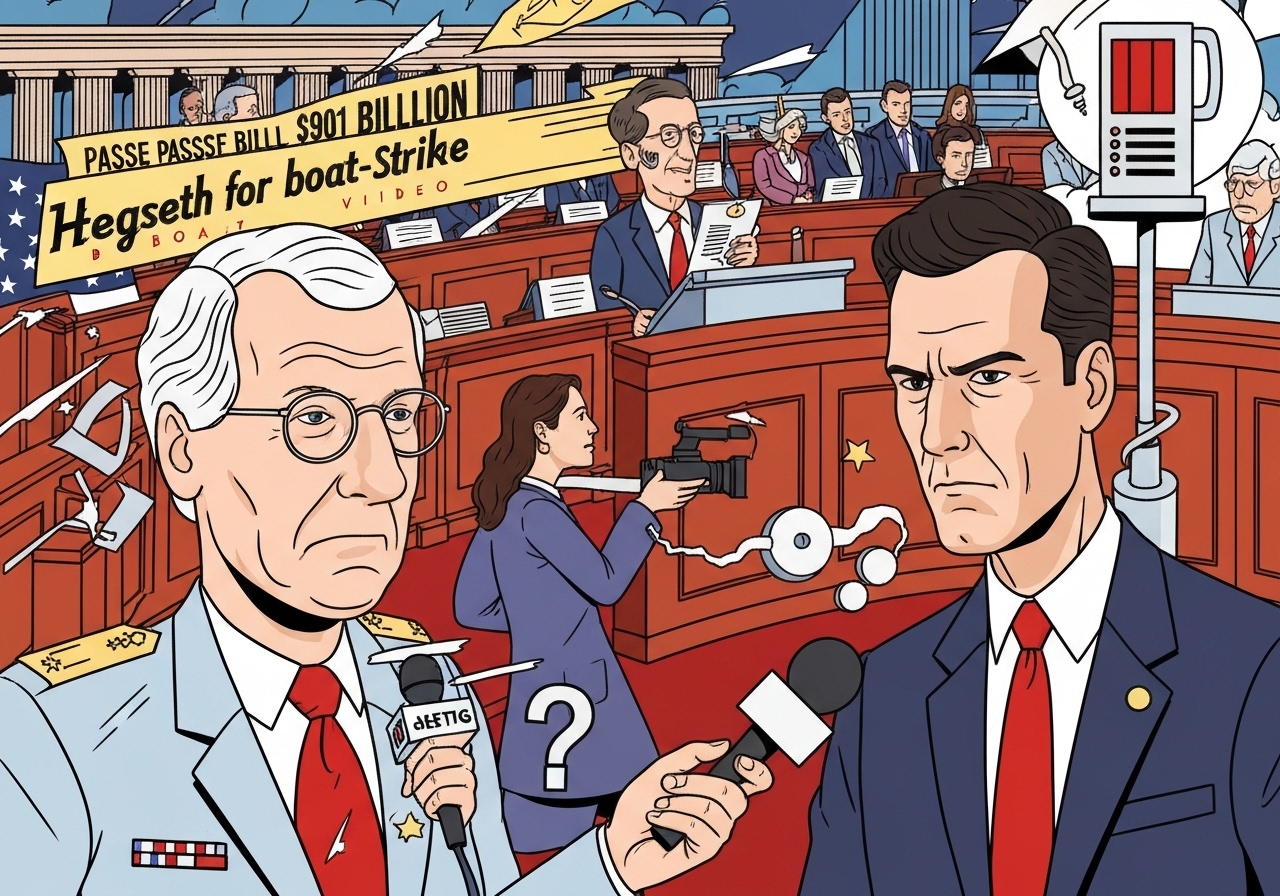
On Wednesday the Senate approved the annual National Defense Authorization Act (NDAA), authorizing roughly $901 billion in defense spending and a 3.8% military pay raise. The measure won bipartisan backing but also inserted new oversight demands, including pressuring Defense Secretary Pete Hegseth to deliver unedited video and orders tied to recent strikes on alleged drug-smuggling boats near Venezuela. The bill spans more than 3,000 pages and blends long-standing defense priorities with provisions that respond to recent friction between Congress and the Pentagon. Lawmakers included requirements to maintain troop footprints in Europe and South Korea and to fund weapons shipments to Ukraine even as the legislation implements administration priorities on personnel policy and procurement reform.
Key Takeaways
- The Senate approved a $901 billion NDAA that raises troop pay by 3.8% and spans over 3,000 pages.
- The bill conditions a quarter of the defense secretary’s travel budget on providing unedited video and authorizations for strikes on boats near Venezuela.
- It requires the U.S. to retain at least 76,000 troops and major equipment in Europe and keeps the South Korea presence at 28,500 personnel.
- Congress authorized $400 million per year for two years to manufacture weapons destined for Ukraine.
- The legislation codifies cuts to diversity, equity and inclusion offices and trainings, estimated to save about $40 million.
- Climate-related Pentagon programs would see $1.6 billion in reductions under the bill.
- Congress repealed the 2003 and 1991 authorizations for use of force and permanently lifts certain sanctions on Syria.
- The package expands congressional oversight of troop movements, intelligence sharing and senior personnel changes.
Background
The NDAA is the annual vehicle through which Congress funds and sets policy for the Department of Defense; this year the Senate package authorizes approximately $901 billion in programs and operations. Over recent months tensions have grown between congressional leaders and the Trump administration over decisions made without advance notification, including pauses in intelligence sharing with Ukraine and adjustments to U.S. posture in NATO countries. Those tensions shaped several of this bill’s provisions that directly limit or condition Pentagon actions, reflecting lawmakers’ desire to reassert oversight and Congress’s constitutional role in war powers and force posture.
At the same time, the legislation advances many of the administration’s priorities, including eliminating certain diversity and inclusion offices and trainings and granting temporary authorities for emergency border operations. The mix of priorities produced a compromise that attracted bipartisan support in the end, but not without objections from members on both sides about specific carve-outs and safety issues. The Senate debate also unfolded against the backdrop of public scrutiny over a January midair collision in Washington, D.C., that killed 67 people, a tragedy that elevated concerns about military exemptions from civilian safety protocols.
Main Event
The final Senate vote Wednesday approved the NDAA after lawmakers negotiated language addressing recent military operations in the Caribbean and oversight gaps. A central friction point was a committee demand that Defense Secretary Pete Hegseth provide unedited video of strikes on suspected drug-smuggling vessels in international waters near Venezuela, along with the authorizing orders; the statute ties release of one-quarter of his travel budget to compliance. Hegseth briefed members of Congress on Tuesday in a session that produced sharply divergent reactions: many Republicans expressed support for the campaign, while many Democrats said they had not received sufficient information to judge its legality and conduct.
The committees are probing a Sept. 2 strike early in the campaign that resulted in two deaths of people who had survived an initial attack on their boat; investigators and lawmakers have characterized the episode as a double-tap strike and sought fuller documentation. Navy Adm. Frank ‘Mitch’ Bradley, who ordered the second strike, appeared for a classified briefing shortly before the Senate vote and presented video to committee members in that setting. Beyond the video demand, the bill requires the Pentagon to consult Congress before withdrawing more than a prescribed number of troops from Europe and sets minima for deployments in theater.
Other operational and policy provisions made it into the final text. The NDAA authorizes roughly $400 million per year for two years to manufacture weapons intended for transfer to Ukraine and keeps a restriction that requires consultation with NATO allies before significant force reductions in Europe. It also maintains a U.S. troop presence baseline of 28,500 in South Korea. On procurement, lawmakers included measures they say will modernize Defense Department buying practices to accelerate development of next-generation capabilities vis-a-vis strategic competitors.
The bill also carries contentious domestic policy changes: it codifies the elimination of certain diversity, equity and inclusion programs in the military, with an estimated Pentagon savings of about $40 million, and trims roughly $1.6 billion from climate-related programs the military uses to manage installation and readiness risks tied to extreme weather. Supporters framed those moves as restoring focus and fiscal discipline, while critics warned of decreased force readiness and weakened institutional resilience.
Analysis & Implications
By combining robust funding with detailed oversight requirements, the Senate package signals Congress’s intent to balance support for readiness with tighter civilian control over the use of force. The video requirement for the Hegseth brief underscores a broader push for transparency about operations conducted without clear public mandates, especially when civilian casualties or contested rules of engagement are implicated. Requiring evidence and authorizations to be shared with Armed Services committees raises the political and legal costs of covert or semi-covert campaigns abroad.
Maintaining a floor of 76,000 troops and major equipment in Europe — against a typical presence of 80,000 to 100,000 — and locking in 28,500 in South Korea constrain fast, unilateral redeployments that could surprise allies and erode deterrence. Those provisions are likely to slow any rapid pivot away from Europe and signal reassurance to NATO and regional partners, even as the administration places fresh emphasis on the Western Hemisphere. The Ukraine aid authorization and procurement reform measures also reflect long-term competition priorities: Congress is directing funds and structural changes intended to accelerate U.S. weapons development and replenishment cycles.
Domestically, repealing the 2003 and 1991 authorizations removes long-standing statutory bases for certain military actions and indicates bipartisan appetite to reclaim aspects of congressional war powers. Cutting DEI offices and climate programs will have operational consequences if the savings reduce investments in force resilience, recruitment, or base protection; those effects may unfold over years and will be watched closely by defense planners and allies. Politically, the mix of provisions makes the bill palatable to a broad Senate coalition but risks sparking legal and policy fights over particular changes after the president signs it.
Comparison & Data
| Item | Figure |
|---|---|
| Total NDAA authorization | $901 billion |
| Troop pay increase | 3.8% |
| Minimum U.S. troops in Europe | 76,000 |
| Typical U.S. troop presence in Europe | 80,000–100,000 |
| U.S. troops in South Korea | 28,500 |
| Ukraine weapons manufacturing | $400 million per year for 2 years |
| Estimated DEI savings | $40 million |
| Climate program cuts | $1.6 billion |
The table highlights the bill’s explicit numeric commitments and cuts. The 3.8% pay raise is a near-term personnel incentive, while troop floors in Europe and Korea are structural constraints on force posture. The $400 million per-year authorization for Ukraine is a targeted manufacturing commitment rather than direct transfer funding, signaling congressional intent to bolster stockpiles. Savings from repealing DEI offices and trimming climate programs are relatively small compared with the overall authorization but have symbolic and operational weight.
Reactions & Quotes
Supporters framed the bill as both a funding vehicle and a reform package for Pentagon practices, arguing it modernizes acquisition and restores accountability. The Republican chair of the Senate Armed Services Committee emphasized the scope of planned administrative changes as central to the bill’s purpose.
‘We’re about to pass, and the president will enthusiastically sign, the most sweeping upgrades to DOD’s business practices in 60 years.’
Sen. Roger Wicker
Opponents pointed to specific safety and oversight concerns, including a military waiver that some senators tied to a deadly midair collision in January. One senator urged quick follow-up legislation to require more precise location sharing by military aircraft to prevent future civilian tragedies.
‘The special carve-out was exactly what caused the January 29th crash that claimed 67 lives.’
Sen. Ted Cruz
On the boat-strike issue, lawmakers expressed a mix of alarm and caution: Republicans generally backed the operational aims while Democrats pressed for fuller documentation and legal review. Committees obtained classified briefings and some video in closed sessions, but the statute now seeks unedited materials for committee review before certain funds or authorities are restored to the defense secretary.
Unconfirmed
- Whether the strikes near Venezuela violated international law or U.S. rules of engagement has not been publicly adjudicated and remains subject to committee review.
- The full unedited video sought by Congress has not been released publicly; the contents seen in classified briefings have not been independently corroborated in open session.
- Longer-term readiness effects from cuts to climate programs and DEI offices are projected but not yet demonstrated; those operational impacts will depend on implementation and follow-up funding decisions.
Bottom Line
The Senate’s passage of a $901 billion NDAA represents a broad, if uneasy, bargain: lawmakers funded core defense priorities and pay increases while inserting sharper oversight conditions on recent military actions. Provisions that lock in troop minimums in Europe and Korea, direct Ukraine-related manufacturing funding, and demand evidence for contentious strikes are intended to rein in unilateral moves and reassure allies.
At the same time, codifying cuts to DEI and climate initiatives and granting certain operational flexibilities to the administration reflect the political trade-offs that made the package possible. Watch for follow-on fights over appropriations, the public release of materials now withheld, and legal or diplomatic reviews of strikes that triggered the congressional scrutiny.
Sources
- NPR — news reporting and original coverage of the Senate NDAA passage and committee briefings.