
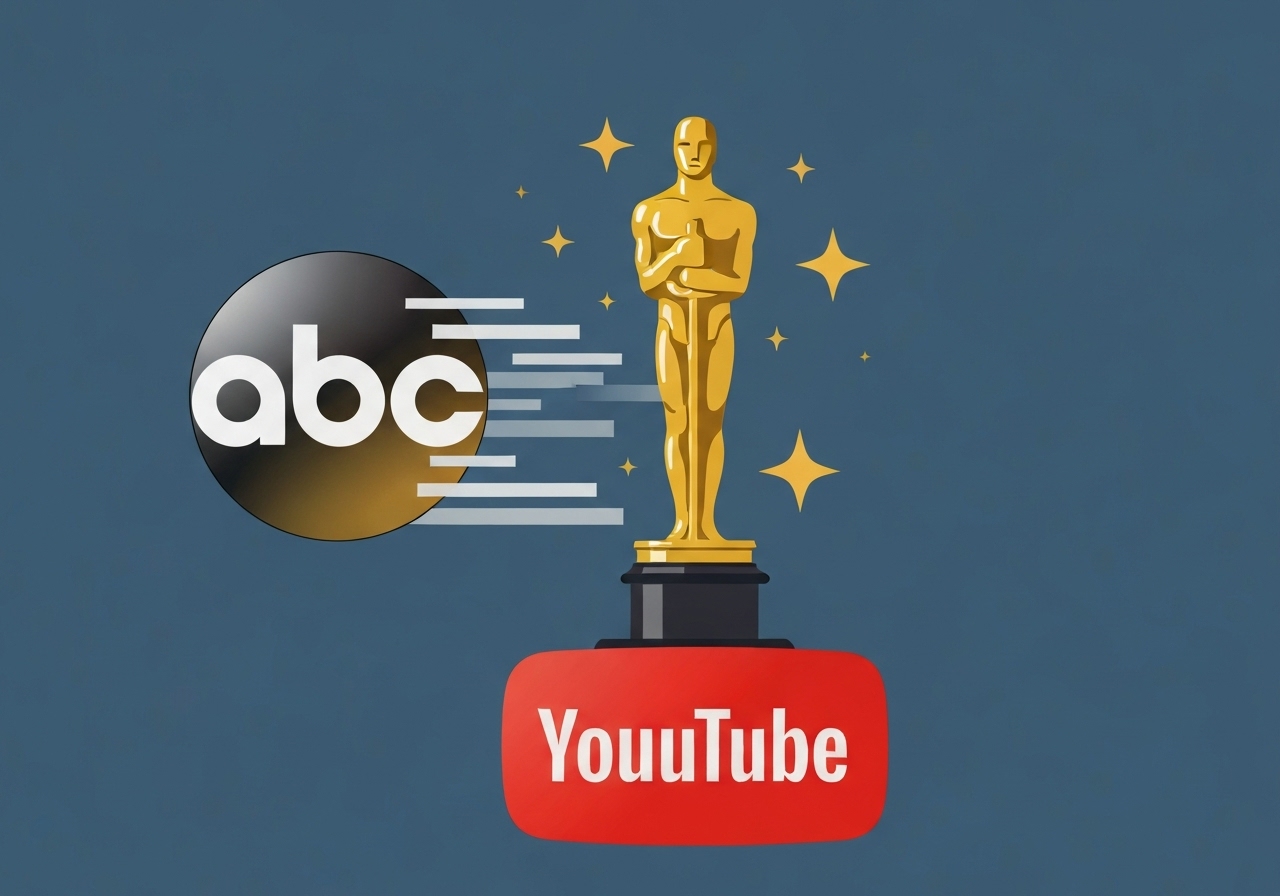
The Academy of Motion Picture Arts and Sciences announced on Wednesday that the Academy Awards will leave ABC after the 2028 ceremony and begin streaming on YouTube in 2029, with YouTube holding global streaming rights through 2033. ABC will continue to broadcast the Oscars through 2028, which will be the ceremony’s 100th anniversary. The shift makes YouTube the primary home for red-carpet coverage, the Governors Awards and the nominations announcement, and signals a major platform change for one of television’s highest-profile live events. The academy and YouTube framed the deal as a bid to reach wider international and younger audiences while maintaining year-round programming tied to the Oscars.
Key Takeaways
- YouTube will have exclusive global streaming rights to the Oscars from 2029 through 2033, according to the academy’s announcement.
- ABC, owned by The Walt Disney Co., will continue to air the ceremony through 2028, including the 100th Oscars celebration that year.
- The show will stream free worldwide on YouTube and also be available to YouTube TV subscribers, with multiple audio tracks and closed captioning.
- Financial terms of the agreement were not disclosed; the academy chose YouTube over bidders such as Netflix and NBCUniversal/Peacock.
- The 2025 Oscars drew about 19.7 million viewers on ABC; peak viewership occurred in 1999 when roughly 55 million watched.
- YouTube claims roughly 2 billion users and, per Nielsen, accounted for 12.9% of all television and streaming consumption in November, ahead of Netflix at 8.3%.
Background
The Oscars have had a long association with broadcast television. NBC first televised the awards in 1953 and ABC acquired the broadcast rights in 1961; aside from a 1971–1975 run on NBC, ABC has been the ceremony’s home for more than half a century. That relationship has been both a cultural anchor and a ratings bellwether for the television industry. Over recent years, awards shows have experimented with streaming partnerships and simulcasts as viewership patterns changed, pressuring rights holders to seek broader distribution and younger audiences.
At the same time, streaming platforms have pursued marquee live events to bolster reach and relevance. YouTube’s scale and global footprint make it an appealing outlet for an organization that calls itself international, even if the platform does not have the same long history of producing large live television spectacles as legacy networks. The academy framed the move as an effort to expand access for viewers worldwide and to support members and the film community with year-round programming.
Main Event
The academy disclosed the partnership in a statement shared on Wednesday, saying YouTube will become the home for the Oscars’ primary events beginning in 2029. The arrangement covers the televised ceremony’s streaming distribution globally through 2033 and includes ancillary programming tied to the awards. ABC will remain the broadcast partner through 2028, allowing the centennial telecast to air on network television as planned.
Academy CEO Bill Kramer and academy president Lynette Howell Taylor said the deal represents a multifaceted collaboration designed to broaden the awards’ reach. Neal Mohan, chief executive of YouTube, described the arrangement as an opportunity to bring the Oscars’ celebration of storytelling to more viewers and to inspire new audiences. The academy emphasized that the YouTube rights encompass red-carpet coverage, the Governors Awards and the nominations announcements as part of a year-round offering.
The academy did not disclose monetary terms or detailed production responsibilities, and it said the 2029–2033 window would be the initial span for YouTube’s global streaming rights. Industry observers noted that selecting YouTube prioritized reach and platform scale, while raising questions about how production, advertising and sponsorships will be structured across a global streaming partner versus a traditional broadcaster.
Analysis & Implications
The shift from a broadcast network to a major online platform reflects broader changes in how large live events are distributed and monetized. For ABC and Disney, losing the Oscars after 2028 removes one of the network’s tentpole entertainment properties, potentially affecting advertising revenue for a high-profile evening that still draws millions of viewers. For YouTube, the rights offer a unique content prestige lift and an opportunity to demonstrate its ability to host major live cultural events at scale.
From a ratings perspective, the transition may accelerate demographic shifts in audience composition. Younger viewers already consume far more content on digital platforms; making the ceremony freely available on YouTube could increase international and younger viewership but risks fragmenting traditional TV audience metrics. Advertisers and sponsors will need new measurement frameworks to compare historical TV ratings with streaming reach and engagement on YouTube.
Creative and production teams will face practical choices around broadcast-style production values versus platform-native formats and interactivity. YouTube’s global reach and language support can broaden the Oscars’ accessibility, but producing a ceremony that satisfies both legacy expectations and new platform capabilities requires coordination on technical standards, rights clearances and monetization. The deal may set a precedent for other major awards and live events considering moves away from linear television.
Comparison & Data
| Year / Metric | Figure | Note |
|---|---|---|
| 1999 (Oscars viewership) | ~55 million | Peak-era broadcast audience |
| 2025 (Oscars viewership on ABC) | 19.7 million | Slight increase from the prior year |
| Nielsen share (November) | YouTube 12.9%, Netflix 8.3% | Share of all TV and streaming content |
The table highlights the long-term decline in linear broadcast audiences for the Oscars compared with peak years, even as the ceremony remains a top-rated non-sports broadcast. The Nielsen figure underscores YouTube’s substantial share of viewing time relative to other platforms, a key reason the academy favored the service for global streaming distribution.
Reactions & Quotes
Officials framed the pact as a way to expand global access and year-round programming tied to the Oscars.
“We are thrilled to enter into a multifaceted global partnership with YouTube to be the future home of the Oscars and our year-round Academy programming.”
Bill Kramer and Lynette Howell Taylor, Academy leadership
The academy characterized the move as consistent with its international mission; academy leaders said the partnership would help reach the largest worldwide audience possible.
“Partnering with the academy to bring this celebration of art and entertainment to viewers all over the world will inspire a new generation of creativity and film lovers.”
Neal Mohan, YouTube CEO
YouTube framed the collaboration as both cultural and strategic. ABC issued a short statement noting its long association with the show and that it looks forward to the next three telecasts through 2028.
“ABC has been the proud home to The Oscars for more than half a century. We look forward to the next three telecasts, including the show’s centennial celebration in 2028.”
ABC (The Walt Disney Co.)
Explainer / Glossary
Unconfirmed
- Exact financial terms and how advertising and sponsorship revenue will be split between the academy and YouTube remain undisclosed.
- Details about which production partners will handle live show technical delivery and whether legacy broadcast crews will be retained are not yet confirmed.
- It is not yet clear how the academy will measure and report combined streaming and linear audience figures for comparative advertiser metrics.
Bottom Line
The move of the Oscars to YouTube beginning in 2029 marks a historic pivot away from traditional network television and reflects the academy’s priority on global reach and younger audiences. ABC will host the ceremony through the 100th Oscars in 2028, preserving a final network-era milestone before the transition to streaming.
For the industry, the deal raises questions about production models, measurement standards and sponsorship approaches for live cultural events. Observers should watch how viewership numbers, advertiser reactions and the ceremony’s presentation evolve as the academy and YouTube operationalize the partnership ahead of the 2029 season.
Sources
- Associated Press (News report)
- Academy of Motion Picture Arts and Sciences (Official organization)
- YouTube Official Blog (Official statement)