
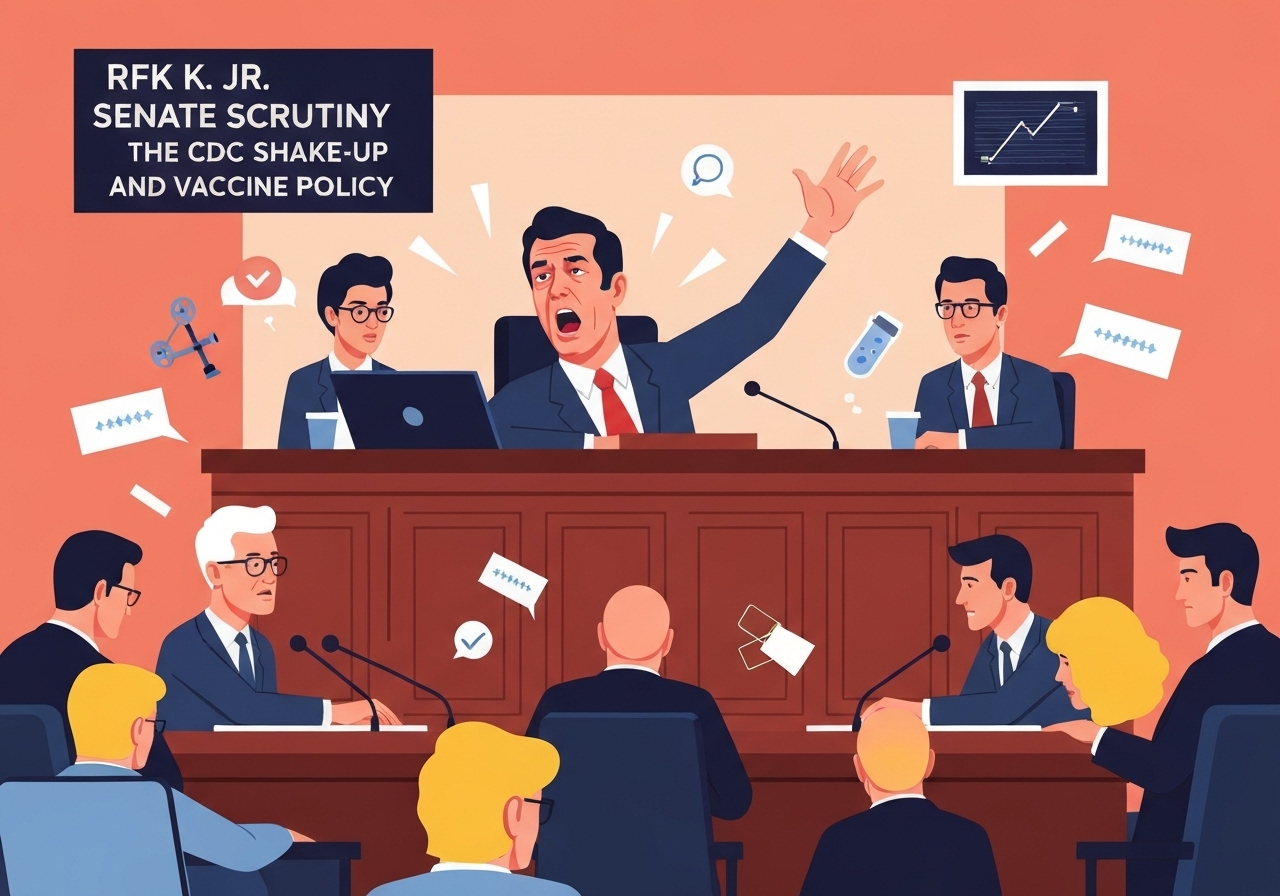
On Sept. 4, 2025, HHS Secretary Robert F. Kennedy Jr. testified before the Senate Finance Committee on Capitol Hill, facing intense questioning over his personnel moves at the Centers for Disease Control and Prevention, changes to federal vaccine guidance and the broader direction of his department; the three-hour session ended with calls from some senators for his resignation and continued sharp debate over vaccine access and public health oversight.
Key Takeaways
- Kennedy defended the recent removals and reassignments at the CDC as needed to restore the agency’s mission.
- Democrats and some Republicans pressed Kennedy on whether his actions reduce vaccine access and undermine scientific standards.
- Kennedy retired all 17 members of the CDC’s Advisory Committee on Immunization Practices (ACIP) in June and named eight replacement picks; the panel is set to meet Sept. 18–19.
- More than 1,000 current and former HHS staffers urged President Trump to fire Kennedy in an open letter, and nine former CDC directors published an op‑ed criticizing his leadership.
- Committee members pressed Kennedy on long COVID research, Medicare drug negotiations tied to the One Big Beautiful Bill and clarity about who can receive COVID boosters under new guidance.
- Several drugstore chains said last week they would require prescriptions or limit COVID‑19 vaccine availability in some states following FDA access restrictions.
- The hearing highlighted disagreements about how to balance transparency, evidence and access in vaccine policy while restoring public trust in federal health agencies.
Verified Facts
Secretary Kennedy appeared before the Senate Finance Committee on Sept. 4, 2025. The hearing lasted roughly three hours and included sustained exchanges with ranking senators from both parties. Committee members named during questioning included Chairman Mike Crapo, Sen. Ron Wyden, Sen. Maria Cantwell, Sen. Bernie Sanders, Sen. Raphael Warnock, Sen. Thom Tillis, Sen. Elizabeth Warren, Sen. Todd Young and others.
Kennedy defended his decision to remove the CDC director Susan Monarez and to replace or ask for resignations of senior CDC staff, saying the agency failed in its COVID response and needed restructuring. He described the personnel changes as necessary to refocus the CDC on infectious‑disease protection.
In June, Kennedy announced the retirement of all 17 ACIP members and has since appointed eight new advisers. That advisory committee is scheduled to convene Sept. 18–19 to consider updates to vaccine recommendations, including for COVID‑19, hepatitis B, RSV and pediatric MMRV vaccines.
Committee members raised policy consequences tied to recent regulatory actions: the FDA approved updated COVID vaccines with access limits for healthy adults, and some pharmacy chains (including CVS and Walgreens) said they would require a prescription or otherwise limit vaccine availability in certain states following those approvals.
Context & Impact
The clash reflects a broader debate over how to balance regulatory safeguards, scientific expertise and individual choice in vaccine policy. Supporters of Kennedy frame his moves as efforts to depoliticize and increase transparency at agencies they view as having overreached during the pandemic. Critics say removing career scientists and replacing advisory committee members risks politicizing recommendations and reducing access to routine childhood and COVID vaccines.
Practical consequences under discussion include state‑level pharmacy access, insurance coverage for boosters or childhood vaccines, and public confidence in immunization guidance. Senators also pressed HHS on unrelated but pressing policy items such as long COVID research and Medicare drug negotiation details tied to recent legislation.
- Long COVID: Sen. Todd Young cited estimates that about 20 million Americans have been diagnosed with long COVID, and urged more clinical trials and therapeutics.
- Rural hospitals: Kennedy referenced a $50 billion rural hospital stabilization fund included in recent legislation as part of broader administration priorities.
Official Statements
“These changes were absolutely necessary adjustments to restore the agency to its role as the world’s gold standard public health agency.”
Robert F. Kennedy Jr., HHS Secretary
“He shouldn’t be within a million miles of this job.”
Sen. Ron Wyden (D‑OR)
Explainer: What the ACIP change means
Unconfirmed or Contested Claims
- Susan Monarez has said she was told to preapprove recommendations from a newly constituted vaccine advisory panel; Kennedy disputes that account and called her statements false.
- Allegations that Kennedy demanded the firing of career CDC scientists were raised during questioning and denied by Kennedy; those claims are contested.
- Reports that Kennedy’s family or allies would directly profit from his policy changes were raised by senators; no definitive evidence establishing financial benefit was presented during the hearing.
Bottom Line
The Sept. 4 hearing illustrated deep partisan and cross‑aisle concerns about HHS direction under Secretary Kennedy, especially related to vaccine advisory processes and CDC leadership changes. The coming weeks — including the ACIP meeting on Sept. 18–19 and further oversight inquiries — will be pivotal in determining whether the administration’s approach produces clearer, evidence‑based guidance or further erodes institutional trust.