
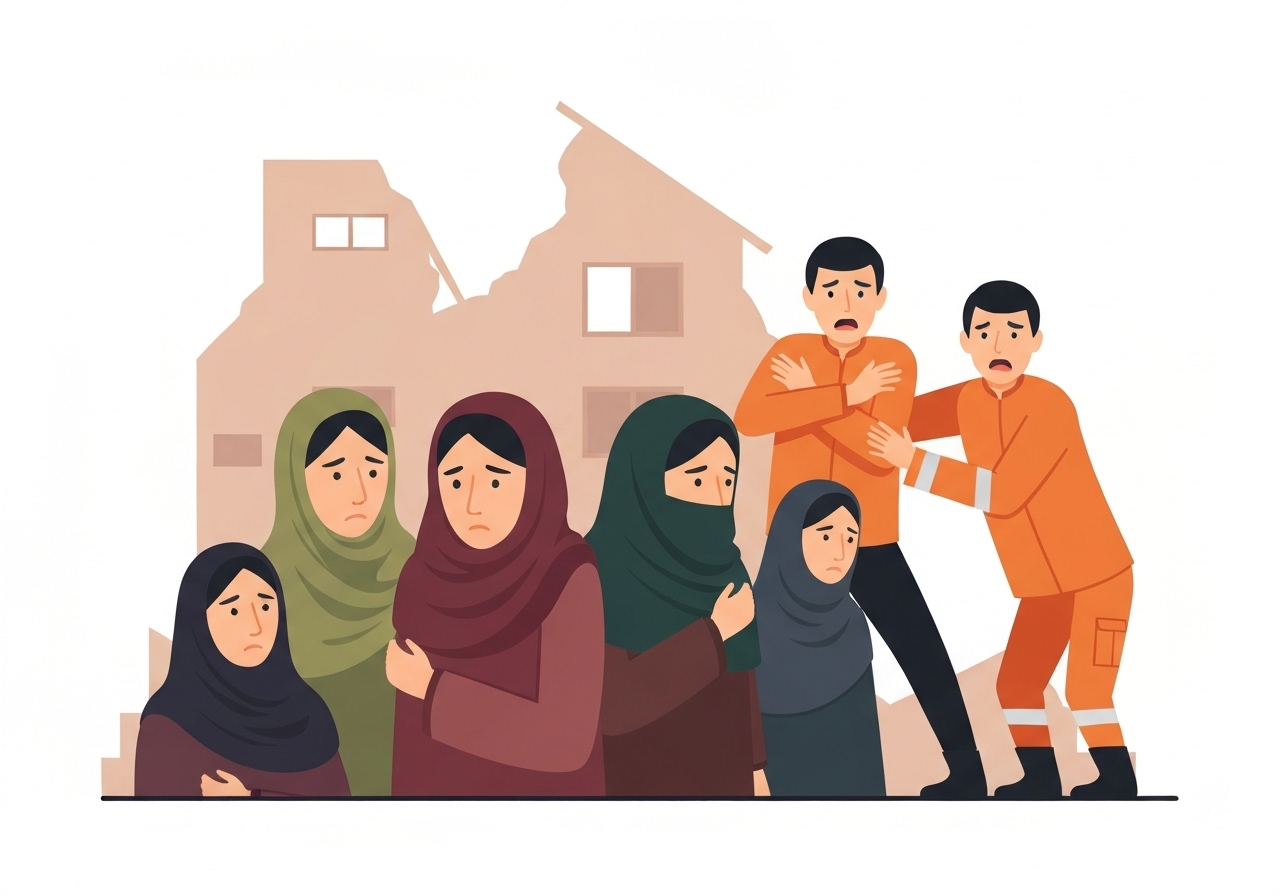
On Sept. 4, 2025, survivors in eastern Afghanistan’s Kunar Province said a magnitude-6 earthquake left many women and girls waiting for aid after male rescue teams prioritized men and children and avoided physical contact with unrelated women, resulting in some injured women remaining trapped or untreated.
Key Takeaways
- More than 2,200 people died and about 3,600 were injured in the Sept. 2025 magnitude-6 quake affecting eastern Afghanistan, according to government figures.
- Witnesses in Kunar Province reported all-male rescue and medical teams treating men and children first while many women waited without care.
- Local survivors, including Bibi Aysha (19) and volunteer Tahzeebullah Muhazeb (33), described women being gathered aside or left under rubble until women rescuers could arrive.
- A severe shortage of female health workers followed a 2024 ban on women’s enrollment in medical education, according to aid groups and local officials.
- The Taliban-run Ministry of Health acknowledged a lack of female staff in affected areas while saying some provincial hospitals have female clinicians.
- Humanitarian groups, including UN Women, warned that gendered restrictions are amplifying the disaster’s harm to women and girls.
Verified Facts
Government tallies put the death toll at more than 2,200 with roughly 3,600 injured after the quake struck mountainous districts in eastern Afghanistan. The initial rescue response arrived in some villages more than 36 hours after the earthquake, according to survivor accounts.
In Andarluckak and Mazar Dara, Kunar Province, witnesses described all-male emergency teams carrying out men and children and treating visible male wounds while women and adolescent girls who were bleeding or trapped were set aside. Volunteer Tahzeebullah Muhazeb said rescuers were hesitant to pull women from beneath rubble if no female rescuers or male relatives were present.
Survivor Bibi Aysha, 19, reported that no female aid workers had reached her village in the first days after the quake and that she and her 3-year-old son slept outdoors for nights as rain fell. Aid workers and local staff shortages contributed to delays in female-led rescue or medical care.
Sharafat Zaman, a spokesman for the Taliban-run Ministry of Health, acknowledged a shortage of female health workers in the hardest-hit provinces while asserting that hospitals in Kunar, Nangarhar and Laghman include female doctors and nurses treating victims.
Context & Impact
Afghan women and girls face strict gender-segregation rules under the current authorities that limit interaction with unrelated men and restrict women’s employment and education. In 2024, the authorities barred women from enrolling in medical education, reducing the pool of female clinicians available during emergencies.
Those restrictions have practical consequences during disasters: when male rescuers avoid direct contact with unrelated women, extraction, triage and immediate treatment can be delayed or forgone. Aid organizations warn that such delays increase the risk of death, infection and long-term disability among women and girls.
Humanitarian actors also report obstacles for female aid workers, including harassment and administrative barriers that have reduced female staffing in nonprofits and U.N. agencies, complicating efforts to mount an inclusive emergency response.
Immediate operational effects
- Delayed extraction of trapped women where no female rescuers or male relatives were present.
- Lower rates of on-site wound care for women, increasing need for follow-up treatment.
- Challenges for aid agencies in deploying female staff quickly to remote mountainous areas.
“Women and girls will again bear the brunt of this disaster, so we must ensure their needs are at the heart of the response and recovery.”
—Susan Ferguson, Special Representative for UN Women Afghanistan
Unconfirmed
- The Taliban authorities have not released a full gender breakdown of casualties across all affected districts.
- Reports that some soldiers blocked journalists from photographing female aid workers or victims are based on field accounts and have not been independently corroborated in every district.
Bottom Line
The earthquake’s immediate death and injury toll is aggravated by entrenched gender restrictions and a shrinking pool of female health professionals. Rapid deployment of female medical teams and targeted protections for women and girls are likely to be decisive in reducing avoidable suffering in the coming days.