
Lead
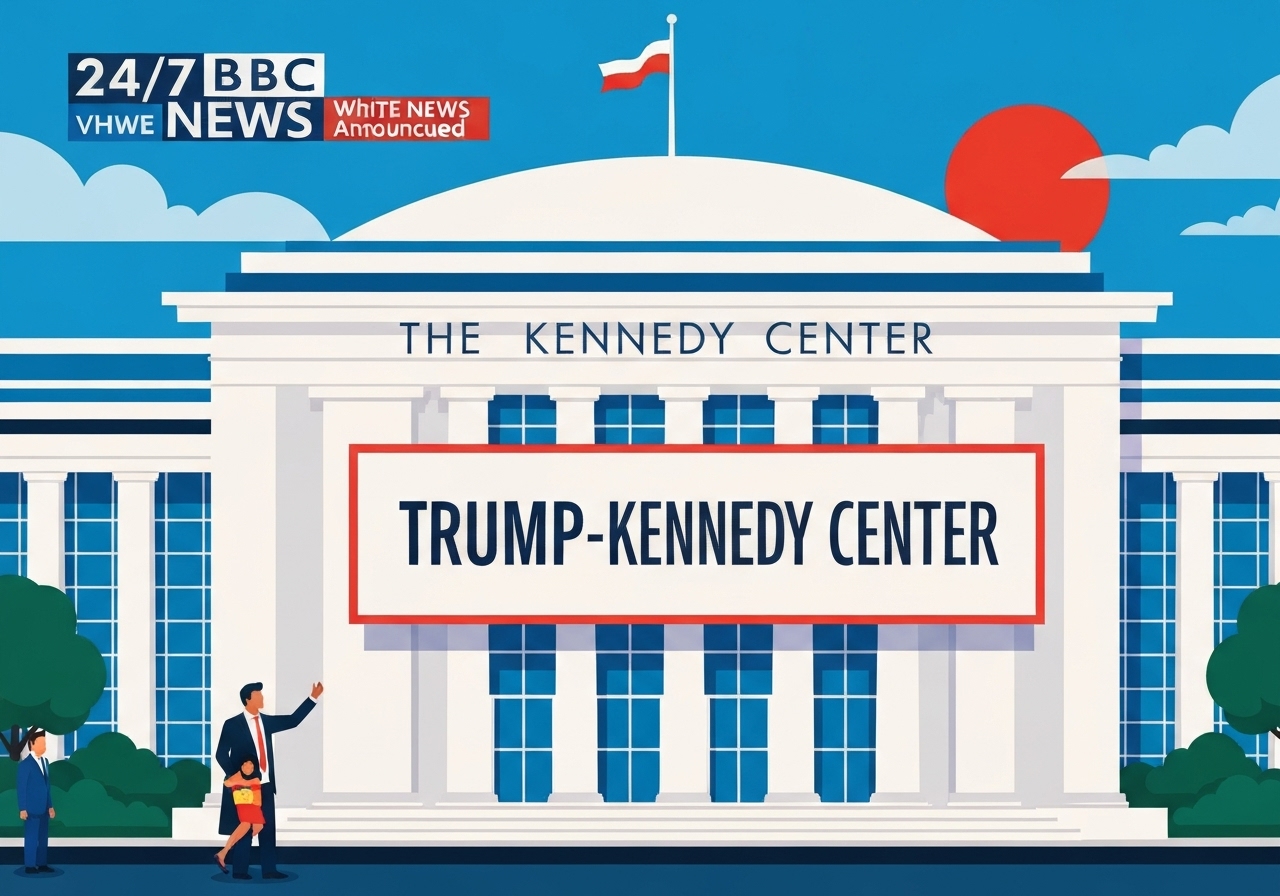
The White House announced that the Kennedy Center’s board voted to rename the national performing arts venue the “Trump-Kennedy Center,” a decision said to have been reached this week during a board meeting. Press Secretary Karoline Leavitt posted that the vote was unanimous and framed the change as recognition of President Trump’s role in funding and renovating the building. At least one board member disputed the unanimity, saying she was muted and prevented from speaking during the call. Legal experts and lawmakers note a 1964 law that named the center, meaning Congress would likely need to approve any formal renaming.
Key Takeaways
- The White House says the Kennedy Center board voted unanimously to rename the venue the Trump-Kennedy Center; the announcement was made on social media by Press Secretary Karoline Leavitt.
- Representative Joyce Beatty, a board member, contested the claim of unanimity, saying she was muted and unable to register opposition during the call.
- President Trump earlier fired the center’s board after taking office, installed allies as replacements and was made chairman; Richard Grenell was named board president.
- The administration secured roughly $257 million in congressional funding for renovations and related costs and recently used the venue for the FIFA World Cup draw.
- The Kennedy Center was authorized by Congress as a living memorial to John F. Kennedy following his 1963 assassination; the naming was included in a 1964 law.
- Some artists and presenters, including Lin-Manuel Miranda and others, canceled or postponed appearances after the board reshuffle; local outlets report lower ticket sales and subscriptions since the change in leadership.
- Legal and political questions remain: a statutory name established by Congress may require legislative action to change formally, even if signage or marketing is altered immediately.
Background
Work on a national performing arts center in Washington began in the 1950s. After President John F. Kennedy was assassinated in 1963, Congress decided the facility should serve as a living memorial and encoded the center’s name in a 1964 statute. Since its opening, the Kennedy Center has been an institutional and cultural landmark, hosting touring productions, national honors and international events.
Board governance has long been a mix of public appointees and private trustees, and Congressional authorization has given the center a distinctive public status. That status constrains some kinds of unilateral action because certain formal changes—especially those rooted in statute—usually require Congressional involvement. Over recent months the center’s leadership and programming have drawn heightened political attention and controversy after a reconstituted board took control.
Main Event
This week the White House publicized a board vote that it says was unanimous to add the president’s name to the Kennedy Center’s official title. Karoline Leavitt’s social posts framed the move as recognition of Trump’s role in preserving the facility, and President Trump described himself as “surprised” and “honoured” by the decision when speaking in the Oval Office.
Trump moved rapidly to replace the center’s board after taking office, dismissing existing members and appointing allies who then elevated him to chairman, according to the White House and reporting. Senior administration figures listed as current board members include Attorney General Pam Bondi, Chief of Staff Susie Wiles and Second Lady Usha Vance, among others; Richard Grenell has been named board president.
Not all trustees accept the characterization of a unanimous vote. Representative Joyce Beatty told colleagues she was muted during the call and said she could not voice opposition; she publicly stated the vote was not unanimous. Meanwhile, the White House claim that the board’s decision was binding collides with statutory questions: because the center’s name is specified in a 1964 law, many observers say Congress must act to change the formal, legal name.
The center has already been the site of high-profile events since the leadership change, including hosting the FIFA World Cup draw after the administration secured approximately $257 million to pay for renovations and other costs. Some artists canceled scheduled performances or declined invitations, and local reporting indicates a drop in ticket sales and subscriptions since the new board took over.
Analysis & Implications
If the board proceeds to alter branding and signage, the change could take effect in practical terms—on websites, tickets and facades—without immediate Congressional approval. However, the statutory name carries legal weight: federal law naming the building creates a clear locus for potential legislative or judicial challenge. Lawmakers who oppose the rename could introduce measures to block or reverse it, setting up a clash between the executive branch’s appointees and Congress.
The episode raises broader questions about political influence over cultural institutions. Critics argue that replacing trustees with political allies and then adjusting institutional identity amounts to partisan control of a national cultural monument. That risk may deter visiting artists, donors and audience members concerned about politicization, further depressing revenue and programming diversity.
On the other hand, the administration emphasizes renovation funding and operational rescue, pointing to $257 million in appropriations and recent high-profile events as evidence of improved stewardship. Supporters may argue that increased federal investment and attention can revitalize a landmark venue—but the reputational cost and the possibility of sustained boycotts or legal proceedings could offset short-term gains.
Comparison & Data
| Year / Moment | Key Detail |
|---|---|
| 1950s | Planning and construction of a national performing arts center began. |
| 1964 | Congress designated the center as a living memorial to John F. Kennedy in statute. |
| 2025 (this week) | Board announced a vote to rename the facility the Trump-Kennedy Center; White House claims unanimity; at least one trustee disputes that. |
| 2025 (recent) | Administration secured ~$257 million in federal funds for renovations and related costs. |
The timeline above frames the dispute between statutory naming and administrative action. While exact ticket sales and subscription figures were not released in the primary reporting, local outlets have reported declines since the board turnover; that trend is relevant for assessing financial and programming impacts should major performers continue to decline engagements.
Reactions & Quotes
White House spokespeople presented the vote as a unanimous expression of gratitude for presidential action to restore the center. Their announcements emphasized renovation funding and recent high-profile events as justification for changing the venue’s name.
“The board voted unanimously to make the change due to the unbelievable work President Trump has done over the last year in saving the building.”
Karoline Leavitt, White House Press Secretary (social post)
At least one board member publicly challenged the account of a unanimous decision, saying she was prevented from speaking during the meeting and therefore could not consent to the motion.
“This was not unanimous. I was muted on the call and not allowed to speak or voice my opposition to this move.”
Representative Joyce Beatty, Kennedy Center board member
President Trump framed his involvement as a rescue effort and emphasized his role in selecting honorees and overseeing the center’s recent activity.
“We saved it — it was really in bad shape, physically.”
President Donald Trump, Oval Office remarks
Unconfirmed
- Whether the board vote was in fact unanimous: the White House asserts unanimity but at least one trustee disputes that account.
- Claims that the Department of Defense was renamed the “Department of War” in September without Congressional approval are reported in some accounts but require independent confirmation.
- Details about the precise decline in ticket sales and subscriptions since the board change have been reported by local outlets but lack a centralized, publicly released dataset in the primary reporting.
Bottom Line
The announced rename of the Kennedy Center to the Trump-Kennedy Center underscores a new flashpoint in debates over political influence in cultural life: the administration points to federal funds and renovation as justification, while critics see partisan control of a national cultural institution. Because the center’s name is specified in a 1964 law, Congress is likely to be drawn into the dispute, and any formal, statutory change would probably require legislative approval.
In the near term, the change could appear in branding, tickets and signage, but legal and political pushback — from trustees, artists, the public and lawmakers — may affect programming, fundraising and public perception. Observers should watch for Congressional action, possible legal challenges, and any public statements from major performers or donors that could determine whether the rename takes practical effect or is reversed.
Sources
- BBC News (news media) — primary reporting on the board vote, statements and disputed unanimity.