
Lead
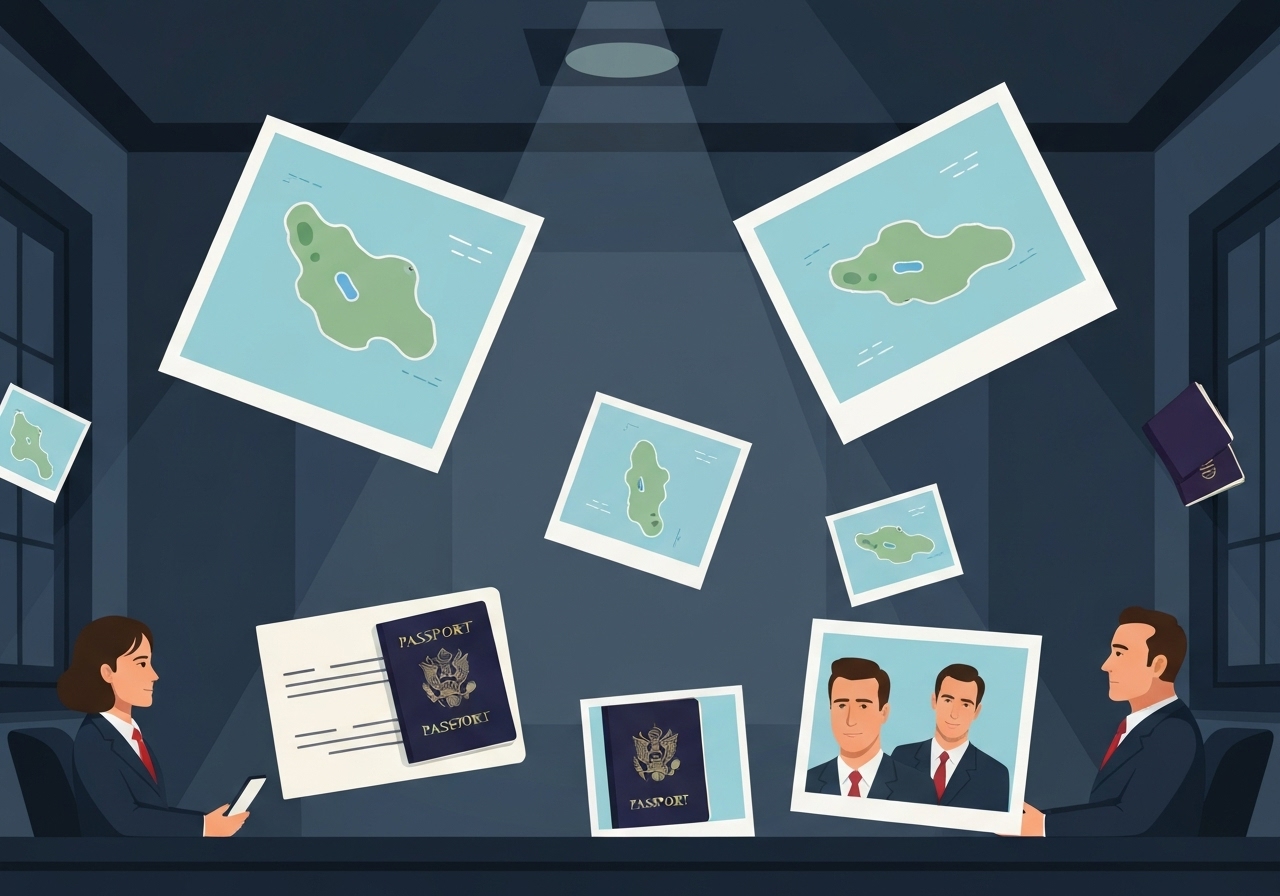
On 18 December 2023, Democrats on the US House Oversight Committee published a set of 68 photographs subpoenaed from Jeffrey Epstein’s estate, drawn from roughly 95,000 images the committee says it holds. The batch includes site plans for Great St James island, multiple passports (most redacted), screenshots of messages including the line “I will send u girls now,” and photos depicting public figures such as Bill Gates, Noam Chomsky and Steve Bannon. Committee Democrats said the images were released to provide a representative sample and transparency; Republicans accused them of selective disclosure. The Department of Justice is under a statutory deadline to release its broader Epstein-related files by 19 December.
Key takeaways
- Number of images released today: 68 photographs drawn from an estimated 95,000 images the Oversight Committee says it obtained from Epstein’s estate.
- Notable contents: passports and identity documents (many redacted), architectural/site plans for Great St James (161 acres; purchased by Epstein in 2016 for $22.5m), and a Christmas Day 2008 inmate request form.
- Messages and captions: a screenshot of WhatsApp-style messages includes “I will send u girls now” and a reference to “1000$ per girl.”
- Medical and personal items: one photo shows a medication bottle labelled “Phenazopyridine,” and several images show handwritten text on a person’s body with quotes from Nabokov’s Lolita.
- Public figures pictured: images include Bill Gates, Noam Chomsky and Steve Bannon; appearances in photos are not evidence of illegal conduct.
- Redactions and context: many images have faces or text blacked out; the committee says the estate provided no contextual notes for the files.
- Political and procedural timeline: release arrives the day before a DOJ deadline to provide broader files under a law signed earlier in December.
Background
The Oversight Committee subpoenaed Jeffrey Epstein’s estate in August and says it received roughly 95,000 images. Since that subpoena the committee’s Democratic members have periodically published batches of photos they describe as representative samples, while saying the estate supplied the material without accompanying explanatory notes or metadata. Republicans on the committee, which holds the majority, have repeatedly accused Democrats of selecting images strategically and applying targeted redactions to shape public perception.
Jeffrey Epstein was a convicted sex offender whose activities and network drew long-running criminal and civil inquiries; his properties included Little St James (acquired 1998) and the larger Great St James (acquired 2016 for $22.5m), the latter shown in the new images with development site plans. Congressional momentum this month produced a law requiring the Department of Justice to disclose government files related to Epstein’s investigations by 19 December, intensifying scrutiny on what both Congress and the public will now be able to review.
Main event
The 68 photos released include a wide array of material: passports and identity documents from multiple countries (names redacted), building and dock plans for Great St James island, screenshots of message chains, intimate or staged portraits, and images of household and medical items. Several passports shown are marked female and linked to countries such as Russia, Lithuania, Ukraine, Czech Republic and South Africa; the majority of identifying details have been blacked out by the releasing committee.
One screenshot in the set contains a short message chain from an unknown sender that includes the line “I will send u girls now” and an earlier message referencing “1000$ per girl” and a “friend scout.” The origin, recipient and full context of that chain remain unestablished in the files as released. Other images display handwritten passages from Nabokov’s Lolita on an individual’s skin; the photographs do not indicate whether the writing appears on one person or multiple people, or the circumstances in which the images were taken.
Photographs of Great St James drawings show a detailed site plan annotated in red pen and a notes column labeling proposed structures—multiple homes, offices and a pool—and docks. The plan references Pillsbury Sound and appears to be part of a portfolio of nine construction or site drawings. An inmate request form dated 25 December 2008 (Christmas Day) is also among the images and contains redactions of name and birthdate; its handwritten message references Paris and Dubai and includes the phrase “I love you.”
The release includes images that depict Epstein alongside several well-known figures. Two images show Epstein with Noam Chomsky, two show Bill Gates standing with women whose faces are blacked out, and others show Steve Bannon in what appear to be social settings. Democrats framed the release as transparency; Republicans reiterated accusations of cherry-picking and partisan editing. The Oversight Democrats said the photographs were presented “as received,” noting they had removed personally identifiable information for suspected victims or where victim status was unknown.
Analysis & implications
Politically, the timed release heightens pressure on the Department of Justice to comply with the statutory deadline and to disclose the broader corpus of documents and evidence it holds. House Democrats present the drops as a transparency measure intended to prod the DOJ; Republicans view such releases as partisan narrative-shaping. The immediate practical effect is a surge in public attention and media scrutiny that may complicate the DOJ’s presentation of investigatory material if context remains sparse.
Legally and investigatively, photographs without corroborating metadata or chain-of-custody notes are limited as standalone evidence. Images can identify locations and suggest networks, but proving criminal conduct requires witness testimony, transaction records, travel logs, contemporaneous communications and forensic corroboration. Courts and investigators are likely to treat this batch as leads that must be confirmed through those traditional channels rather than as dispositive proof.
For victims and privacy considerations, the committee’s redactions indicate an effort to shield personally identifiable information and protect survivors, but the public release of graphic or intimate images—even redacted—raises ethical concerns. Media organisations and investigators must balance transparency with harm-minimisation, since uncontextualised images can retraumatise survivors or produce misleading public narratives.
Internationally, the presence of passports from multiple countries points to transnational movement of people associated with Epstein’s network; investigators will need to coordinate with foreign authorities to follow travel patterns, visa records and consular documentation. The site plans for Great St James also renew attention on Epstein’s property holdings as potential loci for further inquiry into who visited, when, and under what circumstances.
Comparison & data
| Item | Count / detail |
|---|---|
| Images released today | 68 |
| Total images reportedly held by committee | ~95,000 |
| Great St James island | 161 acres; purchased 2016 for $22.5 million |
| Notable date in images | Christmas Day request form dated 25 December 2008 |
The table places the latest drop in context: 68 images are a small fraction of the committee’s stated holdings. While the island purchase price and acreage are fixed factual items, the number of images released to date versus remaining files may change as the committee or DOJ discloses more material. The figures show why the committee calls the sets “representative samples” rather than comprehensive releases.
Reactions & quotes
“These new images raise more questions about what exactly the Department of Justice has in its possession,”
Robert Garcia, Top Democrat, House Oversight Committee
Garcia’s remark frames the drop as a prompt for the DOJ to make its files public under the recently passed transparency measure. Democrats said the release was intended to provide public insight while protecting possible victims’ identities.
“Photos were selected to provide the public with transparency into a representative sample of the photos received from the estate,”
Oversight Committee Democrats (statement)
The committee statement emphasised that the estate provided images without context and that Democrats redacted personally identifying details for victims or where victim status was unclear.
“I made a huge mistake in my association with Jeffrey Epstein,”
Bill Gates (past statement to media)
Gates has previously acknowledged social interactions with Epstein and called those interactions a mistake; the new photos add to the public record of people who had contact with Epstein, without indicating criminality.
Unconfirmed
- Who authored or received the WhatsApp-style messages in the screenshot and who “J” refers to are not established from the released images.
- Whether the handwritten Lolita quotations were written on the same person or multiple individuals remains unclear from the photos alone.
- Passports shown are redacted; whether they indicate trafficking, coerced travel, or innocent possession cannot be determined without corroborating documentation.
- The selection criteria used by Democrats beyond describing the set as a “representative sample” have not been fully disclosed, leaving questions about how images were chosen.
Bottom line
The 68 photographs released by House Democrats add new visual material to an already large corpus of files tied to Jeffrey Epstein, but they do not by themselves establish criminal conduct by those pictured. The images underscore the complexity of investigating a sprawling network that spans properties, travel, and international documents; they also intensify political pressure on the Department of Justice to release its broader files by the statutory deadline of 19 December.
Readers should treat the images as leads rather than conclusions: investigators and journalists will need to combine these photographs with travel records, communications, witness testimony and forensic data to build a clearer, evidentiary account. In the meantime, transparency demands careful balancing with privacy and due process so that public understanding advances without amplifying unverified or harmful claims.