
Lead
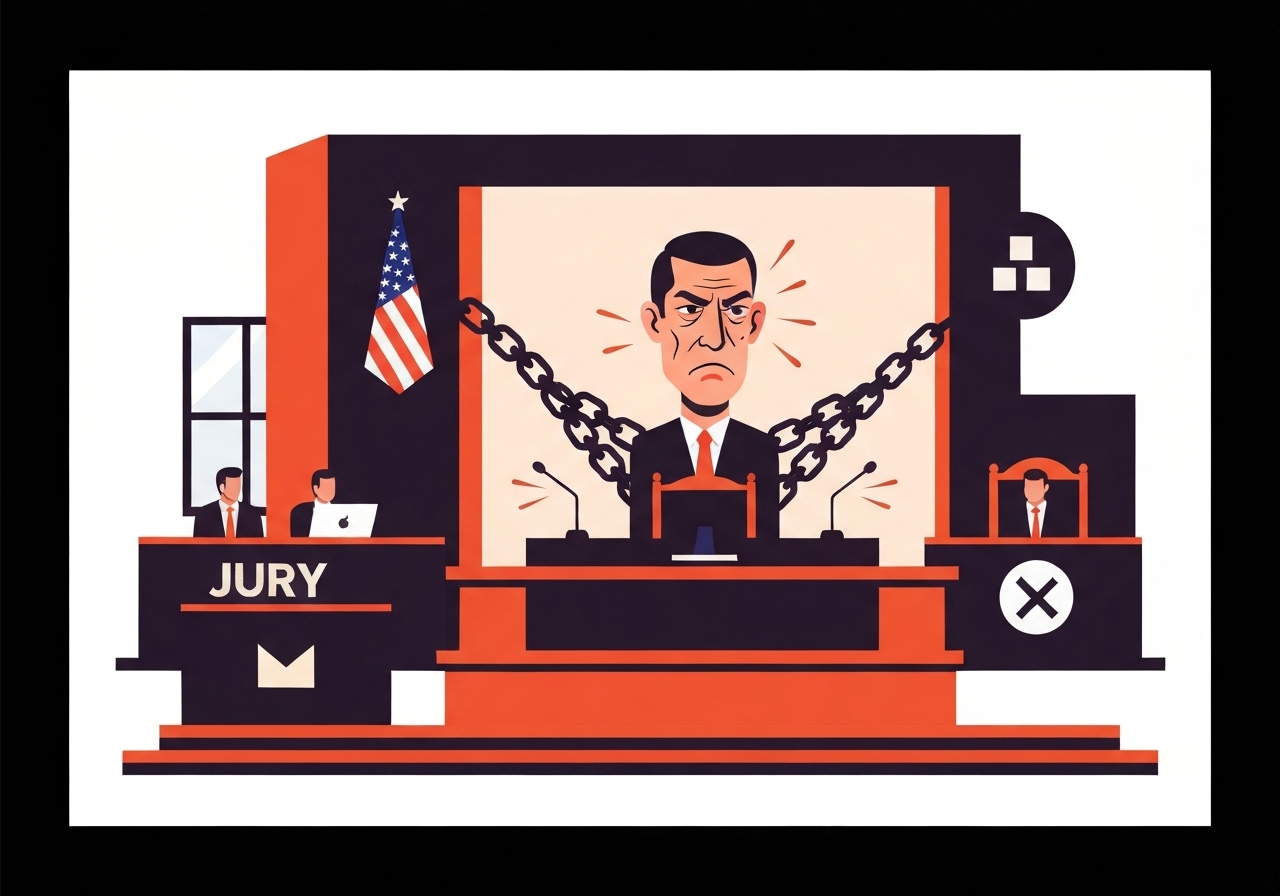
On Dec. 18, 2025, a Wisconsin state judge, Hannah C. Dugan, was convicted of obstructing federal agents after prosecutors said she guided a man away from officers waiting outside a courthouse courtroom. The jury found Dugan guilty of the obstruction charge but acquitted her of a lesser count of concealing a person from arrest. The conviction carries up to five years in prison and likely renders her ineligible to remain a judge under the Wisconsin State Constitution. The trial exposed sharp disagreements over judges’ authority and how to handle Immigration and Customs Enforcement (ICE) activity in local courthouses.
Key Takeaways
- Judge Hannah C. Dugan was convicted on Dec. 18, 2025, of obstructing federal agents during an incident in a county courthouse; she faces up to five years in prison.
- The jury acquitted Dugan of a separate, less serious charge of concealing a person from arrest, leaving a mixed verdict.
- Prosecutors argued Dugan knowingly interfered with agents who were waiting to take an undocumented immigrant into custody outside the courtroom.
- The defense said Dugan was exercising broad judicial authority amid unclear courthouse guidance about ICE encounters and recent arrests within the facility.
- Because a felony conviction likely disqualifies her from holding judicial office under the Wisconsin Constitution, Dugan is probably ineligible to remain a judge pending appeal or post-conviction review.
- The case is a high-profile example of tensions between local court operations and federal immigration enforcement in recent months.
- The trial began on Monday of the same week and centered on competing narratives over intent, procedure and courtroom authority.
Background
In recent months, several jurisdictions have reported ICE officers conducting arrests in or near courthouses, prompting confusion and pushback from local court officials. Wisconsin county courthouses, like facilities elsewhere, grappled with how to balance federal enforcement with court safety and access to justice. Local leaders issued guidance intended to regulate interactions with federal agents, but prosecutors at trial said those rules did not authorize obstructing a lawful arrest.
Hannah C. Dugan had presided over matters in the county courthouse where agents began making arrests, and courtroom staff testified that policies on ICE access were evolving as arrests increased. The Justice Department pursued the case as a demonstration that officials who obstruct federal officers—even judges—can be held criminally accountable. Defense lawyers said Dugan acted within the traditional scope of judicial discretion and faced an unprecedented, unclear operational environment.
Main Event
Prosecutors described a moment when federal agents were stationed outside a courtroom preparing to take custody of a man they believed to be undocumented. According to the prosecution, Judge Dugan escorted or directed the individual to a side door, away from agents waiting in the corridor, which they characterized as intentional interference with a federal arrest. Witness testimony focused on precise movements, spoken instructions and the sequence of events inside the courthouse hallway.
The defense countered that Dugan was exercising routine courtroom control and responding to a chaotic situation without clear guidance from courthouse administration. Counsel argued she sought to preserve order and protect the proceedings, not to obstruct justice. Several witnesses testified about prior courthouses interactions with ICE that had unsettled court staff, reinforcing the defense contention that officials were operating amid unclear rules.
In closing arguments, prosecutors framed the conduct as a deliberate decision to place personal views on immigration above the law. Defense attorneys maintained Dugan acted in good faith as a judge managing her courtroom and following ambiguous local protocols. The jury ultimately convicted on obstruction but cleared her on the concealing charge, a narrower count that would have required showing she hid the person to prevent arrest.
Analysis & Implications
The conviction raises immediate legal and institutional questions. Practically, a felony conviction likely triggers removal from the bench under Wisconsin law, setting up appeals and potential constitutional litigation over how and when a sitting judge can be prosecuted for courtroom decisions. The case could prompt internal reviews of courthouse policies nationwide and clearer protocols for interactions with federal immigration agents.
Politically and socially, the verdict spotlights the fraught intersection of local judicial independence and federal immigration enforcement. Supporters of Dugan will likely argue the case chills judicial discretion and could deter judges from managing sensitive courtroom encounters for fear of criminal exposure. Critics will argue that no official is above the law and that obstructing federal officers cannot be justified by policy disagreements.
For the Justice Department, the conviction is a high-profile win that may be used to deter similar conduct by other public officials. For local court systems, the ruling underscores the need for explicit, accessible guidance about coordination with federal agents to avoid both improper obstruction and unnecessary deference that compromises court operations or public safety.
Comparison & Data
| Charge | Outcome | Maximum Penalty |
|---|---|---|
| Obstructing federal agents | Convicted (Dec. 18, 2025) | Up to 5 years in prison |
| Concealing a person from arrest | Acquitted | Less serious felony/misdemeanor range (varies by statute) |
The table summarizes the core legal outcomes and statutory exposure as presented at trial. While obstruction carries a defined federal sentencing exposure, actual punishment will depend on sentencing guidelines, any prior record, the judge’s role and mitigation offered at sentencing. The acquittal on the concealing count narrowed the jury’s findings about intent and concealment specifics.
Reactions & Quotes
“Common sense tells you that the defendant knew what she was doing was wrong, and she did it anyway,”
Kelly Brown Watzka, federal prosecutor
The prosecutor framed the conduct as willful interference with federal officers during a lawful arrest, arguing the judge followed personal preferences rather than the law.
“She never acted corruptly in doing her job as a judge in the middle of a stressful, new and confusing situation,”
Jason Luczak, defense attorney
The defense emphasized chaotic courthouse conditions and argued Dugan acted within her judicial authority and without corrupt intent, urging acquittal or leniency.
“This is a moment for courts and local governments to set clearer rules on how to handle federal immigration actions on court premises,”
Legal scholar on judicial-administration issues
Observers noted the broader administrative implications for courthouse policy and encouraged clearer, uniform guidance to prevent similar disputes.
Unconfirmed
- Whether courthouse leadership gave explicit, contemporaneous written instructions to Judge Dugan about ICE interactions at the moment of the incident is unclear and was contested in testimony.
- The full extent to which similar conduct has occurred in other Wisconsin courthouses but not resulted in prosecution remains unverified.
Bottom Line
The conviction of Judge Hannah C. Dugan is a consequential legal outcome that underlines tensions between judicial autonomy and the rule of law when federal agents operate in local courthouses. It signals that prosecutors are willing to pursue criminal charges against public officials whose actions are judged to cross legal lines, even within a courtroom context.
Readers should watch for appeals and any administrative moves by Wisconsin authorities regarding Dugan’s status on the bench, as well as broader policy responses from court administrators seeking clearer protocols for interactions with federal immigration enforcement. The case will likely shape both legal precedent and practical courthouse policies in the months ahead.