
Lead
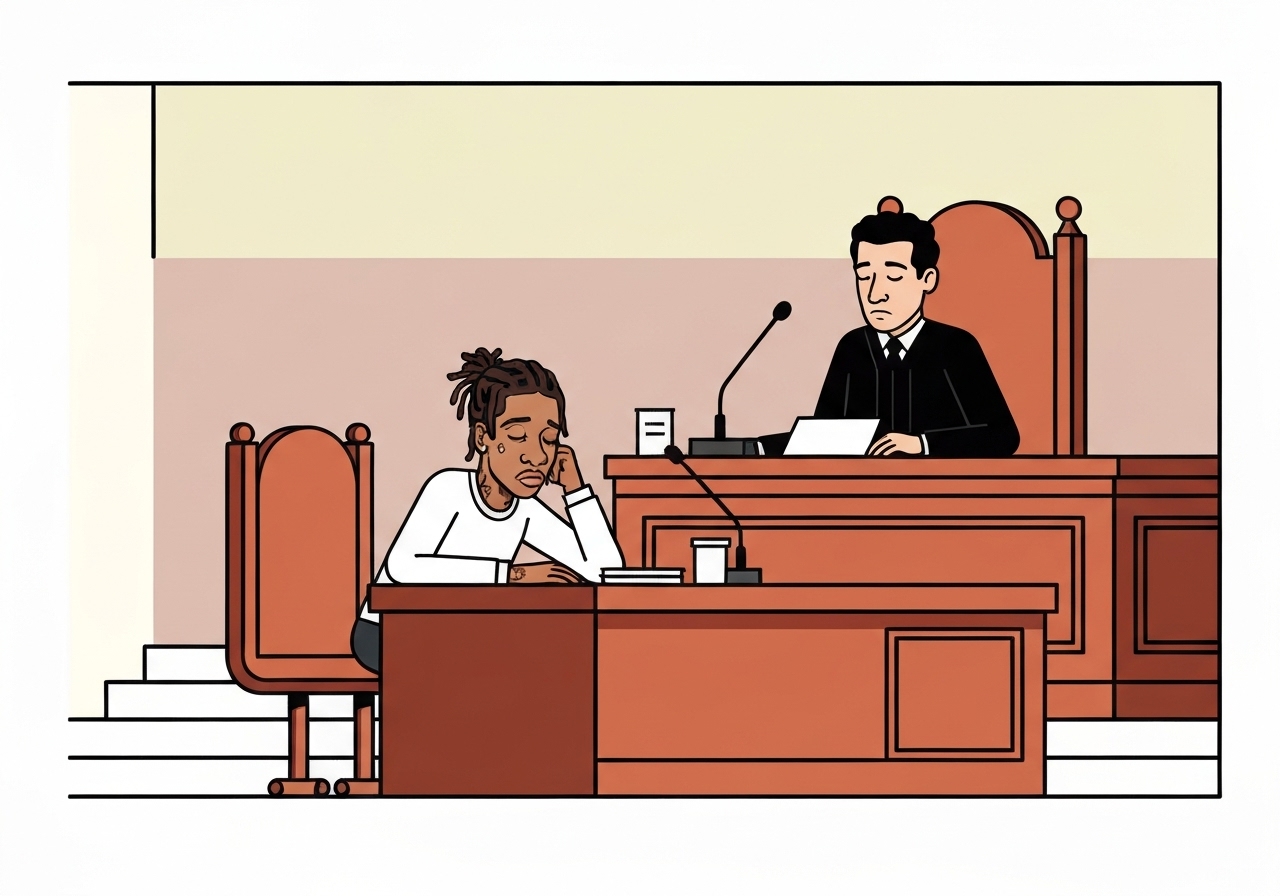
On Dec. 18, 2025, a Romanian appeals court in Constanța sentenced U.S. rapper Wiz Khalifa (born Cameron Jibril Thomaz) to nine months in jail for possession of cannabis, finalizing a case that began after a July 2024 festival incident. Romanian authorities say police stopped Khalifa after he smoked on stage at the Beach, Please! Festival in Costinești and found more than 18 grams of cannabis in his possession. A lower court had earlier fined him 3,600 lei (about $830) in April, but prosecutors appealed seeking a custodial sentence. It is not yet clear whether Romanian officials will seek extradition or how the sentence will be enforced for a U.S. citizen who does not reside in Romania.
Key Takeaways
- On Dec. 18, 2025 the Constanța Court of Appeal handed Wiz Khalifa a nine-month jail term for possession of dangerous drugs for personal consumption.
- Police stopped Khalifa in July 2024 at the Beach, Please! music festival in Costinești after he reportedly smoked onstage; authorities say more than 18 grams of cannabis were recovered.
- A lower court in Constanța County imposed a 3,600 lei (≈$830) fine in April 2025; prosecutors appealed for a harsher sentence and won at the appellate level.
- Romanian law criminalizes possession of cannabis for personal use, with statutory penalties of three months to two years in prison or a fine.
- Khalifa is a U.S. citizen and does not live in Romania; Romanian authorities have not confirmed whether they will seek an extradition request.
Background
Romania maintains some of the stricter drug statutes in the European Union, where possession of certain controlled substances—cannabis included—can be treated as a criminal offense rather than an administrative matter. The legal framework allows courts to impose short custodial sentences or fines for personal use; that statutory range for cannabis possession is three months to two years. In this legal climate, prosecutors appealed an earlier, lighter sanction after concluding the April fine did not reflect the seriousness of the offense.
The case stems from a July 2024 incident at the Beach, Please! Festival in the Costinești resort on Romania’s Black Sea coast, where local police say they intervened after festival staff or onlookers reported visible smoking on stage. Khalifa, who rose to fame with the mixtape Kush + Orange Juice and is known for performing hits like “Young, Wild & Free,” was identified and charged under Romanian criminal statutes. The Constanța County proceedings moved from an initial fine to an appellate conviction over the course of more than a year.
Main Event
Romanian police allege that during a July 2024 performance Khalifa smoked a large hand-rolled cigarette while on stage and that officers later located over 18 grams of cannabis in his possession. Prosecutors brought a charge described in the court record as “possession of dangerous drugs, without right, for personal consumption,” a finding the Constanța Court of Appeal affirmed on Dec. 18, 2025. The appellate court’s decision is described by Romanian outlets as final, meaning domestic appeals are exhausted.
At the earlier trial in April, a local court opted for a criminal fine of 3,600 lei (about $830) rather than imprisonment. Prosecutors contested that outcome, arguing the appellate panel should impose a custodial sentence consistent with statutory ranges. The appeals court agreed, converting the case outcome to a nine-month jail term while marking the decision as definitive under Romanian procedure.
Officials have not publicly outlined next steps regarding enforcement. Because Khalifa is an American citizen who does not live in Romania, options include service of the sentence in Romania, negotiation of a transfer, or pursuit of extradition — the latter of which, if contemplated, would require legal and diplomatic processes that have not been announced. U.S. authorities have not released statements on any cooperation or request linked to the ruling.
Analysis & Implications
The ruling underscores the practical differences between national drug policies in Europe: possession that many jurisdictions handle as an administrative offense can carry criminal penalties in Romania. That legal divergence creates heightened risk for foreign performers who may be unaware of local enforcement practices or the potential for prosecutorial appeals after an initial sanction. For international acts, the decision is a reminder to secure informed legal counsel and to comply with host-country laws.
Politically and diplomatically, the case could prompt quiet discussions between Romanian and U.S. officials if authorities seek enforcement against a nonresident U.S. national. Extradition is legally possible under bilateral and EU frameworks but is politically sensitive, time-consuming and uncommon for short, non-violent drug sentences. If no extradition request is made, the practical effect may be limited to reputational and travel considerations for the artist.
Economically, the decision may prompt festival organizers and promoters to tighten event policies and backstage procedures to reduce legal exposure for performers and staff. Promoters could increase coordination with local counsel and police to avoid incidents that might trigger criminal proceedings, which can carry greater costs than fines, including litigation, travel disruption and reputational damage.
Comparison & Data
| Item | Value |
|---|---|
| Appellate sentence | 9 months imprisonment |
| Amount reportedly seized | More than 18 grams cannabis |
| Lower-court penalty (April) | 3,600 lei (≈$830) fine |
| Romanian statutory range (possession) | 3 months to 2 years in prison, or fine |
The table summarizes the case’s central numeric facts and the applicable legal range under Romanian law. These figures show the appellate outcome moved the result from a monetary penalty to a custodial term within the statutory band for personal possession.
Reactions & Quotes
Romanian media and the national news agency framed the appellate finding using the legal charge recorded in court documents, while U.S.-based outlets republished the report from The Associated Press. Below are short, contextual excerpts from those public reports.
“Possession of dangerous drugs, without right, for personal consumption.”
Agerpres (Romanian national news agency)
This phrase summarizes the criminal count the court applied; Agerpres reported the appellate court’s wording when describing the conviction and the finality of the decision.
“Possession of cannabis for personal use is criminalized and can result in a prison sentence of between three months and two years, or a fine.”
ABC News (reporting the Associated Press)
That description—reproduced in English-language reporting—captures the statutory penalty range that frames the court’s discretion when moving from a fine to imprisonment.
Unconfirmed
- Whether Romanian authorities will formally request extradition from the United States is not confirmed and has not been announced by prosecutors or foreign ministries.
- It is unclear whether the sentence will be served in Romania, transferred to the United States under a prisoner-transfer agreement, or suspended pending further legal steps; no court documents made that disposition public at the time of reporting.
Bottom Line
The Dec. 18, 2025 appellate ruling converts an earlier fine into a nine-month custodial sentence for Wiz Khalifa under Romanian law after a July 2024 festival incident involving onstage smoking and the recovery of more than 18 grams of cannabis. The case highlights how national legal regimes can produce markedly different consequences for the same conduct and emphasizes the potential exposure foreign performers face when traveling for events.
Practical outcomes now hinge on procedural follow-ups that have not been disclosed publicly: whether Romanian authorities will pursue enforcement actions across borders, whether transfers or diplomatic negotiations will occur, and how promoters and performers will respond to reduce future risk. For readers, the ruling is a reminder to weigh local laws and enforcement practices when planning international appearances.