
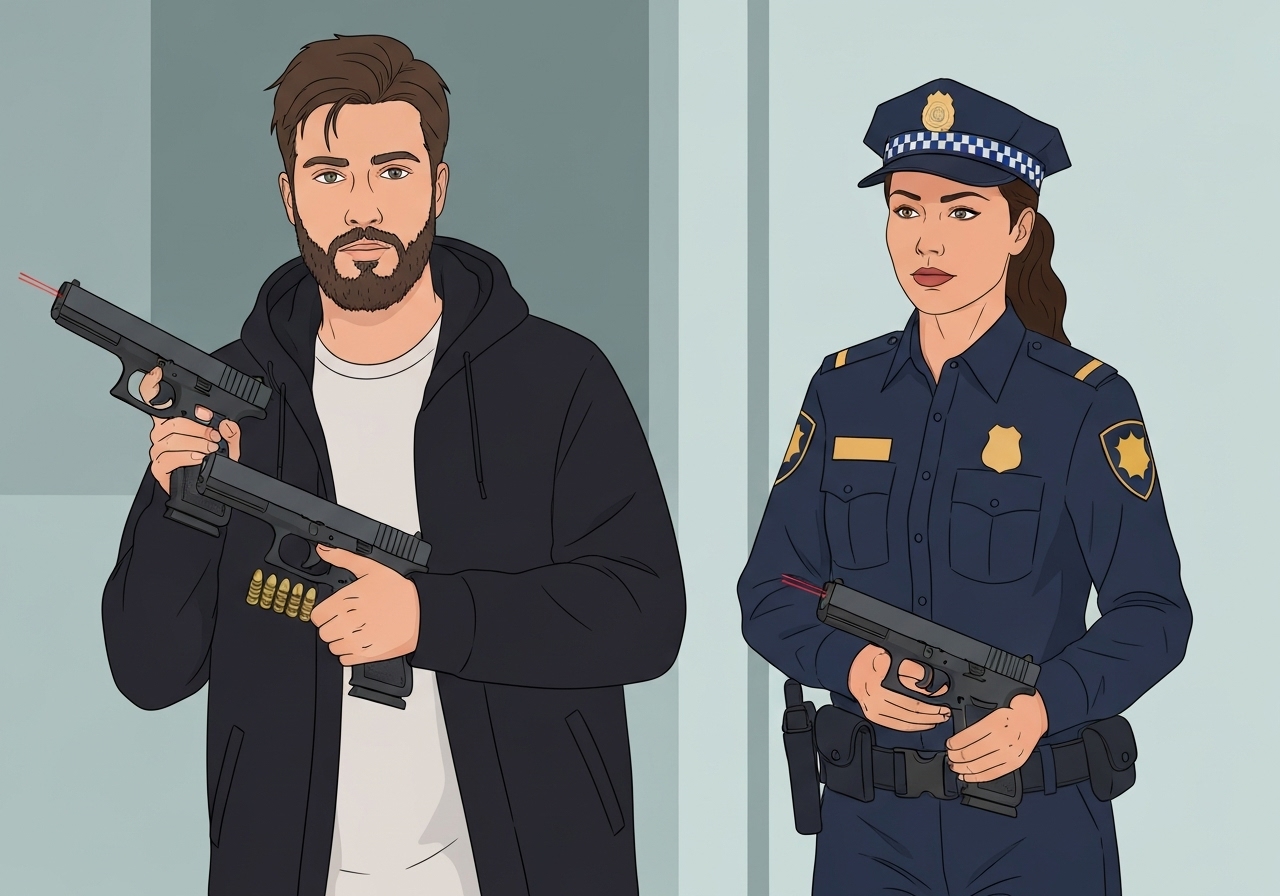
On Dec. 13, investigators say a gunman opened fire in a Brown University lecture hall in Providence, killing two students and wounding nine. Two days later an MIT professor, Nuno F.G. Loureiro, was shot to death at his Brookline home. Federal officials later linked both scenes to the same suspect and found him dead in a Salem, New Hampshire, storage unit; authorities recovered two 9mm Glock pistols with green laser sights, five magazines holding nearly 200 rounds, and close to $900 in cash. Law enforcement said the combination of weapons, ammunition and equipment raised urgent concerns that the attacker may have intended additional targets.
- Two shootings were linked: a Dec. 13 attack at Brown University (two killed, nine wounded) and the Dec. 15 fatal shooting of MIT professor Nuno F.G. Loureiro in Brookline, Massachusetts.
- Suspect identified as Claudio Manuel Neves Valente, 48; found dead in a Salem, N.H. storage unit; cause of death ruled a self-inflicted gunshot wound.
- Two 9mm Glock pistols recovered at the storage unit have been tied by ballistic matches to the Brown and Brookline scenes, the FBI reported.
- Investigators recovered five magazines with nearly 200 rounds and green laser sights; additional ammunition and body armor were found in the suspect’s vehicle.
- A rapid DNA test produced a preliminary match between remains and DNA recovered at the Brown crime scene, per the FBI.
- Three USB thumb drives were recovered from the suspect’s car and are under forensic review for motive-related evidence; contents have not been publicly disclosed.
- Federal agents conducted a multi-state manhunt across four New England states and posted teams at Boston and Hartford airports while the investigation was active.
Background
The shootings occurred amid heightened concerns about targeted campus and academic violence. Brown University and MIT share overlapping academic communities, and both institutions confirmed the suspect and one victim had previously attended the same engineering program in Lisbon, Portugal. The suspect had enrolled in Brown’s physics Ph.D. program around 2000 but left after less than a year; school officials say he later did not remain on campus.
Campus shootings and attacks on academics are rare but carry outsized repercussions for university safety policies and regional law enforcement coordination. In this case, local police partnered with federal investigators, including the FBI and the U.S. Attorney’s Office for the District of Massachusetts, to combine ballistic, DNA and digital forensics. The multi-jurisdiction response reflected both the cross-state locations of the crimes (Rhode Island, Massachusetts, New Hampshire) and the rapid development of evidence tying the scenes together.
Main Event
On Dec. 13, a shooter opened fire inside a lecture hall at Brown University in Providence, killing two students and injuring nine others, according to university and police accounts. Authorities initially treated the incident as an active investigation and began searching for a suspect who had fled the scene. Two days later, on Dec. 15, MIT professor Nuno F.G. Loureiro was found fatally shot at his Brookline residence, prompting investigators to assess links between the two attacks.
By Thursday evening of the following week, federal and state investigators located a body in a storage unit in Salem, New Hampshire. The New Hampshire Attorney General’s Office said the individual, later identified as Claudio Manuel Neves Valente, was deceased and that an autopsy suggested he had died approximately two days earlier. Officials recovered two handguns in the unit and additional evidence in a nearby vehicle.
Ballistics testing conducted by the FBI linked one pistol to shell casings at the Brown scene and the other to evidence from the Brookline home. A rapid DNA screen also returned a preliminary match between the remains and DNA found at Brown. Investigators reported finding roughly five magazines with almost 200 rounds across the storage unit and vehicle, green laser sights on the firearms, extra ammunition in the car and body armor—factors law enforcement described as indicating premeditation.
Analysis & Implications
The combination of ballistic matches, DNA linkage and physical equipment suggests the two attacks were carried out by the same individual and that the incidents were planned rather than impulsive. The presence of nearly 200 rounds, laser aiming devices, body armor and multiple firearms is consistent with an assailant prepared for multiple engagements or a prolonged event. That inventory also prompted investigators to treat the case as potentially part of a broader plot until motive and target selection could be clarified.
Officials emphasized the uncertainty about motive. Although the suspect and one victim shared a prior academic affiliation in Lisbon, investigators have not confirmed a motive tying that connection to the killings. The lack of an immediately apparent motive complicates both criminal analysis and public messaging, leaving institutions to balance transparency with the need to protect investigative integrity.
Operationally, the case highlights how local, state and federal agencies must coordinate rapidly across state lines when violent incidents cross jurisdictions. The fast mobilization to search airports and overlay suspect movement with vehicle plate data reflects expanded investigative playbooks post-2010s campus attacks. For universities, the episodes will likely prompt renewed scrutiny of access controls, emergency alert systems and faculty safety protocols.
Comparison & Data
| Item | Brown (Dec. 13) | Brookline/MIT (Dec. 15) |
|---|---|---|
| Fatalities | 2 students | 1 professor |
| Injuries | 9 injured | 0 additional reported |
| Weapon linkage | Pistol A (ballistics match) | Pistol B (ballistics match) |
| Ammunition recovered | Shell casings at scene | Shell casings at scene |
The table summarizes publicly reported forensic links and casualty counts. Ballistic teams matched two different pistols recovered from the storage unit to each crime scene separately, which is a less common pattern than a single firearm used across multiple attacks. That distinction may inform investigators’ reconstruction of timelines and movements.
Reactions & Quotes
“We had no idea if he had a hit list and these were just the first two stops on his tour.”
Leah Foley, U.S. Attorney for the District of Massachusetts
Foley made the remark while describing the urgency of the multi-state search and investigators’ concern about potential additional targets. She later characterized the suspect’s actions and preparation as deliberate.
“Preliminary ballistic and DNA tests link the weapons and remains to the two separate scenes.”
FBI Boston (statement)
The FBI confirmed that ballistics tied each recovered pistol to evidence from the Brown and Brookline crime scenes and reported a preliminary DNA match to the Brown scene.
“He had enrolled in Brown’s physics program in 2000 but left after less than a year.”
Brown University (institutional statement)
University officials supplied background on the suspect’s prior enrollment and said campus support services were activated after the attack to assist students and staff.
Unconfirmed
- Whether the suspect maintained an explicit “hit list” naming further targets remains unverified and investigators have not publicly produced such a document.
- The motive for selecting Brown and Professor Loureiro has not been established; links to prior acquaintanceship do not equal a confirmed motive.
- Contents of the three USB drives recovered from the suspect’s vehicle have not been disclosed and any potential manifestos or target lists have not been confirmed.
Bottom Line
Federal and local authorities say forensic evidence links two violent episodes in New England to a single suspect who was heavily armed and appeared prepared for further action. Whether additional targets existed or why these particular individuals were chosen remains under investigation. The events have intensified scrutiny of safety on campuses and the mechanisms for interagency response across state lines.
In the near term, investigators will continue forensic work on digital devices, complete confirmatory DNA analyses and review the suspect’s movements and communications to build a clearer picture of motive and planning. For communities and institutions affected, the case underscores the difficult balance between open academic life and robust security measures.