
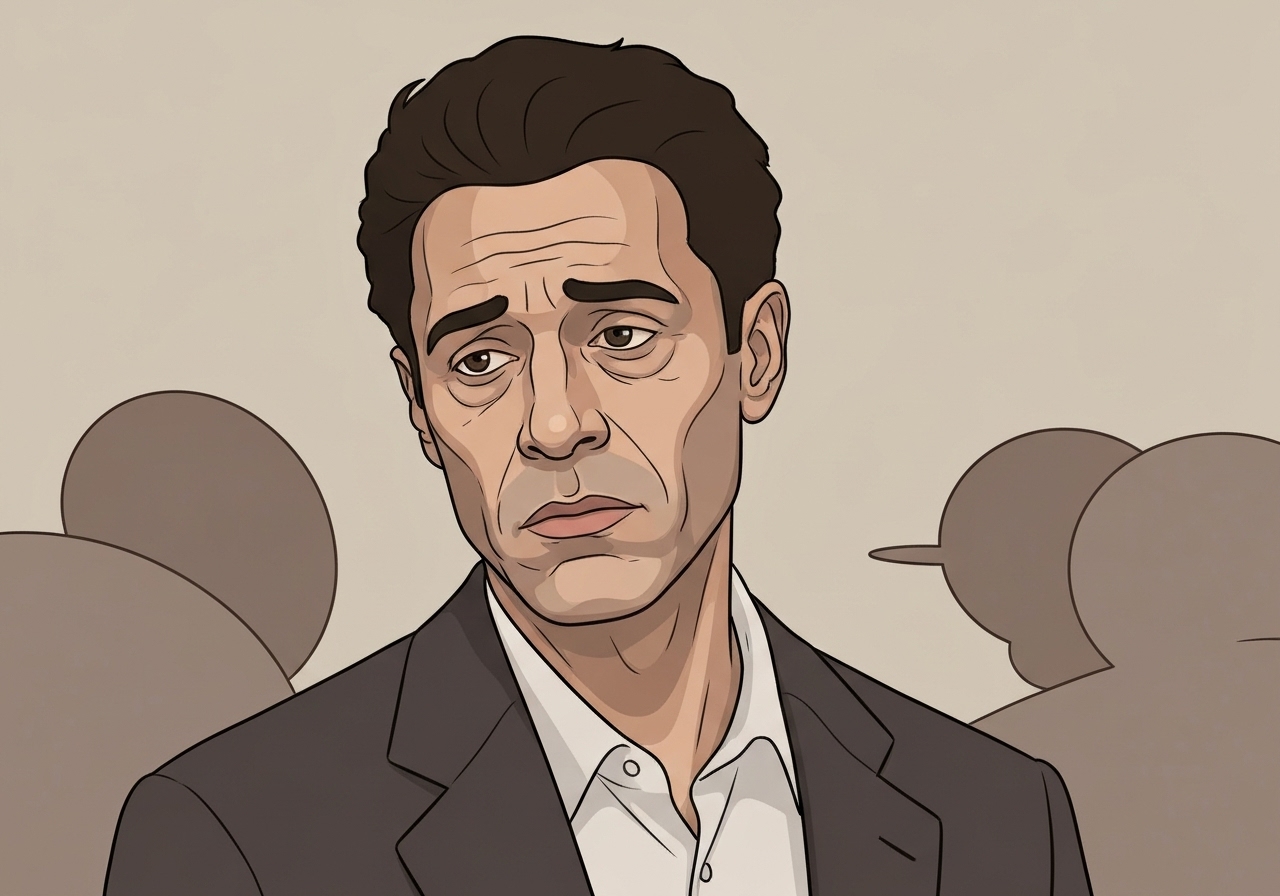
Actor James Ransone, 46, died Friday in Los Angeles in what the Los Angeles County Medical Examiner described as an apparent suicide. Ransone rose to prominence for his portrayal of Ziggy Sobotka on HBO’s The Wire and later as Eddie Kaspbrak in the 2019 film It: Chapter Two. His career spanned film and television projects including Generation Kill, Bosch and the Sinister and Black Phone franchises; his final credited TV appearance was a Season 2 episode of Poker Face that aired in June, according to The Movie Database (TMDB). Family members and representatives had not issued a public statement at the time of reporting.
Key Takeaways
- Age and determination: James Ransone was 46 at the time of death; the LA County Medical Examiner identified the death as an apparent suicide.
- Signature roles: He was best known as Ziggy Sobotka on The Wire and Eddie Kaspbrak in It: Chapter Two, with notable film credits including Sinister, Tangerine, Mr. Right and the Black Phone series.
- Recent work: Ransone’s final television credit was a Season 2 episode of Poker Face that aired in June 2024, per TMDB.
- Personal history: In a 2016 Interview Magazine conversation he described difficult adolescence, attendance at an arts high school, film school struggles, a multi-year heroin addiction and sobriety around age 27.
- Survivors: He is survived by his wife, Jamie McPhee, and their two children.
- Reporting status: NBC News contacted Ransone’s representatives but had not received an immediate response.
Background
James Ransone built a steady career as a character actor across prestige television and genre films. He first gained wide attention for his portrayal of Ziggy Sobotka on HBO’s critically acclaimed series The Wire, a role that remains a touchstone of his early career. Over the next two decades he moved between supporting and leading parts in independent dramas and mainstream horror franchises, building a reputation for intense, textured performances.
Ransone’s personal history informed much of his public narrative: he spoke openly about struggling in conventional schools, finding refuge in an arts high school, and later dropping out of film school in New York. He also discussed a period of heroin addiction in his twenties and a decision to pursue sobriety; he said that recovery and subsequent roles such as Generation Kill were formative for his outlook.
Main Event
The Los Angeles County Medical Examiner reported Friday that Ransone’s death was being treated as an apparent suicide. Local authorities and medical examiners typically release preliminary findings after an incident pending toxicology and administrative reviews; NBC News cited the ME’s initial determination in its reporting. No detailed public statement from the actor’s family or his representatives had been published at the time of the ME’s preliminary report.
Ransone continued working in both film and television through 2024. Credit databases list a string of roles across genres: he appeared in high-profile horror projects (the Sinister franchise and Black Phone), the indie Tangerine, and he had recurring TV parts on shows such as Bosch and Generation Kill. His performance in It: Chapter Two brought him additional mainstream visibility in 2019 as part of a widely distributed horror sequel.
Industry colleagues and collaborators had not issued wide public tributes in the immediate hours following the report; public reaction was beginning to form on social media as outlets and peers learned of his death. NBC News and other outlets were working to confirm details and to solicit comment from close contacts and representatives.
Analysis & Implications
Ransone’s death underscores continuing concerns about mental health and the pressures that can accompany careers in the entertainment industry. Actors who work steadily but outside the celebrity spotlight often face financial, emotional and scheduling stresses that can complicate access to stable support systems. Public discussion after such deaths frequently focuses on prevention, treatment access and stigma reduction.
The preliminary use of the term “apparent suicide” by a medical examiner indicates an initial determination; final cause and manner of death can be updated after toxicology and administrative reviews. That procedural timeline means public narratives may shift as more official information becomes available.
Professionally, Ransone’s passing removes an often-cast supporting performer whose presence added texture to ensemble casts. For projects in production or promotion, productions will need to manage contractual, promotional and memorial decisions carefully and sensitively. The industry’s response may also prompt renewed attention to wellness resources for working actors.
Comparison & Data
| Selected Credits | Medium |
|---|---|
| Ziggy Sobotka (The Wire) | Television |
| Eddie Kaspbrak (It: Chapter Two) | Feature film |
| Sinister series / Black Phone | Feature films |
| Poker Face (Season 2 episode) | Television — June 2024 |
The table highlights Ransone’s cross-medium presence: he moved between prestige television and commercial horror films, a career pattern shared by many contemporary character actors. That mix often yields both critical recognition and ongoing employment but can produce irregular income and visibility cycles.
Reactions & Quotes
Peers, outlets and fans began posting condolences and recollections after news of Ransone’s death circulated. Public tributes typically emphasize the actor’s craft, humility and the roles that resonated with audiences.
“I did not fit in well with all of the kids…Going to arts school saved me,”
James Ransone, Interview Magazine (2016)
The quotation above—drawn from a 2016 Interview Magazine profile—speaks to Ransone’s own account of formative experiences that shaped his life and career. In the same interview he recalled overcoming addiction and finding renewed focus on acting in his late twenties, framing recovery as a turning point.
“The death is being investigated as an apparent suicide,”
Los Angeles County Medical Examiner (preliminary statement)
The LA County Medical Examiner’s phrasing is a standard preliminary characterization; further testing and administrative review typically follow such an initial determination. News outlets, including NBC News, reported the ME’s preliminary finding while seeking additional confirmation from representatives and family.
Unconfirmed
- Final toxicology results and the formal manner-of-death ruling by the LA County Medical Examiner were pending at the time of reporting.
- No public statement from Ransone’s representatives or immediate family had been released to confirm circumstances or provide additional context.
Bottom Line
James Ransone’s death at 46 was reported as an apparent suicide by the Los Angeles County Medical Examiner, and his passing has prompted reflection on both his body of work and the broader issues of mental health in the entertainment industry. Ransone leaves behind a varied filmography—from The Wire to mainstream horror—that showcased his capacity for intense, memorable supporting performances.
As authorities complete tests and more statements emerge, the public conversation is likely to focus on prevention, resources and the pressures faced by working actors. For those affected by this story, mental health resources are available: call or text 988 in the U.S. or visit 988lifeline.org for support; the network formerly known as the National Suicide Prevention Lifeline can also be reached at 800-273-8255 and at SpeakingOfSuicide.com/resources for guidance.
Sources
- NBC News (news outlet) — original report summarizing ME findings and career highlights.
- Los Angeles County Medical Examiner (official) — office responsible for cause/manner determinations in LA County.
- Interview Magazine (profile feature) — source of Ransone’s 2016 interview reflections on adolescence, addiction and recovery.
- TMDB (film/TV database) — credit listings and recent appearance information.
- 988 Lifeline (official resource) — Suicide & Crisis Lifeline information and support resources.