
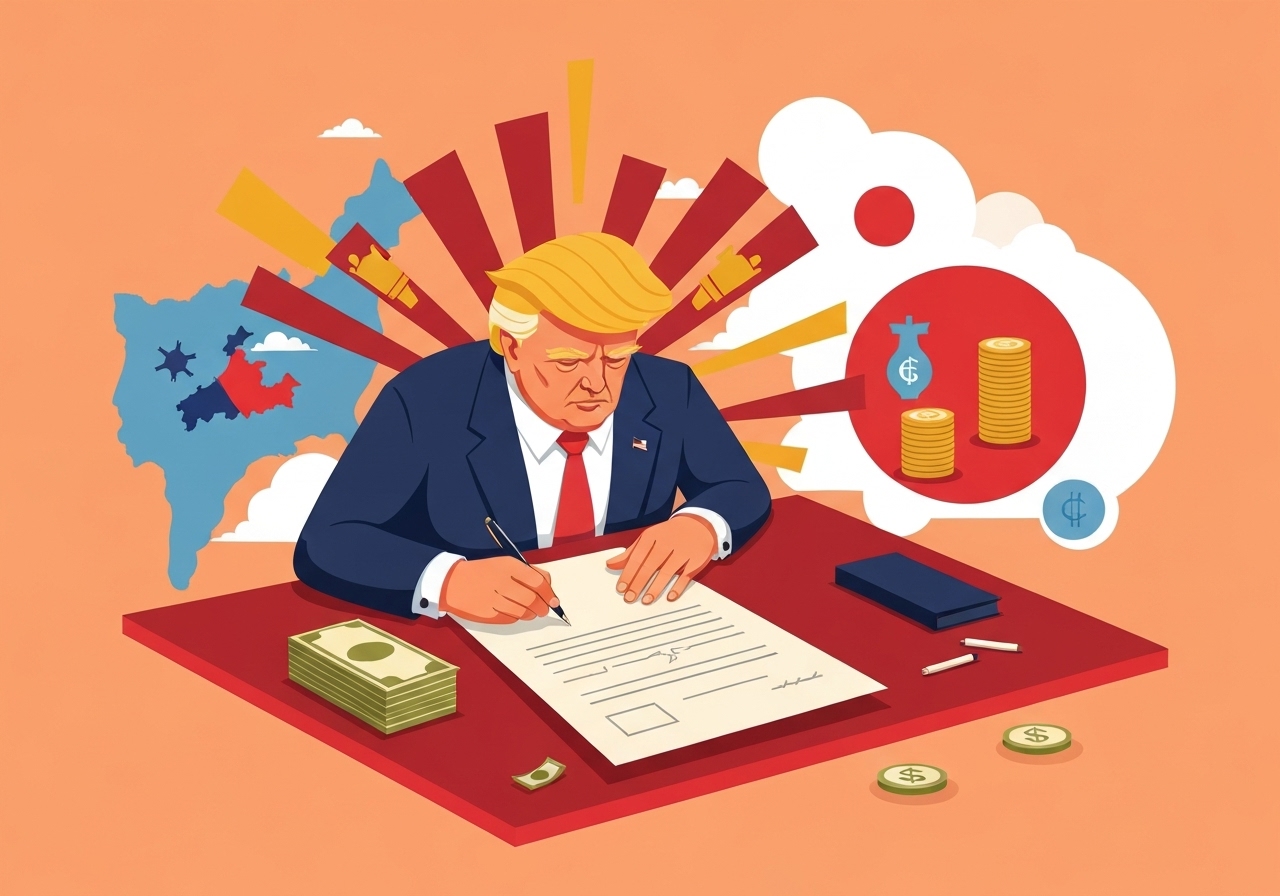
On September 4, 2025, President Donald Trump signed an executive order in Washington to finalize a trade agreement with Japan reached in July, imposing a maximum 15% tariff on most Japanese imports — including automobiles and parts — and accompanying a commitment that Japan will establish a $550 billion U.S. investment fund.
Key Takeaways
- The executive order was signed on Sept. 4, 2025, formalizing the bilateral deal reached in July.
- The measure sets a maximum 15% tariff on most Japanese goods, explicitly covering automobiles and parts.
- Japan has pledged to create a $550 billion fund to invest in the United States as part of the agreement.
- Japan’s chief trade negotiator, Ryosei Akazawa, met with the president in Washington this week during final talks.
- The July agreement had been provisional until terms were settled and implemented by the order.
- Details on the tariff schedule, effective dates, and legal implementation were not fully disclosed in the signing announcement.
Verified Facts
The White House signed the implementing executive order on September 4, 2025. Officials say the order gives force to the trade arrangement negotiated between Washington and Tokyo earlier in July, converting negotiated terms into U.S. executive action.
The order establishes a cap of 15% for tariffs applied to most Japanese-origin products. Public reporting identifies automobiles and automotive parts among the categories explicitly covered by the tariff cap.
An element of the July agreement is a Japanese commitment to create a $550 billion U.S. investment fund. According to reporting, Tokyo agreed to assemble or mobilize that capital as part of the bilateral package aimed at boosting U.S. investment and economic ties.
Japan’s top trade negotiator, Ryosei Akazawa, was in Washington for talks and met with President Trump during the week of the signing, signaling close coordination in the finalization of the implementing documents.
Context & Impact
The move follows months of negotiation after the preliminary July agreement. Formalizing the pact via executive order means the White House is using its authority to implement trade measures without awaiting separate congressional enabling legislation for this action.
For U.S. consumers and importers, the 15% cap could raise prices on covered Japanese goods or change sourcing decisions by retailers and manufacturers. For automakers and parts suppliers, the tariff level may alter supply-chain economics and prompt adjustments in procurement or production location strategies.
Markets are likely to price in the policy change; import-sensitive sectors and currency markets could respond as details about implementation dates and product lists become clearer. Other trading partners will watch whether the U.S.’s approach to Japan sets a precedent for future bilateral trade steps.
Official Statements
The White House described the order as the step that implements the bilateral trade arrangement reached in July and noted the investment pledge from Japan as a key component.
White House statement
Unconfirmed
- The precise effective date and phased schedule for the 15% tariff implementation have not been published in the signing notice.
- The full list of product lines subject to the tariff cap and any exemptions has not been publicly released.
- Details on the legal structure, governance, and timeline for the $550 billion investment fund remain to be disclosed.
- Any potential congressional responses or legal challenges to the executive action were not detailed at the time of signing.
Bottom Line
By signing the executive order, the administration has converted a July agreement with Japan into enforceable U.S. policy that sets a 15% tariff ceiling and includes a large Japanese investment pledge. Key implementation details—including when and how the tariffs will be applied and how the investment fund will operate—remain pending; those specifics will determine the short- and medium-term economic impact.