
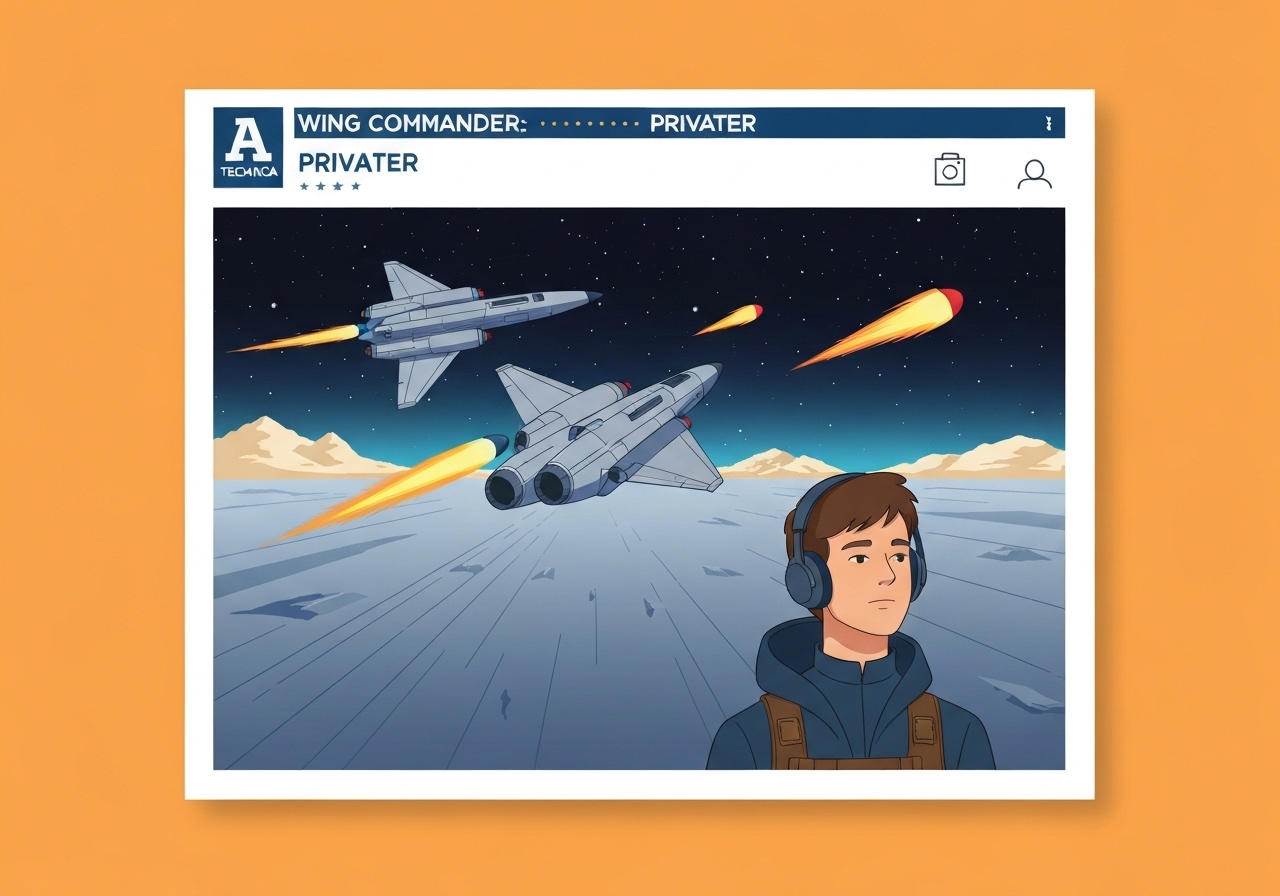
In 1993, Wing Commander: Privateer taught a generation of players — including the author of this piece — a simple lesson about what a game could be: a space to live an invented life rather than a sequence of authored challenges. That realization has shaped how the writer evaluates games ever since, and it explains why, in 2025, most of the titles they played the most are open-world experiences or sandboxy explorations. The writer’s top-played list for 2025 (from most hours down) includes No Man’s Sky; Civilization VII; Assassin’s Creed Shadows; The Elder Scrolls IV Oblivion Remastered; The Lord of the Rings: Return to Moria; The Elder Scrolls III Morrowind; World of Warcraft; Meridian 59; Tainted Grail: Fall of Avalon; and Unreal Tournament. The through-line is clear: games that give space to invent a life, explore, upgrade, and master systems matter more to this player than tightly authored narratives.
Key Takeaways
- Wing Commander: Privateer (1993) left a lasting impression that shaped one player’s tastes toward sandbox, open-world play rather than linear storytelling.
- The writer’s 2025 most-played games list includes 10 titles, topped by No Man’s Sky, and spans remasters, MMOs, and single-player open worlds.
- Of the ten most-played 2025 titles listed, eight are primarily open-world or sandbox experiences; Civilization VII and Unreal Tournament are the exceptions.
- Privateer blended Elite-style open-space simulation with Wing Commander’s craft and art direction, emphasizing exploration, ship upgrades, and a pseudo-simulated economy.
- Visuals (CG planet backdrops) and emergent personal storytelling — the player’s own imagined narrative — were central to Privateer’s appeal.
- The article links Privateer’s design lineage back to Elite (1984) while noting Privateer’s more handcrafted setting and flight mechanics.
- The author argues modern favorites (No Man’s Sky, Morrowind, Oblivion) continue Privateer’s legacy by prioritizing player-driven lives over purely authored beats.
Background
Wing Commander: Privateer arrived in 1993 as a hybrid: it used the Wing Commander universe and flight-sim mechanics but opened them into a freeform trading, exploration, and combat sandbox. That combination arrived years after Elite, the original 1984 space-trading sim that popularized open-ended space play. Privateer’s distinct contribution was its more hand-crafted planetary and settlement design, plus a narrative framing that never forced a single path on the player.
In the decades since, game genres split between authored, scripted experiences and systems-driven sandboxes. Titles such as The Elder Scrolls III: Morrowind (2002) and No Man’s Sky (2016) built on the idea that player agency, discovery, and incremental mastery can be the primary reward. Meanwhile, strategy and arena shooters — represented here by Civilization VII and Unreal Tournament — continue to attract hours but follow different engagement logics: rules and competition rather than emergent personal narrative.
Main Event
The central narrative here is personal but informative: the piece’s author reports that their play in 2025 — logged via Steam and PlayStation year-in-review summaries — was dominated by open-world or sandbox titles. No Man’s Sky topped the list in hours, followed by Civilization VII and Assassin’s Creed Shadows. The list mixes recent releases, remasters, an MMO, and a classic-era title that has endured through replays and mods.
Privateer’s appeal is described as less about its scripted missions and more about the experiences it enabled: exploring star systems, admiring CG-rendered planetary vistas, learning ship capabilities, upgrading equipment, and playing an in-game economy. Those systems encouraged self-directed goals and mental roleplay — the player’s internal story became the point of the game.
That personal-story emphasis is why the author sees continuity between Privateer and modern favorites. Games like Oblivion and Morrowind provide locations, factions, and mechanics that support player-created arcs. No Man’s Sky expands that on a cosmic scale, while Return to Moria and World of Warcraft offer communal versions of persistent, player-shaped lives.
Analysis & Implications
The first implication is design-oriented: when systems, worldbuilding, and meaningful progression are prioritized, players often form long-term attachments that outlast specific narratives. Privateer’s blend of exploration, economy, and incremental ship mastery is a model for designers who want sustained engagement without heavy-handed storytelling.
Economically, sandbox and open-world games can encourage longer playtimes and recurring engagement because they offer player-defined objectives. The 2025 play data cited here — spanning single-player remasters and live-service MMOs — suggests that varied business models can all benefit from deep, emergent systems that reward experimentation and mastery.
On a cultural level, the nostalgia factor matters but doesn’t fully explain the attachment. Visuals like Privateer’s CG planet art triggered wonder in the 1990s, but the enduring draw is agency: the permission to role-play and discover. That has consequences for how communities and creators value modding, long-tail support, and player-driven storytelling across genres.
Comparison & Data
| Rank (2025) | Title | Type |
|---|---|---|
| 1 | No Man’s Sky | Open-world / Sandbox |
| 2 | Civilization VII | Strategy / Turn-based |
| 3 | Assassin’s Creed Shadows | Open-world / Action |
| 4 | The Elder Scrolls IV: Oblivion Remastered | Open-world / RPG |
| 5 | The Lord of the Rings: Return to Moria | Open-world / Cooperative |
| 6 | The Elder Scrolls III: Morrowind | Open-world / RPG |
| 7 | World of Warcraft | MMO / Persistent world |
| 8 | Meridian 59 | Early MMO / Persistent world |
| 9 | Tainted Grail: Fall of Avalon | Open-world / RPG |
| 10 | Unreal Tournament | Arena Shooter / Competitive |
The table shows that eight of ten titles are built around exploration, world persistence, or sandbox systems. Civilization VII and Unreal Tournament rely on explicit rulesets and competitive structures. This contrast underscores two major play patterns: player-driven emergence versus authored/comparative challenge.
Reactions & Quotes
Observers from different perspectives highlight the same pattern: players often prefer systems that let them invent narratives or goals.
“Privateer showed me that the best moments were the ones I made up — trading runs, narrow escapes, slow upgrades.”
Player reflection (essay)
Industry commentators note the technical lineage from Elite through Privateer and into modern space and open-world titles.
“Elite laid the groundwork for open-space simulation; Privateer refined it with setting and character-driven systems.”
Game historian (commentary)
Community responses to the 2025 play list emphasize longevity: remasters and persistent worlds keep players returning for years, especially when systems invite personal goals.
“When worlds let you carve out a life, you keep coming back — whether it’s a 1993 game or a 2025 release.”
Longtime community member (forum post)
Unconfirmed
- The precise number of hours the author spent on each 2025 title is based on personal year-in-review summaries and not independently verified.
- The full extent of Privateer’s direct influence on every later sandbox title is complex; connections drawn here are interpretive rather than rigorously traced through design documents.
Bottom Line
Wing Commander: Privateer (1993) is significant not because it told a better story than its peers but because it gave players room to tell their own. That freedom — the ability to explore, upgrade, and create an internal narrative — remains a core appeal of the author’s most-played games in 2025, from No Man’s Sky to Oblivion and beyond.
For designers and players alike, the lesson is practical: invest in systems that enable emergent play and player-directed goals. Those systems yield longevity, community investment, and a different kind of satisfaction than strictly authored storytelling — one that keeps players returning year after year.
Sources
- Ars Technica — Feature — journalism piece by the original author reflecting on Privateer and 2025 play data.
- GOG — Digital store — image and re-release information for classic titles and artwork credits.
- Elite (1984) — Wikipedia — historical overview of the 1984 space-trading simulation that popularized open-ended space gameplay (reference/encyclopedic).