
Lead
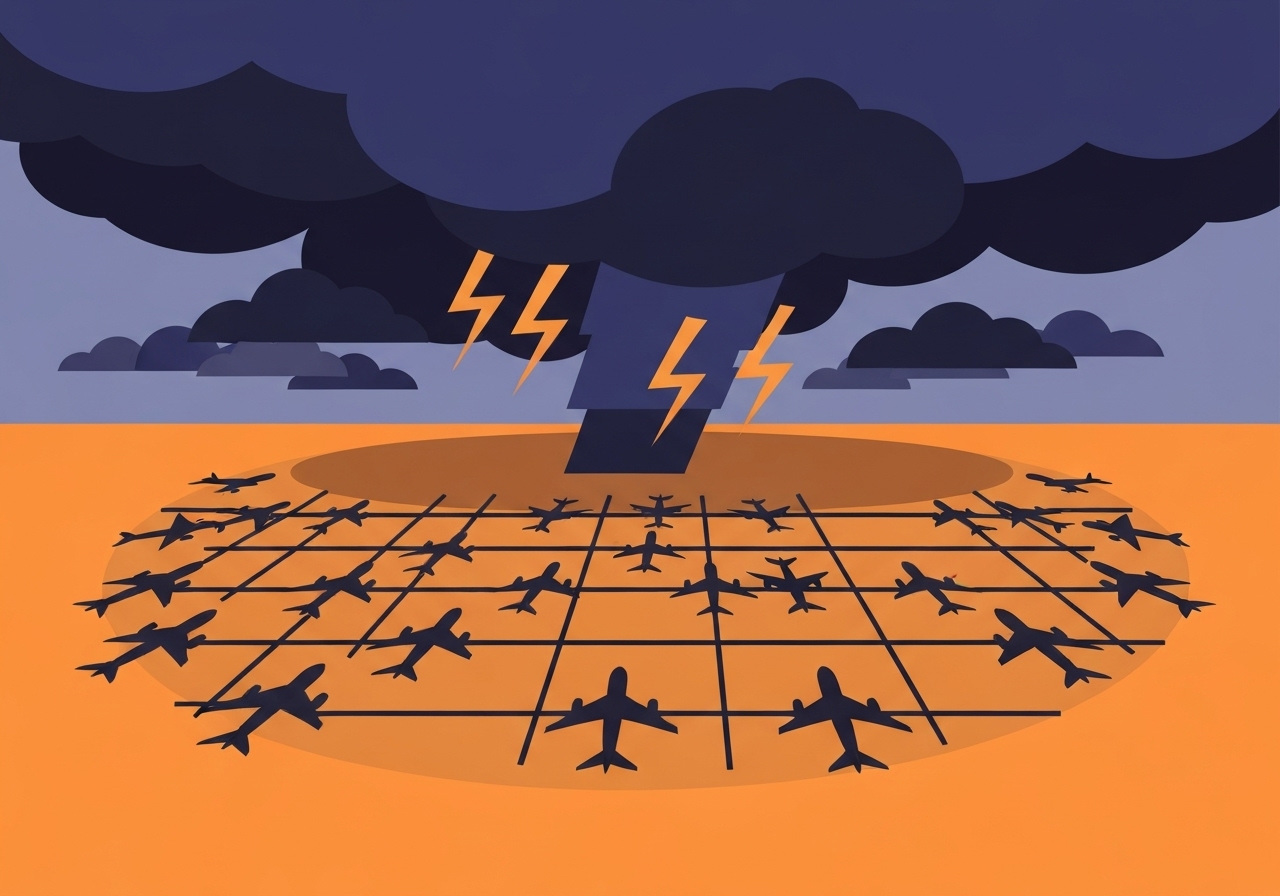
On Friday, 26 December 2025, a major winter storm disrupted holiday travel across the northeastern United States, cancelling and delaying thousands of flights and threatening up to 9 inches (23 cm) of snow in the New York area. Flight-tracking data showed nearly 1,500 cancellations and roughly 5,400 delays by Friday afternoon, with New York-area airports and several Mid-Atlantic hubs among the hardest hit. Officials issued winter-storm warnings and urged drivers and travellers to postpone non-essential trips or allow extra time if travel was unavoidable. Road crews and airport operations prepared for heavy evening snow and hazardous conditions through Saturday afternoon.
Key Takeaways
- Nearly 1,500 flights across the US were cancelled and about 5,400 delayed as of Friday afternoon, per FlightAware tracking data.
- Up to 9 inches (23 cm) of snow is forecast for New York City and southern Connecticut under a National Weather Service warning effective from 16:00 Friday to 13:00 Saturday local time.
- JFK, Newark Liberty and LaGuardia were among the most affected airports; Philadelphia, Detroit and Toronto also reported disruptions.
- Airline operational impacts included 227 cancellations by JetBlue, 213 by Delta, 157 by Republic and 146 by Southwest; American and United each had roughly 100 flights grounded.
- The heaviest precipitation was expected between 18:00 and midnight on Friday, prompting travel advisories for drivers and transit users.
- State leaders urged residents to avoid unnecessary travel; municipal snow-removal crews planned to begin clearing once two inches had accumulated.
Background
The storm came during the peak holiday travel period when airports and roadways typically carry elevated passenger volumes, increasing the potential for cascading delays. The Northeast has a history of severe winter systems that can quickly overwhelm airport de-icing operations, snow removal and surface transportation, producing multi-day knock-on effects for airline schedules. Major New York-area airports—JFK, Newark Liberty and LaGuardia—serve as national and international hubs; significant disruptions there tend to ripple across domestic and transatlantic connections. Local authorities and the National Weather Service issued coordinated guidance intended to reduce travel-related incidents and keep critical routes clear.
Earlier in the month, New York City experienced its first notable snowfall of the season on 14 December 2025, creating a recent precedent for winter operations this season. Airports and airlines enter winter with contingency plans—extra crews, de-icing fluids, and mutual-aid agreements between airports—but the combination of high passenger volumes and intense snowfall rates raises the risk of cancellations exceeding typical winter patterns. Airlines frequently adjust schedule buffers during holiday peaks, yet extreme weather still forces substantial operational changes.
Main Event
Flight-tracking figures from FlightAware showed nearly 1,500 cancellations and about 5,400 delays nationwide by Friday afternoon. The bulk of those changes concentrated on flights to, from, or passing through the New York metropolitan area. Airport advisories on social media and airline status pages repeatedly told travellers to check flight status before heading to terminals.
Airlines reported specific tallies: JetBlue cancelled 227 flights and Delta cancelled 213; Republic and Southwest removed 157 and 146 flights from their schedules respectively, and both American and United reported roughly 100 cancellations each for the day. Gates and operations teams at affected airports moved to adjust departure sequences, rebook passengers and deploy ground crews for de-icing and turnover work.
The National Weather Service issued a winter storm warning beginning at 16:00 on Friday and extending into early Saturday, forecasting the heaviest snowfall between 18:00 and midnight. Local officials warned drivers of reduced visibility, slick roads and the potential for stalled vehicles, and advised carrying emergency kits. New York Governor Kathy Hochul and the governors of New Jersey and Connecticut urged residents to avoid nonessential travel and to plan for delays if travel was necessary.
Analysis & Implications
The immediate effect is clear: passenger disruption on a major holiday travel day, with airlines facing operational and financial strain from rebookings, crew repositioning and potential compensation costs. When hub airports like JFK and Newark experience concentrated cancellations, aircraft and crews are displaced from planned rotations, which can propagate delays to other cities for 24–48 hours. For travellers, this means baggage misconnects, missed connections and longer wait times at customer-service counters.
Beyond acute passenger inconvenience, repeated winter disruptions can strain airline networks and airport staffing. Smaller carriers or regional partners tasked with feed flights may face disproportionate schedule stress if mainline aircraft and crews are unavailable. Cargo movements are also at risk: airport slowdowns and ground-operations limits affect time-sensitive shipments, potentially impacting supply chains that rely on air freight during the holidays.
Municipal responses—early plough deployment, pre-positioned salt and de-icing resources—mitigate some ground hazards, but extreme snowfall rates outpace removal capacity and can force temporary road closures. The economic cost of a multi-day ripple in travel flows includes lost productivity, additional lodging and meal expenses for stranded passengers, plus added operational costs for airlines and airports. Policy implications include assessing whether infrastructure and mutual-aid agreements are adequate for peak-season weather stressors.
Comparison & Data
| Metric | Count |
|---|---|
| US flight cancellations (as of Friday afternoon) | ~1,500 |
| US flight delays (as of Friday afternoon) | ~5,400 |
| Forecast snowfall in NYC/southern Connecticut | Up to 9 in (23 cm) |
| JetBlue cancellations | 227 |
| Delta cancellations | 213 |
| Republic cancellations | 157 |
| Southwest cancellations | 146 |
| American cancellations | ~100 |
| United cancellations | ~100 |
Those figures are snapshot data reported on Friday afternoon and can change rapidly as airlines update operations. The table highlights the distribution of cancellations by carrier and the broader national scale of delays. Airlines with heavy hub operations in the Northeast accounted for a disproportionate share of cancellations, consistent with hub disruption dynamics.
Reactions & Quotes
Officials urged residents to avoid nonessential trips and to allow extra time for any necessary travel, emphasizing cautious driving and planning.
Governor Kathy Hochul (paraphrased)
Airport advisories asked passengers to confirm flight status with carriers before arriving at terminals and to prepare for longer processing times at gates and security checkpoints.
Regional airport authorities (paraphrased)
Airlines said they were re-accommodating travellers, adjusting crews and positioning equipment to minimise system-wide knock-on effects, while warning that rapid changes in conditions could force additional cancellations.
Airline operations notices (paraphrased)
Unconfirmed
- Final snowfall totals across the metropolitan area were not yet available at the time of reporting and may exceed or fall short of the 9-inch forecast in localized spots.
- Cancellation and delay figures are dynamic; the counts cited reflect Friday-afternoon snapshots and are subject to revision as airlines update schedules.
- Any specific link between a particular equipment failure or staffing shortage and individual cancellations had not been publicly confirmed by airlines.
Bottom Line
The storm caused significant, immediate disruption to holiday travel on a day of already heightened demand, with nearly 1,500 cancellations and thousands more delays concentrated in the Northeast. Travellers should expect ongoing schedule changes and allow additional time for connections or consider postponing nonessential trips until operations stabilise.
For policymakers and industry planners, the event underscores persistent vulnerabilities in peak-season resilience: hub-centric networks magnify local weather impacts, and real-time coordination between meteorological services, airports and carriers remains critical to reducing passenger harm. Monitoring the evolving forecast and airline updates will be essential over the next 24–48 hours.
Sources
- BBC News — news report summarising flight impacts and local official statements (media)
- FlightAware — flight-tracking aggregator used for cancellation and delay tallies (flight-data service)
- National Weather Service — official forecast and winter storm warning notices (official weather agency)