
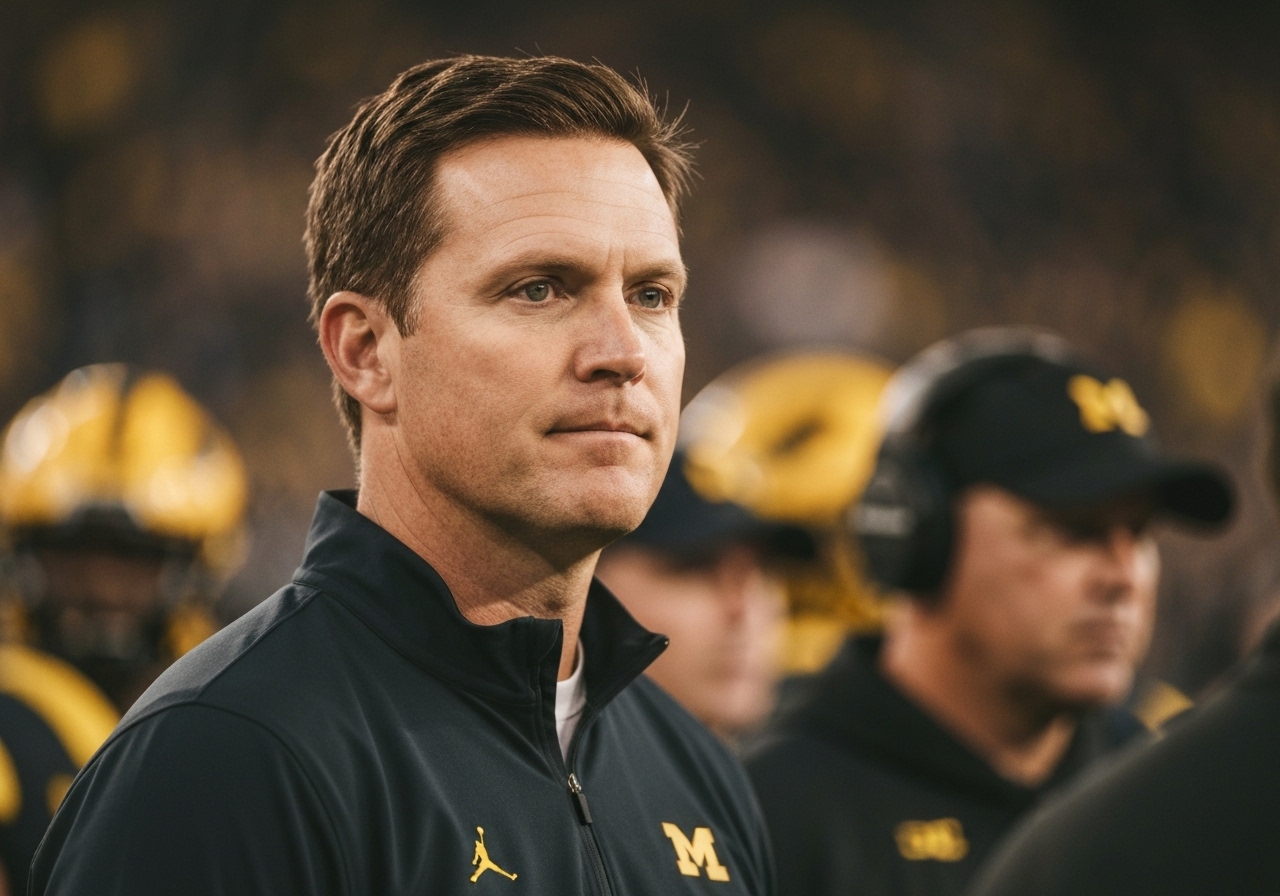
Lead
On Dec. 26, 2025, the University of Michigan announced Kyle Whittingham as the program’s 22nd head coach, following the Dec. 10 dismissal of Sherrone Moore over an extramarital affair with a staffer. Whittingham arrives from the University of Utah, where he spent more than three decades as an assistant and then 21 seasons as head coach. He leaves Utah with a 177–88 record, eight 10-win seasons and two Pac-12 titles, and comes to Ann Arbor with a reputation for physical defense and program stability. His résumé also includes two seasons working with Urban Meyer as Utah’s defensive coordinator in 2003–04.
Key Takeaways
- Kyle Whittingham was named Michigan’s 22nd head coach on Dec. 26, 2025, after Sherrone Moore’s firing on Dec. 10 over an extramarital affair.
- Whittingham served 21 seasons as Utah’s head coach, compiling a 177–88 overall record, the most wins in program history.
- He posted eight 10-win seasons and led Utah to a 13–0 season in 2008, including a Sugar Bowl win over Alabama.
- Whittingham coached under Urban Meyer as Utah’s defensive coordinator in 2003–04 before taking over as head coach in 2005.
- He is 3–0 all-time against Michigan, with wins in Ann Arbor in 2008 and 2014 and a Salt Lake City victory in 2015.
- His teams won one Mountain West title and two Pac-12 championships during his tenure at Utah.
- Whittingham has spent more than 30 years in Utah coaching ranks and now takes on his second head-coaching job outside his home state.
Background
Kyle Whittingham’s football roots run deep: his father, Fred Whittingham, played in the NFL in the 1960s and 70s and later coached at both the professional and collegiate levels, including a stint as Utah’s defensive coordinator. Kyle joined Utah’s staff in 1994 under Ron McBride and rose from defensive-line coach to defensive coordinator by 1998, prompting him to bring his father onto staff from 1998–2000. The younger Whittingham briefly left Utah for roles at Idaho State and in junior college before returning to become the Utes’ long-term defensive architect.
Whittingham’s second major career pivot came after Urban Meyer left Utah following the 2004 season; Whittingham was promoted to head coach in 2005. Over the next two decades he transformed Utah into a consistent winner, guiding the program through conference realignment into the Pac-12 and securing signature wins and bowl victories that raised the program’s national profile. His teams became known for physical defenses and disciplined, run-oriented offenses, hallmarks that defined Utah’s on-field identity under his leadership.
Main Event
The immediate catalyst for Michigan’s coaching change was the Dec. 10 firing of Sherrone Moore following confirmed reports of an extramarital affair with a staff member. In the wake of that upheaval, Michigan pursued a candidate with a long track record and a reputation for steady program management; Whittingham emerged as the choice. The university publicly announced Whittingham’s hiring on Dec. 26, 2025, framing the move as a search for stability and a proven leader to steady the roster and staff.
Whittingham steps into a program with high expectations and national visibility, and his arrival will likely lead to immediate conversations about staff composition, recruiting continuity and scheme adjustments. He spent more than 30 years tied to Utah’s institution and culture, making this move one of the most significant lateral transitions of his career. While details of his contract and staff decisions were still being finalized at the time of the announcement, Michigan’s leadership emphasized experience and a track record of winning when discussing the hire.
On the field, Whittingham brings a defensive-first philosophy and a history of adapting schemes to personnel, traits that should influence Michigan’s recruiting and game planning. His prior success against Michigan—three wins in three meetings—will be noted by fans and media, though matchups and rosters will be different moving forward. The program now faces a compressed timeline to stabilize recruits and prepare for the next season under new leadership.
Analysis & Implications
Strategically, Michigan’s hire of Whittingham signals a preference for experience and program-building over a high-risk offensive innovator. Whittingham’s 177–88 record and multiple double-digit win seasons show sustained success, but translating the Utah model to the Big Ten and specifically to Michigan’s expectations presents challenges. The Big Ten’s competition level, recruiting battles in the Midwest and the premium on offensive explosiveness mean Whittingham will need to adapt aspects of his staff and scheme to local recruiting realities.
From a personnel standpoint, Whittingham’s first decisions—retaining or replacing key coordinators, preserving top recruits and managing transfers—will shape whether Michigan sustains short-term competitiveness. His strength in developing defensive talent and emphasizing physical play should shore up Michigan’s identity, but the program may accelerate offensive hires to maintain the quarterback and receiver recruiting pipelines that Big Ten success demands. How quickly Whittingham can blend Utah’s disciplined culture with Michigan’s existing roster will determine whether the program slips, holds steady, or improves.
Institutionally, the hire is also a reputational reset after Moore’s dismissal. Michigan’s leadership framed Whittingham as a steady, ethical steward; whether that framing resonates with alumni, boosters and the broader fan base will depend on transparency around the hiring process and subsequent personnel moves. Nationally, the hire may embolden programs that prioritize long-term stability in coaching choices, while raising questions about whether proven coordinators or prior rivals are preferable to high-profile offensive names.
Comparison & Data
| Metric | Whittingham at Utah (2005–2025) |
|---|---|
| Seasons as head coach | 21 |
| Overall record | 177–88 |
| 10‑win seasons | 8 |
| Notable bowl / landmark season | 13–0 in 2008, Sugar Bowl win vs. Alabama |
| Conference titles | Mountain West: 1, Pac‑12: 2 |
| Record vs. Michigan | 3–0 |
The table above summarizes Whittingham’s record at Utah and highlights achievements that factor into Michigan’s decision. Utah’s move into the Pac‑12 and Whittingham’s ability to produce double‑digit win seasons are central data points for assessing fit. While raw win totals are strong, differences in conference strength, recruiting footprint and financial resources between Utah and Michigan mean a direct statistical projection of future Michigan wins is not straightforward.
Reactions & Quotes
University and public reactions were mixed between relief at hiring a veteran and questions about adaptation to the Big Ten.
“We wanted a steady, proven leader who can bring stability to the program and focus on sustained success.”
University of Michigan athletics official statement
The university emphasized continuity and character in its initial statement, framing Whittingham’s tenure as evidence of program-building ability. That messaging aims to reassure donors, players and recruits after a turbulent fortnight in early December.
“Kyle’s teams have always been tough, well coached and disciplined on defense. He understands how to win at a high level.”
Pac‑12 analyst (on Utah tenure)
Independent analysts and conference observers highlighted Whittingham’s consistent defensive identity and longevity. They noted his record in high-stakes games, including the 2008 Sugar Bowl victory, as evidence he can prepare teams for postseason pressure.
“This is a fresh start for Michigan fans and the program — but it’s also a big transition for Whittingham, leaving the place where he has been for most of his career.”
College football commentator
Commentators stressed the cultural change inherent in moving from Utah, an established home base, to Michigan, a program with larger national expectations and different recruiting dynamics. The practical demands of staff hiring and roster management were flagged as near-term priorities.
Unconfirmed
- Specific terms and length of Whittingham’s Michigan contract were not public at the time of the announcement and remain unverified.
- Which Utah assistants, if any, will join Whittingham on the Michigan staff is unclear and reported staff moves were unconfirmed.
- Internal reactions from current Michigan players and individual recruits were reported anecdotally in some outlets but lacked independent verification at publication.
Bottom Line
Kyle Whittingham’s hiring represents a calculated decision by Michigan to prioritize steady, experienced leadership after an abrupt coaching vacancy. His lengthy, successful run at Utah — including a 177–88 record, eight 10‑win seasons and two Pac‑12 titles — gives him clear credibility as a program builder. Translating that success to the Big Ten and fitting it to Michigan’s immediate competitive goals will depend on his staff appointments, recruiting adjustments and willingness to adapt schemes.
For Michigan fans and stakeholders, the next months will be decisive: Whittingham must retain key recruits, settle the coaching staff and demonstrate early progress on defense without sacrificing offensive momentum. If he can blend Utah’s disciplined identity with Michigan’s resources and recruiting pull, the hire could restore stability and keep the program nationally competitive; if not, impatience will rise quickly in a high‑expectation environment.