
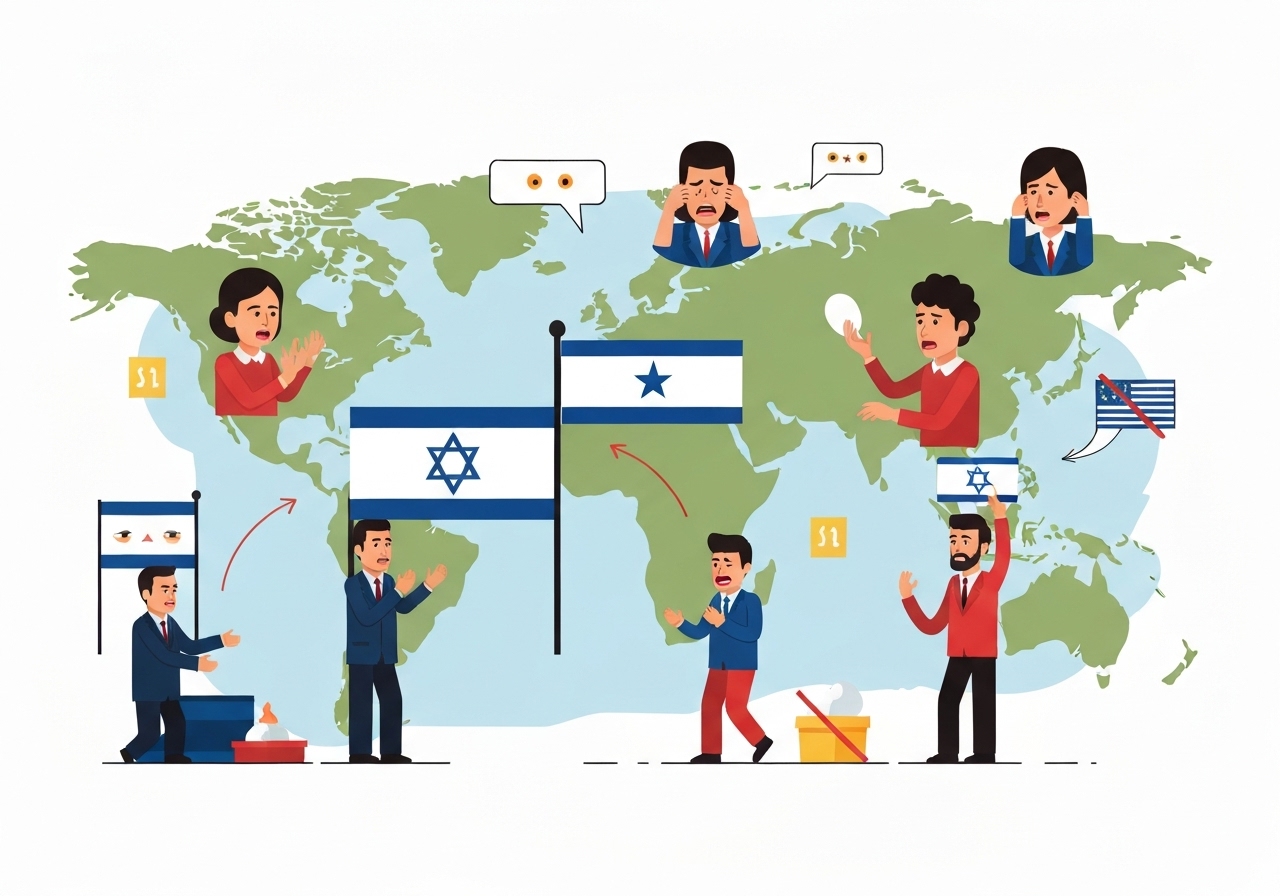
Lead: On Dec. 26, 2025, Israel formally recognized Somaliland, the breakaway region in northwestern Somalia that declared independence in 1991. The move — the first formal recognition of Somaliland by any country — was announced as part of a reciprocal diplomatic agreement and quickly provoked protests from Somalia and several neighboring states. Somaliland has administered most of its claimed territory for decades with relative stability, and Israel framed the decision as deepening ties in the region. The recognition, however, triggered immediate regional criticism and raised questions about precedents for other secessionist movements.
Key Takeaways
- On Dec. 26, 2025, Israel became the first nation to formally recognize Somaliland in a reciprocal diplomatic agreement.
- Somaliland declared independence from Somalia in 1991 and has governed most of its claimed territory for 34 years without broad international recognition.
- Somalia’s government labelled the recognition an unlawful act and reiterated that Somaliland remains part of Somalia’s sovereign territory.
- Egypt, Somalia, Turkey and Djibouti registered diplomatic objections in calls and statements within hours of the announcement.
- The recognition is presented by Israel and Somaliland as mutually beneficial, with potential strategic and economic cooperation under discussion, though details have not been published.
- Regional governments warn that recognizing a breakaway region could encourage other separatist claims and unsettle fragile states in Africa and beyond.
Background
Somaliland declared that it had restored the sovereignty of the former British Somaliland Protectorate in 1991, after the collapse of Somalia’s central government and the onset of prolonged civil war. Since then, authorities in Hargeisa have built parallel institutions: a constitution, regular elections, and security forces that have kept the region comparatively stable. Despite functioning de facto as an independent state for three decades, Somaliland has not secured de jure recognition from the United Nations or major powers, in part because many states seek to avoid encouraging separatist claims within their own borders.
Somalia’s central government in Mogadishu maintains that Somaliland is an integral part of Somali territory and has consistently rejected any external recognition that could undermine its sovereignty. Regional capitals and African Union members also tend to oppose unilateral recognitions that might set precedents for other separatisms. At the same time, the Horn of Africa’s strategic maritime corridors and emerging economic links have attracted outside interest, and some external actors have engaged informally with Somaliland authorities for security, trade and port access.
Main Event
On Dec. 26, 2025, Israeli and Somaliland officials issued a joint statement announcing formal diplomatic recognition and an agreement described as reciprocal. Israeli officials framed the development as an enhancement of bilateral ties, while Somaliland leaders hailed international acknowledgment of their governance record. The announcement specified no full text of bilateral treaties in the initial release, and both sides said more technical details would follow in subsequent exchanges.
Somalia’s foreign ministry swiftly condemned the action, calling it an unlawful unilateral step that infringes on Somalia’s sovereignty. Within hours, Egypt reported phone consultations between its foreign minister and counterparts in Somalia, Turkey and Djibouti; those governments reiterated their objections and urged restraint. Regional capitals expressed concern that the move could destabilize already fragile political balances and complicate ongoing diplomatic efforts in the Horn of Africa.
Observers noted that the recognition is symbolically significant because it breaks a long-standing international consensus against formal recognition of Somaliland. Israeli officials indicated the decision was reciprocal and tied to broader diplomatic objectives in the region, but publicly available documentation about security, economic or development components of any agreement remained limited at the time of this report.
Analysis & Implications
The recognition alters a decades-long diplomatic freeze around Somaliland’s status and could encourage other states to reassess their posture toward de facto governments that provide stability absent formal recognition. For Somaliland leaders, formal recognition by Israel could translate into faster access to bilateral assistance, investment, and diplomatic channels; however, immediate economic windfalls are uncertain without broader international acceptance. The political calculus for other states will weigh the risks of encouraging separatism against strategic benefits such as access to ports or alliances in the Red Sea and Gulf of Aden.
For Somalia, the decision deepens diplomatic pressure on Mogadishu and complicates its efforts to assert exclusive sovereignty over national territory. The Somali government and allied states may pursue diplomatic and multilateral remedies, including appeals to the African Union and the United Nations, to counteract what they characterize as an unlawful encroachment. Any escalation of diplomatic or economic measures could further strain ties across the Horn of Africa, where cooperation on security, migration and trade is already delicate.
For Israel, the recognition provides a public diplomatic gain in expanding formal ties within predominantly Muslim regions, though it risks backlash from states that view the step as contrary to regional norms. Strategically, Israel may seek port access, security cooperation against piracy or illicit trafficking, and expanded trade links; the scale and speed of such cooperation will depend on how other international actors respond. Ultimately, the move may produce a patchwork of bilateral arrangements without immediately changing Somaliland’s wider international status.
Comparison & Data
| Item | Fact |
|---|---|
| Somaliland declaration | 1991 |
| Years without wide recognition (as of 2025) | 34 years |
| First formal recognition | Israel, Dec. 26, 2025 |
The table highlights the core chronological facts: Somaliland’s 1991 declaration, three decades of unrecognized de facto governance, and the breakthrough recognition on Dec. 26, 2025. These discrete data points underscore why analysts describe the decision as a potentially precedent-setting shift rather than an isolated symbolic gesture.
Reactions & Quotes
Somalia’s government officially protested, framing the recognition as a violation of Somalia’s territorial integrity and international law norms. The ministry urged diplomatic partners to respect Somalia’s borders and signalled it would seek support from regional organizations to reverse or limit the impact of the decision.
We consider this move an unlawful step that undermines Somalia’s sovereignty and territorial integrity.
Somalia Foreign Ministry (paraphrased)
Somalia’s statement reflected long-standing concerns that external recognition could embolden separatists elsewhere and weaken central authority. Somali officials indicated they would pursue diplomatic channels and raise the issue in regional forums to contest the recognition.
Egypt and several neighboring states made urgent contacts with one another to coordinate their response, citing fears about the regional precedent and implications for stability. Diplomats signalled readiness to push back diplomatically and warned that unilateral recognitions carry wider consequences for nations confronting their own separatist pressures.
We reject unilateral actions that could erode the foundations of regional stability and encourage separatist claims.
Egyptian Foreign Ministry (paraphrased)
Regional capitals emphasized multilateral problem-solving and warned against steps that bypass broader consultations. The positions spotlight a shared anxiety among neighboring states about contagion effects if recognition spreads without a collective framework.
Leaders in Hargeisa welcomed the recognition as validation of long-standing governance and expressed hope for expanded ties in trade and security. Somaliland officials described the decision as a milestone that could open doors for more formal relationships, though they acknowledged that broader international recognition would remain a longer-term effort.
This recognition affirms Somaliland’s institutions and opens channels for cooperation that could benefit our people.
Somaliland Presidency (paraphrased)
Officials in Somaliland stressed pragmatic next steps, including technical talks and potential agreements on economic and security cooperation. Analysts cautioned that without wider international acceptance and multilateral engagement, gains could be limited or contested diplomatically.
Unconfirmed
- Specific terms of any security, port access, or economic deals between Israel and Somaliland have not been publicly released and remain unverified.
- It is not yet confirmed whether other nations will follow Israel’s recognition or whether the African Union or United Nations will take binding action in response.
Bottom Line
The Dec. 26, 2025 recognition by Israel is a watershed moment for Somaliland and for diplomatic norms in the Horn of Africa: it breaks a decades-long pattern of nonrecognition and immediately intensifies diplomatic tensions with Somalia and several neighboring states. In the short term, the move gives Somaliland a higher profile and opens pathways for bilateral cooperation, though concrete gains will depend on the specifics of agreements and whether additional countries reciprocate the step.
For the region, the episode sharpens a policy dilemma: balance incentives for stability and investment in functional local administrations against the risk of encouraging separatist movements elsewhere. Watch for developments in multilateral forums, any published bilateral agreements, and diplomatic responses from the African Union and major regional partners to gauge how lasting this change will be.
Sources
- The New York Times — International news report and initial account of the recognition and regional responses.