
Lead
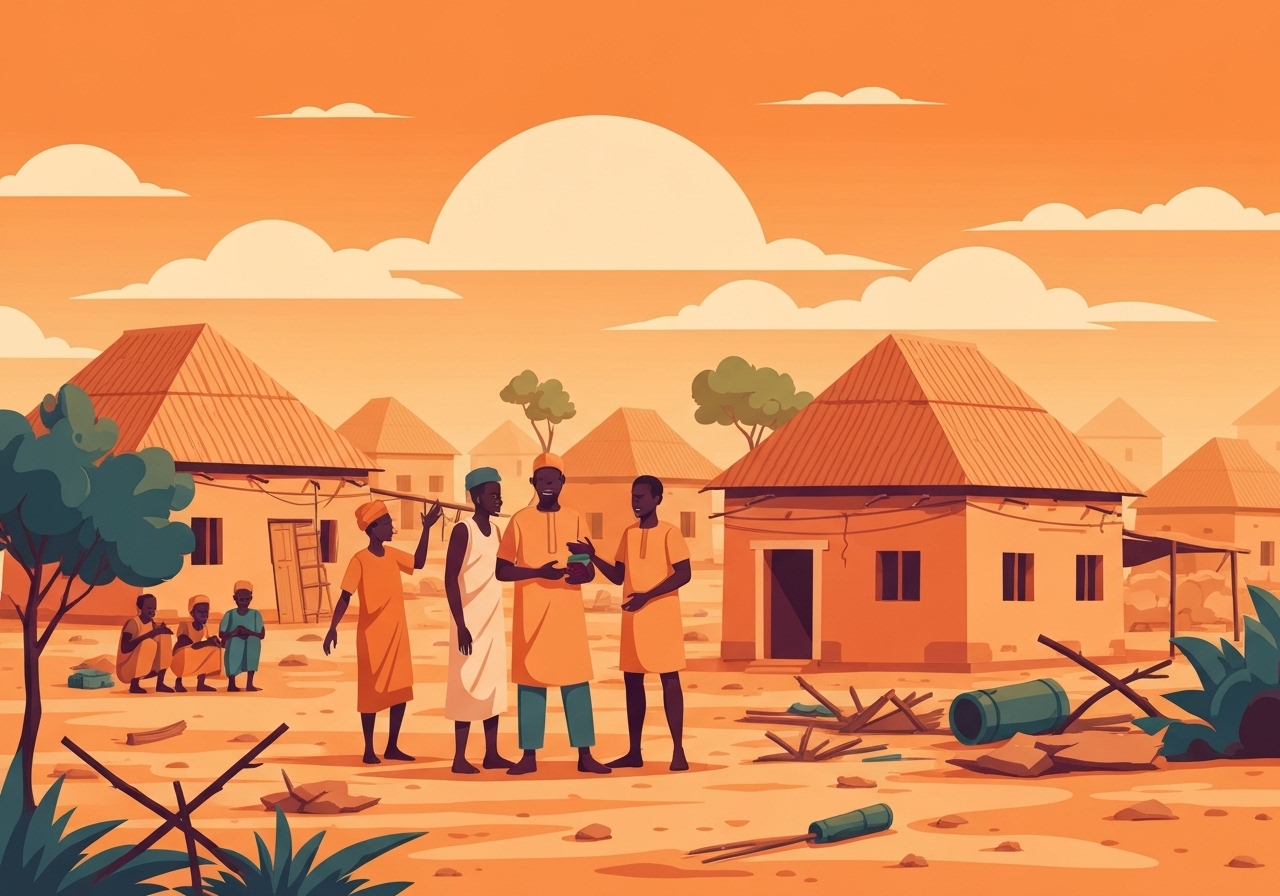
Residents of Jabo, a farming village in Tambuwal district of Sokoto state, were left frightened and bewildered after parts of a US-fired missile fell near their only medical facility late Thursday, around 10 p.m. Villagers say there is no local history of ISIS activity in Jabo and reported no casualties, though debris landed about 500 meters from the primary health centre. US Africa Command said the operation neutralized multiple ISIS militants in nearby forests; Nigeria’s government said it coordinated with the US. The episode comes after high-level US statements framing an expanded action against groups accused of targeting civilians.
Key takeaways
- At roughly 10 p.m. on Thursday, projectile debris from a US strike fell in Jabo, Sokoto state, landing about 500 meters from the village Primary Health Center and causing panic but no reported deaths.
- Suleiman Kagara and other villagers described loud explosions and visible flames; several families fled their homes temporarily in fear.
- US Africa Command said the broader operation “neutralized multiple ISIS militants,” while Nigeria’s Information Ministry confirmed debris from expended munitions fell in Jabo and an area of Kwara state.
- Nigerian Foreign Minister Yusuf Tuggar reported prior consultation with US Secretary of State Marco Rubio and said President Bola Tinubu authorized the action.
- Local officials and residents in Jabo insist the village has no known presence of ISIS, Lakurawa, or similar groups and that Christians and Muslims coexist peacefully.
- Analysts, including Nnamdi Obasi of the International Crisis Group, warned that airstrikes may weaken some militants but are unlikely to end multi-causal violence driven by governance failures.
- The strike follows public US rhetoric alleging elevated attacks on Christians in Nigeria and an order this month to prepare for possible military action.
Background
Jabo is a predominantly Muslim, agrarian settlement in Tambuwal district of Sokoto state, northwest Nigeria. The surrounding region has experienced banditry, kidnappings and episodic violence tied to armed groups; Nigerian authorities have in some cases attributed such actions to organizations with suspected Islamic State links. Yet villagers and local lawmakers describe Jabo itself as peaceful, with longstanding communal ties between Muslim and Christian residents.
In recent months, US officials and the White House framed a narrative of increased threats against Christians in Nigeria, prompting the president to direct the Pentagon to prepare for potential action. Nigeria’s military has been engaged in protracted operations across multiple fronts, and Abuja’s authorities at times request or coordinate external support for strikes against armed-group hideouts in remote forested areas.
Main event
On Thursday night, witnesses in Jabo reported an overhead fireball and a loud blast around 10 p.m., followed by debris striking a field roughly 500 meters from the village Primary Health Center. People in several compounds ran from their homes and stayed awake through the night in fear, according to multiple residents. Local lawmaker Bashar Isah Jabo told reporters the village has “no known history” of ISIS or similar groups operating locally and described the community as peaceful.
US Africa Command publicly framed the operation as targeting ISIS elements in the forests of Tangaza district, saying it neutralized multiple militants. Nigeria’s Information Ministry later confirmed that precision strikes hit hideouts in Tangaza but added that debris from expended munitions fell in Jabo and in a separate location in Kwara state, stressing there were no civilian fatalities. The ministry characterized the action as coordinated with US forces.
President Trump called the action a “powerful and deadly strike” and framed it as a response to what he described as violent attacks chiefly targeting Christians. That messaging has left some residents and local officials uncertain about the immediate rationale for operations that produced stray debris over a village without a known militant presence.
Analysis & implications
The incident highlights the risks when long-range or cross-border operations occur near populated areas: even when strikes focus on remote forest aims, expended munitions or fragments can land in civilian zones. In Jabo, the physical impact was limited to property shock and fear, but the political and social fallout could be greater if perceptions of arbitrary or externally driven violence take hold.
Strategically, US-enabled strikes can disrupt militant command-and-control and remove key operatives, but analysts caution these gains are often temporary unless paired with governance, policing and local reconciliation measures. Nnamdi Obasi of the International Crisis Group noted that while air operations may degrade capacity, they do not resolve the underlying drivers—land disputes, weak state presence and communal tensions—that fuel recurring violence across Nigeria.
Domestically, Abuja’s apparent authorization of the strike underscores growing willingness to accept foreign kinetic help, but it raises accountability questions: who vets target selection, how are civilian-risk assessments conducted, and how are affected communities consulted or compensated after incidents? Unanswered operational details risk undermining public trust in both Nigerian and partnering foreign institutions.
Comparison & data
| Item | Reported value |
|---|---|
| Time of incident | ~10:00 p.m. (Thursday) |
| Distance from PHC | ≈500 meters |
| Civilian casualties | None reported |
| Target area named by authorities | Tangaza district forests (Sokoto) |
The table summarizes the concrete, attributable details reported so far: timing, proximity to health infrastructure and the absence of confirmed civilian fatalities. Those data points frame both the humanitarian and political considerations for follow-up: local trauma and disruption were significant despite no physical casualties, and the proximity to a health center increases the sensitivity of any future operations.
Reactions & quotes
“We couldn’t sleep last night. We’ve never seen anything like this before.”
Suleiman Kagara, Jabo resident
Kagara’s account was typical of many villagers who described shock and a night of fear after the blast.
“A peaceful community — no known history of ISIS, Lakurawa, or other terrorist groups operating in the area.”
Bashar Isah Jabo, Tambuwal lawmaker
The lawmaker stressed that Jabo’s residents have coexisted across faith lines and were unprepared for becoming affected by the operation’s debris.
“The operation neutralized multiple ISIS militants.”
US Africa Command (official statement)
US Africa Command framed the mission as successful against militants in the region; independent verification of the numbers and identities of those neutralized has not been provided publicly.
Unconfirmed
- Whether Jabo itself was ever an intended target of the operation remains unclear; official statements emphasize strikes in Tangaza forests.
- The precise number and identities of the “multiple ISIS militants” the US Africa Command said were neutralized have not been independently verified.
- Full forensic linkage between the debris found in Jabo and specific expended munitions used in the Tangaza strikes is not publicly documented.
- The degree to which the operation was driven by sectarian targeting claims versus security-based intelligence has not been independently corroborated.
Bottom line
The Jabo incident underscores how counterterrorism strikes, even when declared precise and coordinated, can produce unintended local consequences that shape public perception and trust. While authorities report tactical success against militants in nearby forests and no civilian deaths in Jabo, the psychological impact and political questions about target selection and civilian risk assessment remain.
For long-term stability, military action should be paired with transparent investigations, community engagement, and investments in governance and local security capacity. Without those complementary steps, similar operations risk reducing immediate militant capacity but doing little to stem the multi-causal violence affecting parts of Nigeria.
Sources
- CNN (media report summarizing field interviews and official statements)
- US Africa Command (official military organization statement)
- Nigeria Information Ministry (FMIC) (official government communication)
- International Crisis Group (independent policy analysis; analyst commentary)