
Lead
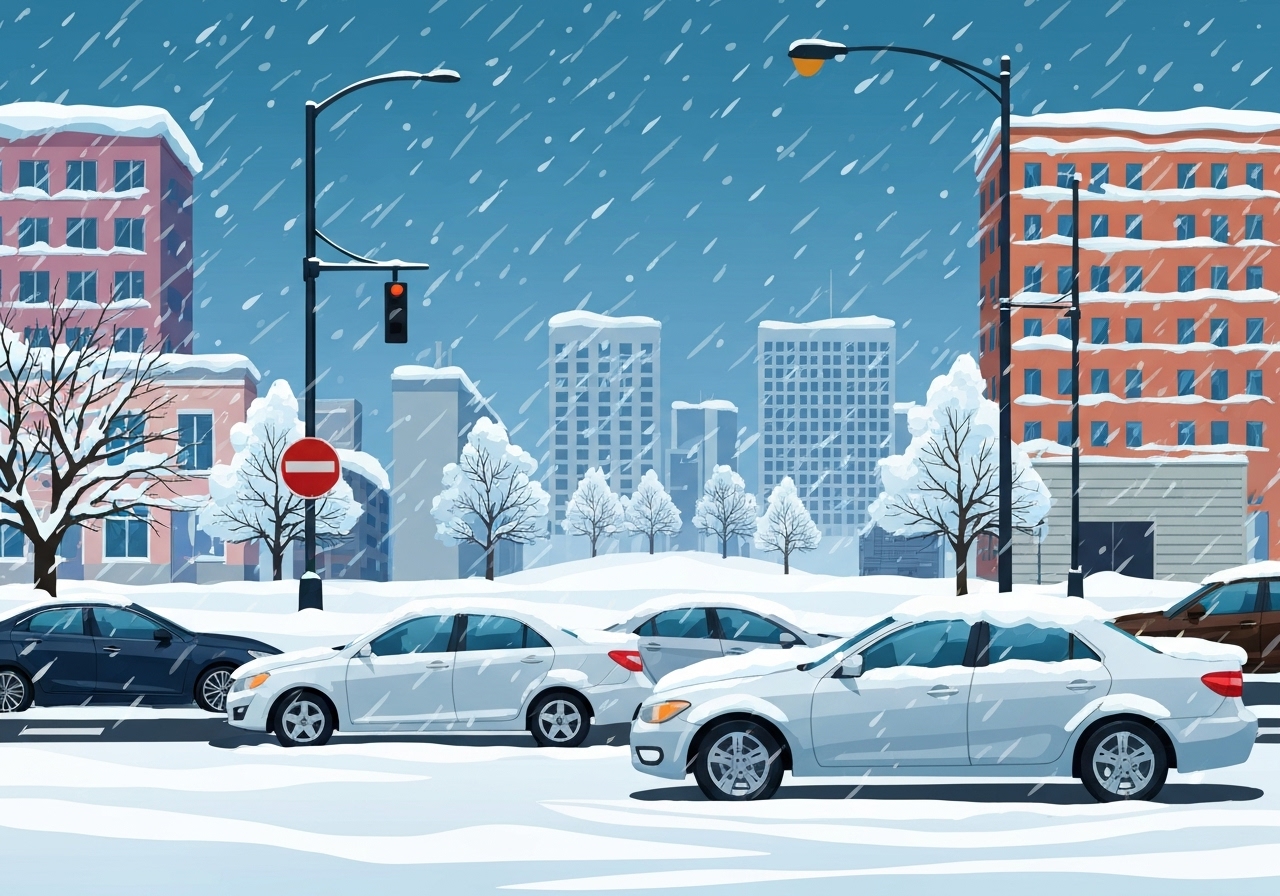
A fast-moving winter storm struck the Upper Midwest, Great Lakes and Northeast over the holiday weekend beginning Dec. 27, 2025, producing heavy snow, dangerous ice and bitter cold that disrupted travel into the holiday period. The National Weather Service said the system will intensify and remain active through Tuesday, with Arctic air plunging into the Plains and a potent storm affecting the upper Midwest to the Great Lakes from Sunday night into Monday. Major metropolitan areas from New York City to parts of the Midwest saw significant accumulations, while the storm snarled road and air travel along the I-95 corridor. Authorities warned of treacherous conditions, including whiteouts, a quarter-inch of ice in parts of the Northeast and wind chills well below zero in northern states.
Key Takeaways
- More than 1,000 flight delays were reported across U.S. airports Saturday evening, with nearly 1,000 cancellations into, out of and within the U.S. as of that time.
- New York City and surrounding areas recorded up to about 8 inches of snow between Friday and Saturday, causing major traffic slowdowns on I-95.
- Parts of Michigan’s Upper Peninsula could receive more than a foot of snow as the storm intensifies through Monday.
- Lake-effect snow is expected in western New York and northwest Pennsylvania, compounding accumulations locally.
- Ice accumulation of up to 0.25 inches was forecast for eastern New York and sections of Connecticut and Massachusetts, increasing the risk of hazardous travel and fallen power lines.
- Bitter wind chills are forecast, reaching as low as -35°F in parts of North Dakota and around -25°F in northern Minnesota.
- Meanwhile, regions from the South into the Tennessee Valley could see unseasonably warm readings in the 70s at the same time, underscoring a sharp temperature gradient.
Background
The National Weather Service issued a public bulletin on Saturday, Dec. 27, 2025, describing an Arctic surge into the Plains followed by a strengthening winter storm across the upper Midwest and Great Lakes from Sunday night into Monday. Such synoptic setups—cold continental air colliding with a developing low over the central U.S.—often yield a sharp divide between heavy snow and milder southern conditions. In this pattern, lake-effect snow commonly develops downwind of the Great Lakes where colder air crosses relatively warmer water, producing localized intense bands of snow. The Northeast has been vulnerable this season to midwinter coastal and inland storms that disrupt travel and utility services, and emergency managers were already coordinating pre-storm preparations.
Holiday travel volumes typically increase roadway and airport exposure to weather disruptions, making even modest storms disproportionately disruptive. Large hubs along the I-95 corridor and Midwestern airports carry concentrated passenger flows; when one major link slows, delays cascade through schedules nationwide. Airlines, ground crews and state transportation agencies have contingency plans, but capacity constraints and crew rules limit how quickly service can be restored once cancellations mount. The event also underscores infrastructure stress in prolonged cold and ice, where deicing resources and salt supplies are strained by simultaneous regional demand.
Main Event
Between Friday and Saturday, the storm system produced measurable snowfall across the Northeast, with New York City and surrounding suburbs receiving as much as about 8 inches in pockets. Road conditions on major arteries including I-95 became slow-moving or stopped at times, officials said, as crews worked to clear congested corridors. Flight-tracking service FlightAware reported more than 1,000 delays nationwide Saturday evening and nearly 1,000 cancellations affecting travel into, out of and within the U.S., reflecting both early-season scheduling pressures and storm impacts.
Across the Great Lakes and Upper Midwest, forecasters warned of heavy, blowing snow and potential whiteout conditions that would make overland travel treacherous. Michigan’s Upper Peninsula was highlighted for totals that could exceed one foot, while western New York and northwest Pennsylvania faced significant lake-effect bands likely to produce rapid accumulation in localized areas. Emergency responders and state DOTs issued travel advisories and, in some places, limited nonessential travel.
The NWS also highlighted a separate icing threat for eastern New York, parts of Connecticut and Massachusetts where mixed precipitation could leave up to a quarter-inch of ice on roads, trees and power lines. That amount increases the risk of power outages and hazardous walking conditions. Farther north and west, readings plunged, with wind chill values forecast as low as -35°F in parts of North Dakota and down to -25°F in northern Minnesota, raising concerns about frostbite and hypothermia for anyone exposed without proper gear.
Analysis & Implications
The timing of this storm during a busy holiday travel window amplifies its social and economic impact: cancellations and delays impose direct costs on airlines and travelers while also straining local services such as snow removal and emergency response. Nearly 1,000 cancellations and over 1,000 delays in one evening can cascade through carrier networks for days because crews, gates and aircraft are repositioned and subject to crew-rest rules. For travelers, that means increased chances of missed connections, lodging pressures and difficulty rebooking during subsequent days.
Regionally, the contrast between deep cold and unseasonably warm areas sharpens infrastructure and public-health challenges. Utilities face different stressors—frozen pipes and increased heating demand in the north versus potential heat-related service strain in abnormally warm southern areas—though the latter is less acute in wintertime. Local governments must balance road clearing priorities with limited resources; heavy lake-effect bands can isolate communities quickly and require staged responses to reach essential services.
Economically, disruptions to freight movement along key corridors like I-95 and through Midwest interstates can delay goods and elevate logistics costs, especially for time-sensitive cargo during a holiday week. The storm provides another test of resilience for airline scheduling and ground operations, revealing bottlenecks in both real-time response and longer-term contingency planning. Over the next 48–72 hours, the evolving storm track will determine whether impacts concentrate in a few hard-hit corridors or spread more widely across population centers.
Comparison & Data
| Metric | Reported/Forecast |
|---|---|
| Highest local snowfall | > 12 inches (Michigan Upper Peninsula, forecast) |
| NYC area snowfall | Up to ~8 inches (Dec. 27–28) |
| Flight delays (nationwide) | > 1,000 delays (Saturday evening) |
| Flight cancellations | Nearly 1,000 cancelled (as of Saturday evening) |
| Ice accumulation | Up to 0.25 in (eastern NY, parts of CT & MA) |
| Wind chill extremes | As low as -35°F (ND), ~-25°F (northern MN) |
| Southern highs | Temperatures into the 70s (South/Tennessee Valley) |
These numbers show a sharp spatial contrast: heavy snow and extreme cold across northern and central sectors, and unusually warm conditions in the South. That split is characteristic of strong trough-ridge configurations and emphasizes localized operational impacts rather than a uniformly national event.
Reactions & Quotes
“Arctic air will descend into the Plains beginning Sunday followed by a potent winter storm across the upper Midwest to the Great Lakes Sunday night to Monday,”
National Weather Service (official bulletin)
The NWS bulletin framed the synoptic setup and timing, prompting state transportation agencies to elevate readiness levels.
“The volume of cancellations and delays reported Saturday evening reflects both the storm footprint and holiday travel demand,”
FlightAware (flight-tracking service)
FlightAware data were cited by airport authorities and carriers as they adjusted schedules and advised passengers to check flight status before travel.
Unconfirmed
- Reports of widespread, long-duration power outages in specific counties were circulating on social platforms but had not yet been confirmed by utilities at the time of reporting.
- Some local road closures were reported anecdotally; official statewide closure lists were still being compiled and verified by DOTs.
Bottom Line
The Dec. 27–Dec. 30 storm combined heavy snow, hazardous ice and extreme cold to create significant travel disruption during a peak holiday window, with nearly 1,000 flight cancellations and more than 1,000 delays reported Saturday evening. Motorists, air passengers and communities in the Upper Midwest, Great Lakes and Northeast should expect continued travel challenges through Tuesday as crews work to clear roads and restore normal operations.
Authorities advise travelers to check official sources for evolving flight information, heed travel advisories, and prepare for extreme cold where wind chills will be life-threatening. Over the next several days, the storm’s track will determine whether impacts intensify or concentrate; emergency managers and transportation agencies should remain on alert until the system moves out of the region.
Sources
- NPR — media report summarizing the event and impacts (journalism).
- National Weather Service — official forecast bulletin and warnings (official weather agency).
- FlightAware — flight-tracking data on delays and cancellations (private flight-data service).