
Lead
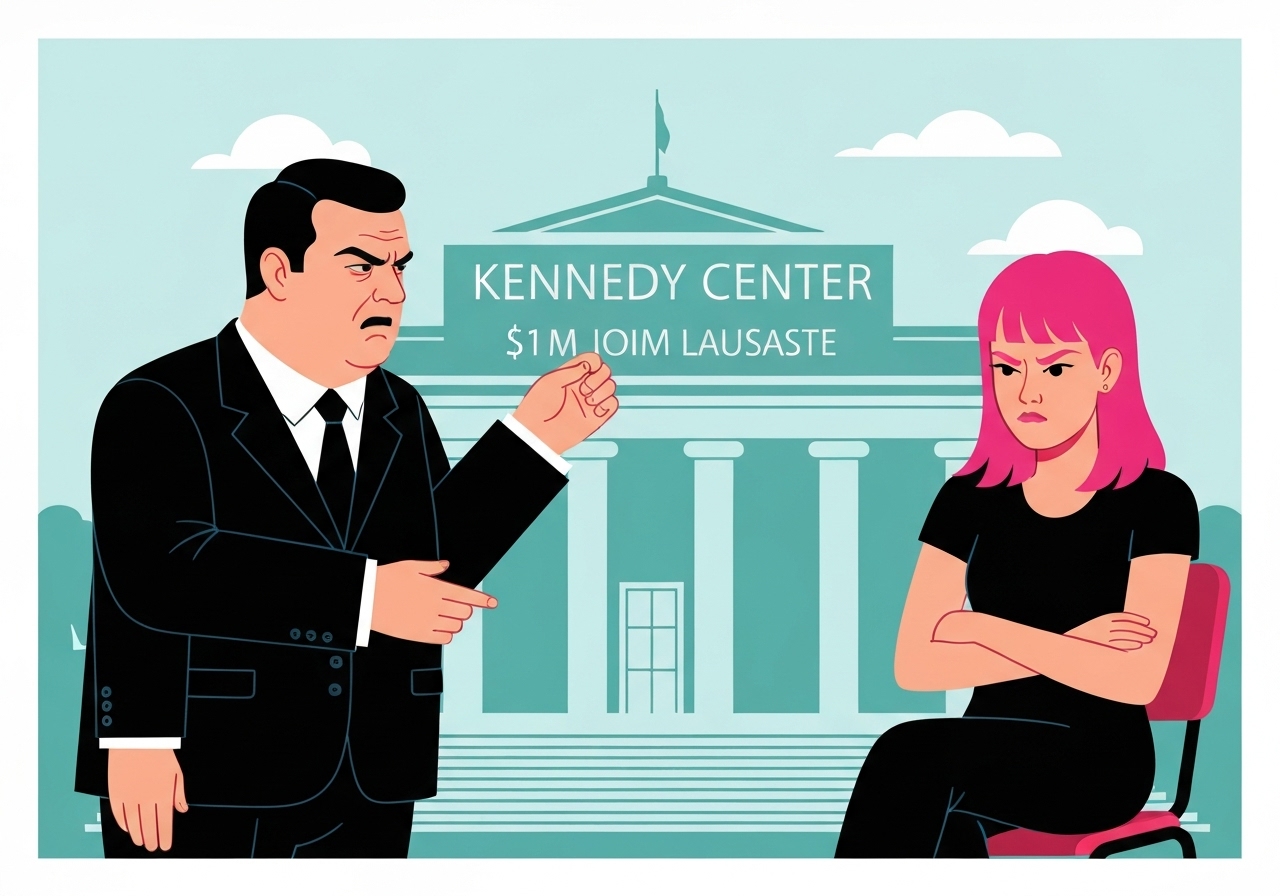
Kennedy Center President Richard Grenell has warned jazz drummer Chuck Redd that the center will seek $1 million in damages after Redd canceled his Christmas Eve performance. The cancellation followed the board’s decision, made a week earlier, to rename the institution the Trump Kennedy Center. Grenell described the withdrawal as costly to the nonprofit and blamed what he called “sad bullying tactics.” Redd told The Associated Press on Dec. 24 that he canceled after seeing the name change on the center’s website and building.
Key Takeaways
- Richard Grenell sent a letter, obtained by the AP, notifying Chuck Redd that the Kennedy Center will “seek $1 million in damages” after Redd canceled a Dec. 24 Christmas Eve Jazz Jam appearance.
- Chuck Redd has led the Kennedy Center’s Christmas Eve Jazz Jam since 2006 and withdrew after the center’s board voted to rename the venue the Trump Kennedy Center a week before the show.
- The board that approved the renaming was reported to be selected by former President Donald Trump; the renaming vote was unanimous.
- Since Trump’s self-appointment as chairman in early February, at least 26 performances at the venue have been canceled, including 15 cancellations initiated by scheduled acts.
- High-profile cancellations and protests have included Issa Rae (Feb. 14), Low Cut Connie (March 19 cancellation of a scheduled show), a Guster protest involving the musical Finn, and the cancellation of a planned 2026 run of Hamilton by Lin-Manuel Miranda and Jeffrey Seller.
Background
The John F. Kennedy Center for the Performing Arts has for decades been a federally chartered, nonpartisan cultural institution in Washington, D.C. For more than 20 years the center hosted a Christmas Eve Jazz Jam, an event led by Chuck Redd since 2006 that became an annual tradition for local audiences and touring musicians.
Tensions escalated after the center’s board of trustees — reported to be handpicked by former President Donald Trump — voted unanimously to rename the institution the Trump Kennedy Center. That change, implemented online and on the building days before the scheduled Jazz Jam, prompted several artists to reassess engagements at the venue.
The dispute follows Trump’s reported decision to appoint himself chairman in early February, a move that critics say politicized a traditionally nonpartisan arts institution. Supporters argue the renaming honors Trump’s role in supporting the institution; opponents call the change controversial and have raised legal and ethical questions.
Main Event
On Dec. 24, Chuck Redd informed the center he would not perform after discovering the venue’s new name on the Kennedy Center website and, later, on the building itself. In a letter obtained by The Associated Press, Grenell framed Redd’s late withdrawal as intolerant and costly to a nonprofit arts organization.
Grenell’s letter described Redd’s decision as surrendering to “the sad bullying tactics employed by certain elements on the left” and labeled the cancellation a “political stunt.” The letter also served as what Grenell called “official notice” that the Kennedy Center intended to pursue $1 million in damages.
Redd did not immediately respond to Rolling Stone when contacted for comment. The cancellation is one of dozens tied to disputes over the center’s leadership and name changes since early in the year, and it adds to a pattern of artists and producers pulling planned work or publicly protesting the institution’s new direction.
The board’s renaming vote occurred roughly a week before the scheduled Jazz Jam. According to reporting, the unanimous decision propelled multiple artists to cancel or modify performances, citing concerns about the center’s values and independence as a public cultural institution.
Analysis & Implications
The threat of a $1 million damages claim raises immediate legal and financial questions for both the Kennedy Center and artists. For a nonprofit arts organization, litigating high-value claims increases operating uncertainty and could divert resources from programming and community outreach.
Legally, a damages demand hinges on contract terms—what notice was required for cancellations, whether political protests constitute breach, and whether force majeure or morality clauses apply. A courtroom fight would likely scrutinize written contracts for the Jazz Jam and similar engagements and could set precedents for how politically motivated cancellations are handled at cultural institutions.
Politically, the dispute amplifies concerns about the politicization of federal cultural bodies. The renaming and reported self-appointment of a former president as chairman have widened divisions among artists, donors, and audiences; continued high-profile withdrawals risk diminishing the center’s programming and national stature.
Economically, the cascade of cancellations—26 reported so far—could reduce earned revenue (ticket sales, concessions) and complicate donor relations. Producers and touring shows, such as the canceled 2026 Hamilton run, may re-route productions or withhold future bookings until governance questions are resolved.
Comparison & Data
| Metric | Count / Year |
|---|---|
| Performances canceled since early February | 26 |
| Acts that canceled themselves | 15 |
| Years Chuck Redd has led Jazz Jam | Since 2006 |
| Planned Hamilton run canceled | 2026 |
The table summarizes reported cancellations and relevant timeline items. The 26-performance figure and the 15 self-initiated cancellations were reported in contemporaneous coverage; they provide a snapshot of the operational impact since changes in leadership and branding began earlier in the year.
Reactions & Quotes
Officials and artists have framed events in contrasting terms, reflecting the polarized debate over the center’s governance and branding.
Your decision to withdraw at the last moment — explicitly in response to the Center’s recent renaming — is classic intolerance and very costly to a non-profit Arts institution.
Richard Grenell, Kennedy Center President (letter to Chuck Redd)
Grenell’s letter portrays the cancellation as politically motivated and financially harmful to the institution, and it signals the center’s intent to seek substantial damages.
When I saw the name change on the Kennedy Center website and then hours later on the building, I chose to cancel our concert.
Chuck Redd (to The Associated Press, Dec. 24)
Redd’s statement underscores that the renaming was the proximate cause for his withdrawal and frames the decision as a response to a symbolic change in the venue’s identity.
The Kennedy Center was not created in this spirit, and we’re not going to be a part of it while it is the Trump Kennedy Center.
Lin‑Manuel Miranda and Jeffrey Seller (on canceling a planned 2026 Hamilton run)
The cancellation by Hamilton’s producers is among the more consequential programmatic impacts, highlighting how producers may reassess multi-year, high-investment projects when institutional governance shifts.
Unconfirmed
- The legal validity of the board’s renaming action and whether it violates statutes or bylaws remains under dispute and has not been adjudicated.
- Whether the Kennedy Center will file a formal lawsuit seeking the $1 million in damages, and the timeline for any filing, had not been confirmed at the time of reporting.
- The full accounting of financial harm attributed directly to Redd’s canceled performance has not been disclosed publicly; the $1 million figure was described in Grenell’s letter but may be subject to negotiation or legal challenge.
Bottom Line
The immediate dispute between Richard Grenell and Chuck Redd is symptomatic of a broader rupture at the Kennedy Center following leadership and branding changes earlier this year. The center’s threat to seek $1 million in damages elevates what began as symbolic pushback into a concrete legal and financial confrontation.
Beyond the individual dispute, the spate of cancellations and high-profile withdrawals risks long-term damage to the institution’s relationships with artists, producers, and audiences. How the center and affected artists resolve contractual claims and governance questions will shape the venue’s programming and reputation in the years ahead.
Sources
- Rolling Stone — media report summarizing the letter and cancellations (journalism).
- The Associated Press — original reporting cited for Grenell’s letter and Chuck Redd’s statement (news wire).