
Lead
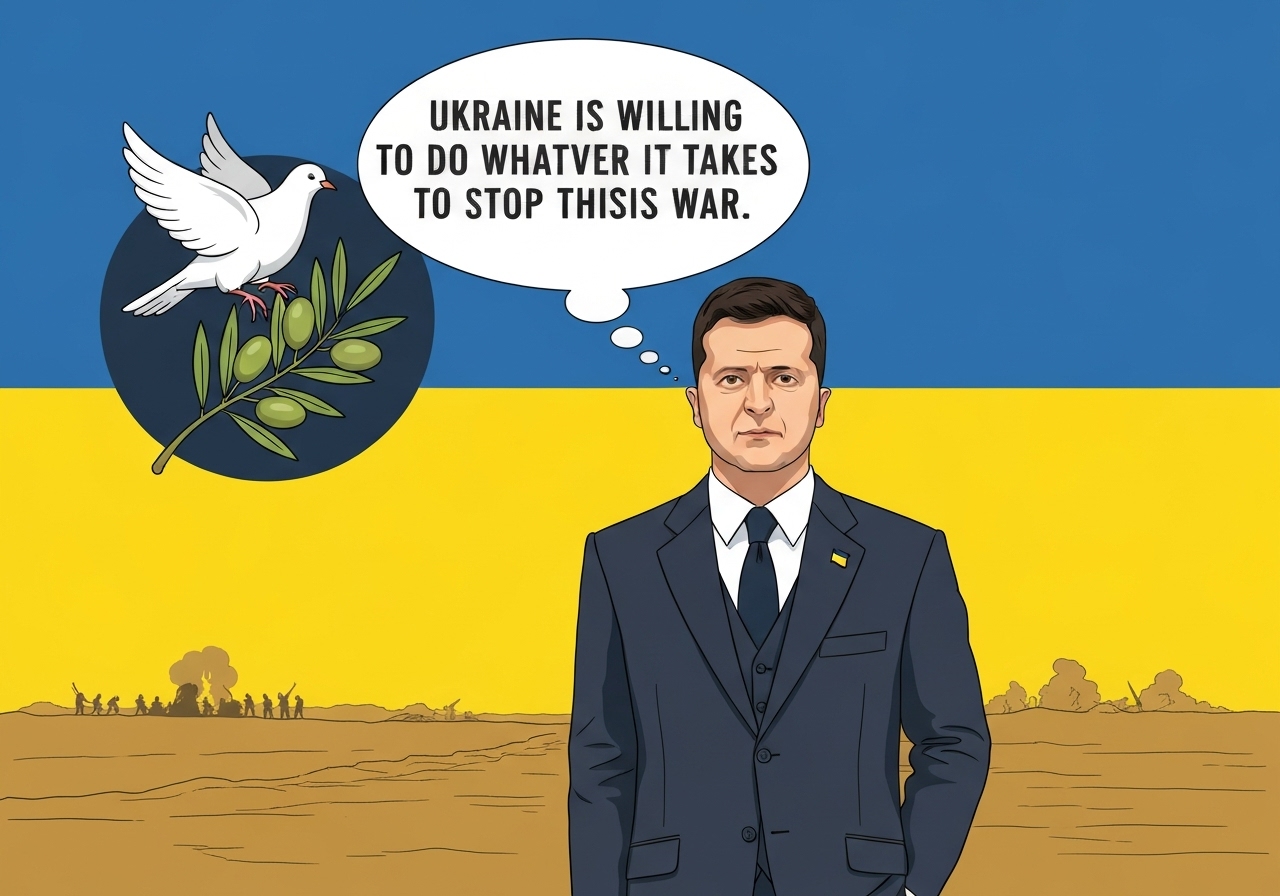
Ukrainian President Volodymyr Zelenskyy met U.S. President Donald Trump on Sunday at Mar-a-Lago as both leaders sought to press a draft peace plan to end nearly four years of war since Russia’s 2022 invasion. In the days before the encounter, Russian forces stepped up strikes on Kyiv and the eastern city of Sloviansk, causing civilian casualties. Zelenskyy said Kyiv was prepared to do “whatever it takes” to halt the fighting and stressed the need for strength at the negotiating table. The meeting follows intensive exchanges among negotiators and fresh international efforts to secure both security guarantees and a fragile local ceasefire near Zaporizhzhia nuclear plant infrastructure.
Key Takeaways
- Meeting location: Mar-a-Lago, Palm Beach, Florida; date: Sunday, December 28, 2025 — a high-profile bilateral session between Trump and Zelenskyy aimed at finalizing a peace framework.
- Damage and casualties: Overnight strikes: three guided aerial bombs hit private homes in Sloviansk — 1 dead, 3 injured (reported by regional head Vadym Lakh). Kyiv attacks with ballistic missiles and drones reportedly killed at least 1 person and wounded 27.
- Draft peace plan: Negotiators have circulated a 20-point draft described as roughly “about 90% ready” by Zelenskyy; the text remains subject to change on territorial and security guarantees.
- Nuclear safety: IAEA-brokered local ceasefire enabled urgent repairs to power lines near Zaporizhzhia NPP; IAEA Director General Rafael Grossi called the works “crucial” and said they would last a few days.
- Security guarantees: U.S. proposals include NATO-like security guarantees intended to protect Ukraine without immediate NATO accession; Kyiv has signaled willingness to pause membership ambitions in exchange for these guarantees.
- International support: Canada announced C$2.5 billion (US$1.8 billion) in additional economic aid to Ukraine, announced by Prime Minister Mark Carney during talks in Halifax.
- Russian demands: The Kremlin continues to press for recognition of territory captured in four regions plus Crimea, limits on Ukraine’s military size, and status for the Russian language; Kyiv publicly rejects those conditions.
Background
The war, which Moscow began in February 2022, has settled into a prolonged, attritional conflict with shifting front lines in eastern and southern Ukraine. International diplomacy has oscillated between sanctions and negotiations; previous ceasefires and local truces have often been temporary. Russia’s annexation of Crimea in 2014 and subsequent fighting in Donbas set the stage for the current demands over territorial recognition and security arrangements.
Since the full-scale invasion, Zaporizhzhia nuclear power plant has been occupied by Russian forces, raising persistent concerns about nuclear safety. The International Atomic Energy Agency has repeatedly called for protected corridors and technical repairs to reduce accident risk. Meanwhile, Kyiv has pursued both military resistance and parallel diplomatic tracks — including offers to trade aspects of territory or demilitarize contested areas in exchange for international guarantees.
Main Event
The leaders convened at Trump’s Mar-a-Lago club, where talks were expected to focus on security and economic accords and unresolved “territorial issues,” especially the future of Donbas. Zelenskyy said he would press for robust international guarantees to prevent future aggression and flagged the Zaporizhzhia plant as a key negotiation item. According to Ukrainian officials, negotiators have iterated a 20-point peace draft in recent weeks; Zelenskyy described it as “about 90% ready,” reflecting progress but also remaining sensitive points.
In the run-up to the meeting, Russian forces launched strikes across Ukraine. In Sloviansk, three guided aerial bombs struck private homes, injuring three people and killing one, a regional official reported on Telegram. Kyiv endured a large-scale attack with ballistic missiles and drones that, according to Ukrainian authorities, killed at least one person and wounded 27 — explosions were reported across the city early Saturday and continued for hours.
Separately, the IAEA said a local ceasefire allowed repair teams to begin fixing power lines near the Zaporizhzhia nuclear plant, work it called “crucial” and expected to last a few days. The plant has been under Russian control since early in the war, and its safety has been a persistent topic in diplomatic discussions. Canada’s announced C$2.5 billion (US$1.8 billion) economic package was presented to Zelenskyy as part of broader Western support aimed at Ukraine’s recovery and leverage at the negotiating table.
Analysis & Implications
If negotiators can convert the draft proposal into a stable, enforceable agreement, the immediate benefit would be a substantial reduction in large-scale combat and civilian harm — but the practical challenge is verification and enforcement on the ground. Russian demands to recognize territory seized in 2014 and since 2022 would require Kyiv to accept long-term loss of parts of Donetsk, Luhansk and other areas, a political concession that Kyiv has publicly rejected. Any accord that falls short of Ukrainian sovereignty expectations risks domestic political backlash and could undermine long-term stability.
Security guarantees that mimic NATO protection without formal membership present both an opportunity and a risk. Such guarantees could deter future Russian aggression if backed by credible, rapid-response mechanisms and international commitment of forces or sanctions. However, Moscow has warned that the presence of foreign troops on Ukrainian soil would be treated as a legitimate target; the exact wording, trigger conditions, and participating guarantors will determine whether these guarantees reduce or merely relocate risk.
The Zaporizhzhia ceasefire and repair work reduce immediate nuclear risk, but they also demonstrate how technical steps are intertwined with diplomacy. Successful, durable maintenance depends on continuous access and monitoring — a fragile arrangement if front lines remain volatile. The IAEA’s involvement adds technical neutrality but cannot substitute for solid political guarantees that keep heavy weapons and occupying forces away from critical infrastructure.
Economically, the additional Canadian assistance and potential Western incentives to reintegrate Russia economically (if and when Moscow complies) create linkage between financial carrots and security outcomes. That linkage may accelerate bargaining but also complicates consensus among Western states that differ on when and how to reengage Russia economically.
Comparison & Data
| Item | Reported figure |
|---|---|
| Killed in Kyiv attack | At least 1 |
| Wounded in Kyiv attack | 27 |
| Sloviansk strike | 1 killed, 3 injured |
| Canadian aid announced | C$2.5 billion (US$1.8 billion) |
| Draft peace points | 20-point draft — ~90% ready (as stated by Zelenskyy) |
The table compiles the key, reported figures surrounding the meeting and preceding attacks. These numbers are drawn from Ukrainian regional officials, national authorities and public statements; casualty figures from active conflict zones can change as more information becomes available. The draft’s “90%” completeness is a negotiators’ characterization, not a final legal status.
Reactions & Quotes
Ukrainian authorities and international figures framed the meeting as a potential pivot point for ending hostilities, while Russian officials reiterated maximal demands. Below are representative quotes with context.
“Ukraine is willing to do whatever it takes to stop this war. We need to be strong at the negotiating table.”
Volodymyr Zelenskyy (post on X)
The quote underscores Kyiv’s stated readiness to pursue compromise measures at the bargaining table while seeking strong international guarantees to preserve sovereignty and security.
“Crucial works” are underway and expected to last a few days, enabling repairs near the Zaporizhzhia plant.
Rafael Grossi, IAEA Director General
Grossi’s remark highlights the technical priority of reducing nuclear risk and the IAEA’s role in brokering temporary local truces to allow repairs.
“It was agreed upon to continue the dialogue.”
Dmitry Peskov, Kremlin spokesman
The Kremlin’s statement signaled ongoing contact with U.S. channels but did not alter official Russian positions on territorial recognition or NATO-related demands.
Unconfirmed
- Whether the 20-point draft contains final, legally binding language on territory and security — current descriptions of “about 90% ready” come from negotiators and are not a formal text yet.
- Whether U.S. offers of NATO-like protections include immediate deployment of allied forces on Ukrainian soil — public statements suggest guarantees but do not confirm troop commitments.
- Reports of behind-the-scenes concessions by either Kyiv or Moscow beyond publicly stated positions remain unverified and may reflect negotiators’ positions rather than final agreements.
Bottom Line
The Mar-a-Lago meeting between Trump and Zelenskyy represents a high-stakes push to convert months of shuttle diplomacy into a practicable peace framework. Human costs continued in the days before the summit, underlining the urgency negotiators face: any agreement must deliver credible, enforceable protections while addressing Kyiv’s need to preserve sovereignty and territorial integrity.
Technical steps such as the IAEA-brokered repairs at Zaporizhzhia reduce immediate nuclear risk, but long-term safety and stability will depend on durable political arrangements and international verification. Observers should watch for the final wording of security guarantees, the fate of contested territories (especially in Donbas), mechanisms for enforcement, and whether Western states are prepared to underwrite and, if needed, act on those guarantees.
Sources
- Fortune — Media report summarizing the meeting and related developments (news media).
- International Atomic Energy Agency (IAEA) — Official international nuclear oversight agency; IAEA statements on Zaporizhzhia and technical works (international organization).
- Office of the President of Ukraine — Official communications from President Zelenskyy and his press office (official government source).