
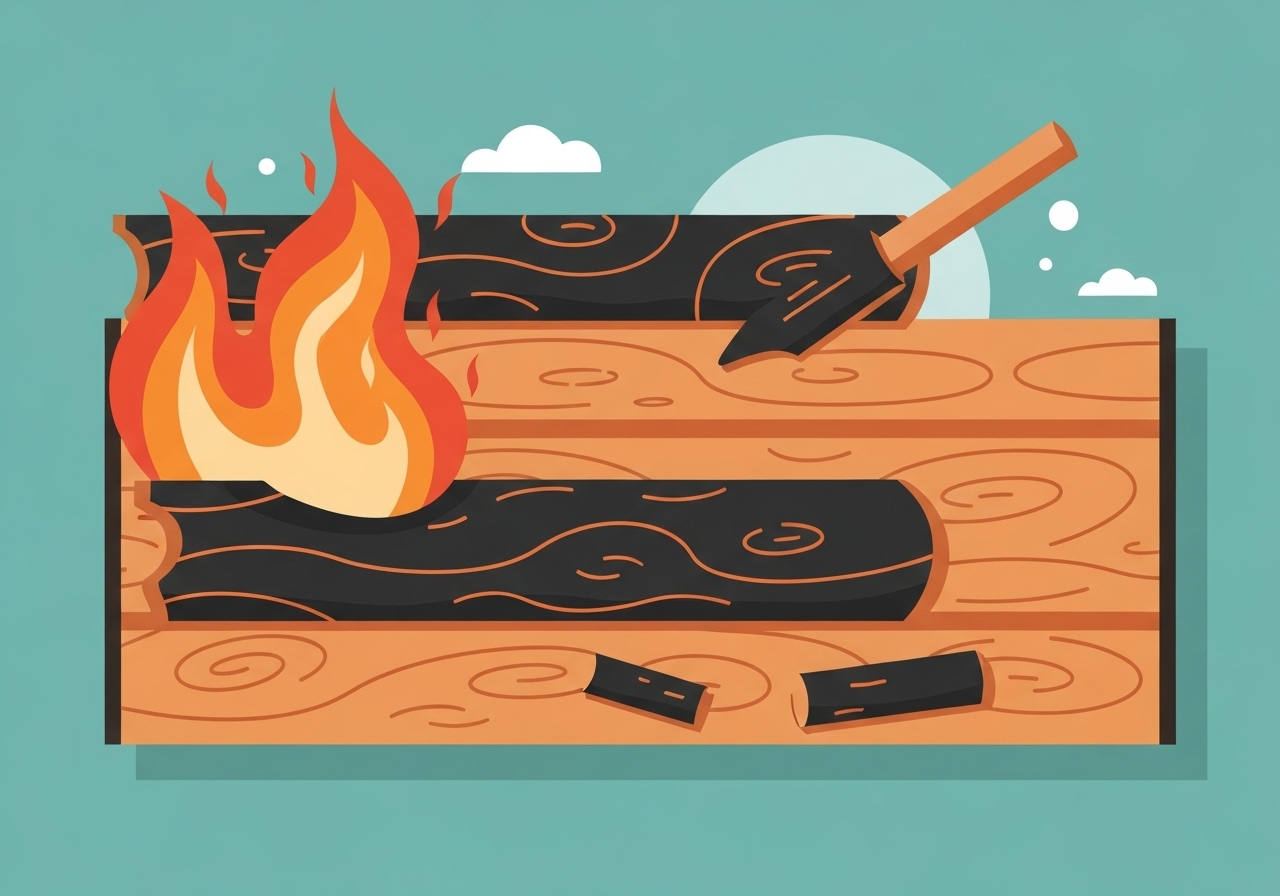
Lead: A newly publicized analysis of Leonardo da Vinci’s Codex Madrid II (dated 1503–1505) highlights a brief note advising that logs “stripped of bark and burned on the surface” last longer, a recommendation that mirrors the Japanese yakisugi technique. The observation appears in folio 87r and was called out in a 2025 paper published on Zenodo by Annalisa Di Maria and collaborators. If interpreted as a practical preservation tip, the note pre-dates the earliest written codifications of yakisugi from the 17th–18th centuries by more than a century. The authors and peer observers frame the finding as an instance of convergent technical insight rather than evidence of direct contact between Renaissance Europe and Japan.
Key Takeaways
- Leonardo’s relevant entry appears on folio 87r of the Codex Madrid II, composed circa 1503–1505.
- The 2025 Zenodo paper (DOI: 10.5281/zenodo.17506250) highlights Leonardo’s line recommending bark removal and surface charring to preserve wood.
- Yakisugi, a Japanese method of charring cedar to create a protective carbon layer, was first codified in written form in the 17th–18th centuries; Leonardo’s note precedes those records by >100 years.
- Authors of the new study are Annalisa Di Maria (UNESCO Club of Florence), Andrea da Montefeltro (molecular biologist/sculptor), and Lucica Bianchi (art historian).
- Scientific mechanisms underlying charring—sealing pores, reducing water uptake, and creating a biologically inhospitable surface—are well documented, though effectiveness varies by species and environment.
- The finding is interpreted as convergent invention: no documentary evidence links Renaissance Italy to Japanese architectural practice in this context.
- Related archival discoveries (e.g., Leonardo’s materials notes and earlier technological sketches) reinforce his interest in material science across art and engineering.
Background
Leonardo da Vinci left an extensive manuscript legacy: his notebooks and codices originally ran to over 13,000 pages, although fewer than a third of those pages survive today. His records span mechanical inventions, anatomical studies, and materials observations—often blending practical workshop notes with theoretical reflection. For example, Leonardo wrote about making lenses in the Codex Atlanticus (c. 1490) and made detailed anatomical drawings that anticipated later scientific advances.
Interest in wood as a structural and functional material was integral to Renaissance workshops and civil engineering. Leonardo catalogued species-specific properties—oak and chestnut for strength, ash and linden for flexibility, alder and willow for submerged uses—and described simple seasoning methods such as raising logs to improve sap drainage. Those entries reflect the period’s hands-on approach to material optimization and the overlap between artistry and emerging engineering practice.
Main Event
The new analysis centers on a short passage in Codex Madrid II (folio 87r) in which Leonardo recommends removing bark and charring the wood surface to enhance preservation. Di Maria and her co-authors examined the phrase in the context of Leonardo’s broader material notes and argued for its technical, not folkloric, character. They published their findings in 2025 on Zenodo with DOI 10.5281/zenodo.17506250, providing transcription, contextual commentary, and comparisons with later documented practices.
The paper situates the note amid a period when European woodworking and civil construction were receiving renewed systematic attention. The study team emphasizes that Leonardo’s recommendation aligns with physical mechanisms now understood by material scientists: heat carbonizes the surface, closing pores and reducing water uptake, while bark removal deprives pests and fungi of nutrient-rich material. Those processes are central to why yakisugi has been effective in Japanese vernacular architecture.
The authors explicitly address the possibility of cultural transmission and find no evidence for direct contact between Renaissance Italy and Japanese carpentry traditions on this point. Instead, they present the case as convergent innovation: independent observers in different places can land on similar solutions when confronting comparable material problems. The paper also notes Leonardo’s consistent attention to the relationship between living materials and environmental processes.
Analysis & Implications
If Leonardo’s note is read as a deliberate preservation technique rather than casual observation, it enlarges our understanding of his empirical approach to materials. It shows that he combined workshop experience with systematic recording, anticipating later craft codifications and, in modern terms, aspects of bioarchitecture. The observation does not prove that he developed a full charring protocol, but it does indicate awareness of a functional effect produced by fire treatment.
For conservationists, the historical note is interesting but not prescriptive. Contemporary wooden-conservation practice evaluates species, exposure, moisture regimes, and treatment side-effects before recommending charring or surface treatments. Different timbers—softwoods versus hardwoods—or varying degrees of char produce different mechanical and aesthetic outcomes, and modern standards emphasize replicable, documented methods.
For historians of technology, the case illustrates how practical problem-solving can recur across cultures without direct influence. The gap of more than a century between Leonardo’s entry and the first written yakisugi descriptions supports the convergent-invention reading. Still, it invites renewed scrutiny of other early European sources for similar observations that may have been overlooked in historical surveys of vernacular carpentry.
Comparison & Data
| Item | Date (approx.) | Nature |
|---|---|---|
| Leonardo’s Codex Madrid II (folio 87r) | 1503–1505 | Notebook note advising bark removal and surface charring |
| First written yakisugi descriptions | 17th–18th centuries | Codified Japanese timber charring practices |
Placed side by side, the timeline shows Leonardo’s note preceding the documented Japanese codifications by roughly 150–200 years. That chronological comparison supports the claim that the idea existed earlier in Europe in at least a notational form. However, the table does not measure prevalence, scale of application, or technical detail; the Japanese tradition contains standardized practices and craft protocols that are not documented in Leonardo’s brief entry.
Reactions & Quotes
“Leonardo’s brief remark appears to reflect an empirical, workshop-derived insight into material longevity rather than mere folklore,”
Di Maria et al. (2025 study)
“Discoveries like this underscore how Leonardo blended observational craft knowledge with theoretical curiosity,”
Art-history commentator
“From a conservation science perspective, charring can reduce moisture uptake and insect colonization, but effectiveness depends on species and exposure,”
Conservation scientist
Unconfirmed
- There is no documentary proof that Leonardo applied the charring method at scale or developed a repeatable procedure—his note is brief and descriptive rather than prescriptive.
- No evidence has been found linking Renaissance Italian carpentry directly to Japanese yakisugi practices; transmission between the regions remains unsupported.
- How Leonardo intended the technique to be implemented (specific temperatures, duration, or tools) is not recorded and remains unknown.
Bottom Line
The newly highlighted line in Codex Madrid II reinforces Leonardo’s role as an acute observer of materials and environments, and it places a practical woodworking insight on the historical record earlier than previously documented written yakisugi. The finding is best read as an example of convergent problem-solving rather than a direct historical connection between Italy and Japan.
For practitioners and researchers, the note is a prompt to revisit early sources on woodworking and to test historically grounded hypotheses under controlled, species-specific conditions. For the public, it adds a modest but telling facet to Leonardo’s portfolio—a reminder that his investigations ranged from lofty inventions to pragmatic workshop techniques.