
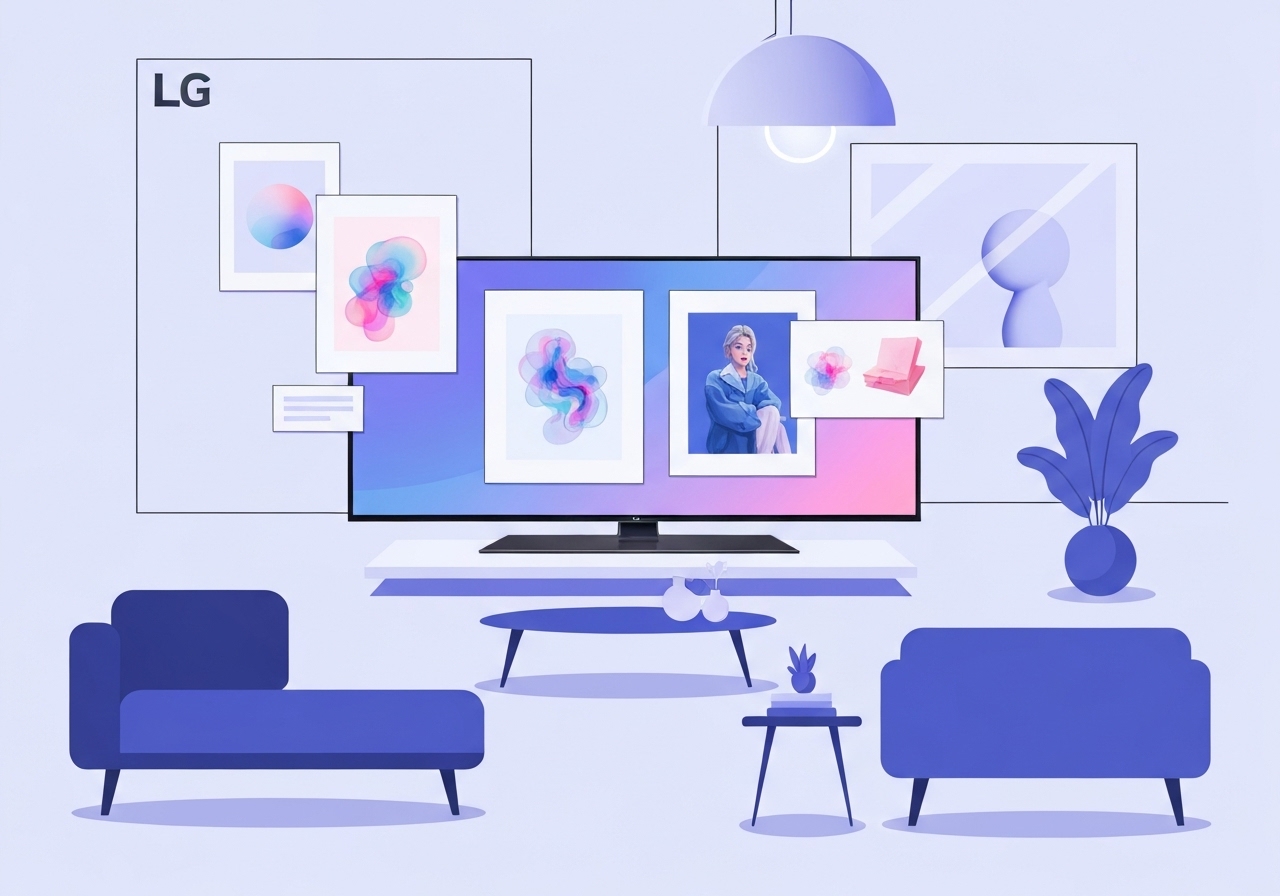
LG has announced the Gallery TV, its first product explicitly aimed at the growing ‘‘art TV’’ market, unveiling a mini‑LED panel paired with the Gallery+ content service. The company confirmed 55‑ and 65‑inch sizes and a default white frame with a wood‑tone option; pricing has not been released. Gallery+ will deliver thousands of display visuals — from classic artworks to cinematic stills and game scenes — with a limited free tier and fuller access behind a subscription. The new model is distinct from LG’s G Series OLEDs, which previously used the ‘‘Gallery’’ name and remain separate because of OLED’s burn‑in risk with static images.
- LG announced the Gallery TV at CES 2026 as a mini‑LED entry into the art TV segment; 55″ and 65″ sizes are confirmed.
- The set integrates LG’s Gallery+ service, which offers thousands of visuals and a tiered model: a limited free option and a paid subscription for full access.
- LG describes the panel as having a specialized screen that reduces glare and reflections, suggesting a matte or anti‑reflective treatment; exact surface and backlight details remain unspecified.
- The Gallery TV ships with a white frame by default; an additional wood‑colored frame will be available for purchase.
- Unlike OLED G Series models, the Gallery TV uses mini‑LED to mitigate long‑term image retention and burn‑in concerns with static artwork.
- LG has not disclosed backlight architecture, but other art‑first sets commonly use edge lighting; availability dates and pricing are still to be announced.
- John Higgins, a senior TV and audio reviewer with more than 20 years in AV, reported the announcement for The Verge and placed the product in the context of recent entrants from TCL and Hisense.
Background
The ‘‘art TV’’ category took shape around Samsung’s The Frame, which combined a picture‑frame design, curated art storefront and a gallery mode that transforms idle screens into framed artworks. That formula attracted competitors: in the last two years TCL and Hisense introduced products leaning into décor‑first displays and optional frame accessories. Manufacturers pair hardware adjustments — matte screens, slim bezels and frame kits — with subscription storefronts to create a lifestyle proposition rather than a conventional television purchase.
LG expanded its software footprint earlier in the year with Gallery+, a curated visual service intended to populate living spaces with art, cinematic stills and themed images. The Gallery TV is the company’s hardware counterpart to that platform, signaling a deliberate move to compete for buyers who prioritize aesthetics and ambient viewing. Historically, LG’s high‑end G Series OLEDs used the ‘‘Gallery’’ label; the new naming reassigns ‘‘Gallery’’ to this mini‑LED, décor‑oriented product line and highlights a split between picture‑quality priorities and static‑image longevity.
Main Event
The central announcement at CES 2026 is straightforward: LG will sell a Gallery‑branded TV that targets consumers seeking art‑style presentation rather than only peak HDR performance. The set uses a mini‑LED backlighting approach, which LG says helps avoid the image retention issues associated with sustained display of single pictures on OLED panels. That makes mini‑LED a practical choice for a device expected to present static images for extended periods.
LG’s press materials say the screen has been treated to reduce glare and minimize reflections to deliver an ‘‘art‑like viewing experience,’’ language the company emphasizes when positioning the product for rooms with natural light and typical household viewing angles. A simple frame system is part of the package: the default finish is white, and an optional wood‑tone frame will be offered as an add‑on. The inclusion of a physical frame follows moves by Hisense and other makers who bundle similar accessories.
Gallery+ will be the curated content engine for the TV, offering collections that range from classical artworks to filmic landscapes and even curated gaming scenes. LG confirmed the service supports a limited free tier but that full libraries and features will require a subscription. The company has not yet published subscription pricing or the cadence of new content drops.
Analysis & Implications
LG’s entry formalizes a market that has matured from a niche novelty into a product category where hardware, software and aesthetics converge. For manufacturers, success depends on striking a balance between display technology that resists image retention and a content ecosystem that justifies ongoing fees. LG’s choice of mini‑LED signals an engineering trade‑off: deliver durable static‑image performance while accepting that mini‑LED may not match OLED for peak contrast and black levels.
Subscription services such as Gallery+ and Samsung’s Art Store turn televisions into platforms for recurring revenue, creating a software layer that can influence buyer loyalty and lifetime value. If consumers respond positively, manufacturers may adopt differentiated content strategies — exclusive collections, curated partnerships with museums or artist collaborations — to justify subscriptions and differentiate hardware beyond screen specs and bezel design.
Price will be pivotal. The Frame benefited from a mix of midrange and premium SKUs that let Samsung dominate early. LG’s competitiveness will hinge on how the Gallery TV is priced relative to comparable mini‑LED and The Frame models, and whether the optional wood frame and software tiers are perceived as add‑ons or essential parts of the experience. Broad retail availability and promotional bundles around Gallery+ could determine early adoption rates.
Comparison & Data
| Model / Attribute | Panel | Sizes | Frame | Art Service |
|---|---|---|---|---|
| LG Gallery TV | mini‑LED | 55″, 65″ | White default; optional wood | Gallery+ (free tier + subscription) |
| Samsung The Frame | QLED (frame‑focused) | various sizes | Multiple bezel options | Art Store (tiered) |
| Recent TCL/Hisense models | varies by model | various sizes | Some include frames | Manufacturer galleries or partner services |
The table highlights the key distinctions customers will weigh: LG emphasizes mini‑LED durability for static imagery and a bundled frame option, while Samsung’s The Frame remains centered on a QLED panel and a mature Art Store ecosystem. TCL and Hisense have introduced budget‑to‑midrange alternatives that prioritize price or design. The specifics of backlight layout, price points and subscription terms will be central to how consumers trade off picture quality, longevity and overall value.
Reactions & Quotes
The announcement prompted immediate commentary from LG and coverage from industry reviewers, who framed the product as a practical solution to burn‑in concerns.
“A specialized screen that reduces glare and minimizes reflections for an art‑like viewing experience.”
LG (product description)
This language came from LG’s product materials and was highlighted in media reports to explain the set’s anti‑reflective focus. The phrase underscores the company’s attempt to position the TV as a decorative object as much as a display device, intended to live on a wall and display static imagery comfortably in real rooms.
“Gallery+ has a limited free option, but its full capability requires a subscription.”
John Higgins / The Verge
John Higgins, reporting from The Verge, noted the Gallery+ tiering and compared LG’s service model to Samsung’s Art Store. Reviewers and analysts will watch whether subscribers find the curated content valuable enough to justify recurring payments or prefer one‑time art purchases and local image libraries.
Unconfirmed
- LG has not specified the exact backlight layout or local‑dimming zone count; reports assume edge lighting is likely but this is not confirmed.
- Whether the screen uses a matte coating or an advanced anti‑reflective laminate is implied by LG’s wording but not explicitly detailed.
- The price for the 55″ and 65″ Gallery TV models and the Gallery+ subscription tiers and costs have not been announced.
Bottom Line
LG’s Gallery TV marks a deliberate move into a category that blends hardware design and subscription content. By choosing mini‑LED and pairing the display with Gallery+, LG aims to offer a product that reduces burn‑in risk while tapping into a recurring‑revenue service model favored by rivals.
Ultimately, the set’s success will depend on price, the perceived value of Gallery+ content, and whether consumers prefer the slightly different trade‑offs of mini‑LED versus OLED. With Samsung, TCL and Hisense already competing for shoppers who prioritize décor, LG’s execution on cost, availability and software partnerships will determine whether it reshapes the market or becomes another manufacturer offering a tasteful alternative.