
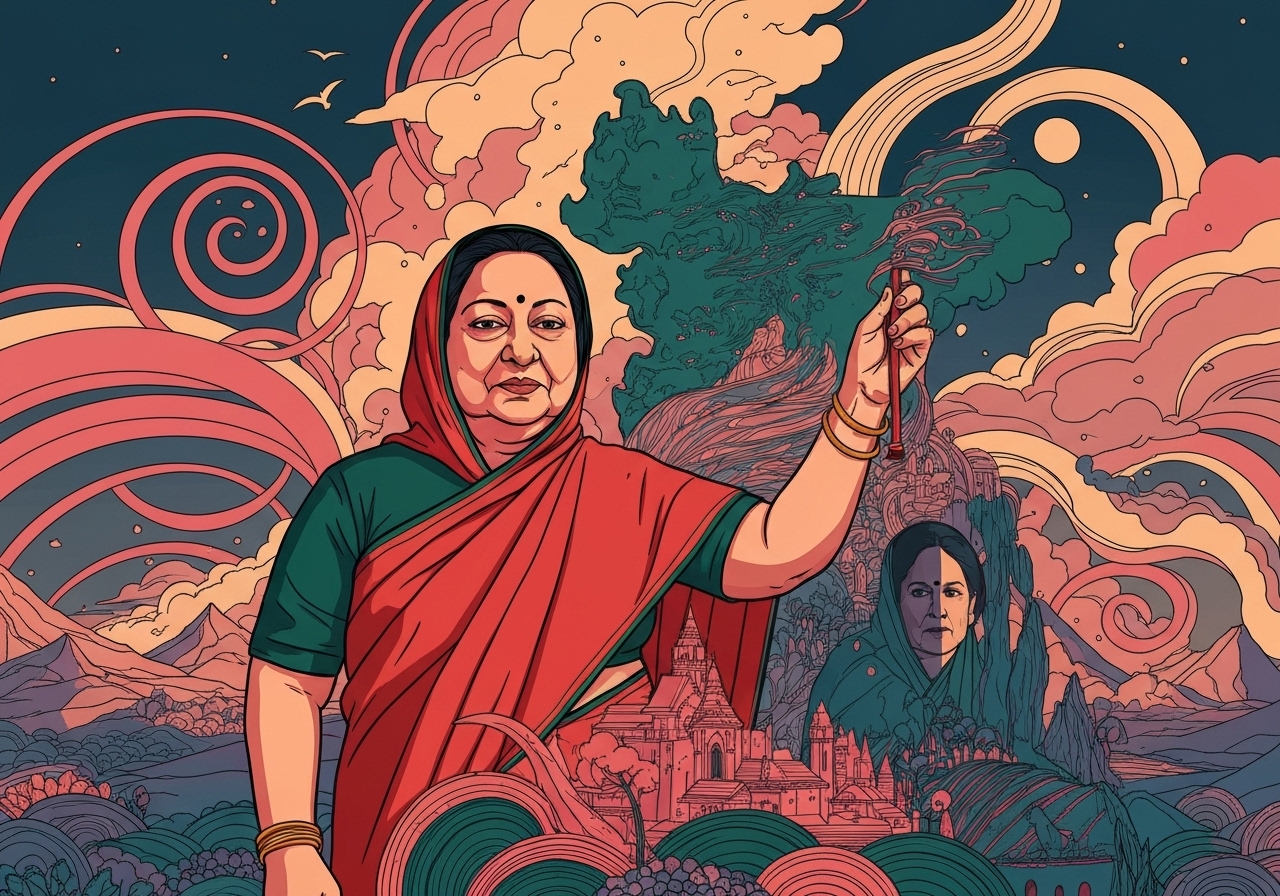
Khaleda Zia, Bangladesh’s first female prime minister, died in Dhaka on Monday aged 80 after a prolonged illness, her party announced. She had been hospitalised for about a month at Evercare Hospital receiving treatment for kidney damage, heart disease and pneumonia and was placed on life support as physicians described her condition as “extremely critical.” The Bangladesh Nationalist Party (BNP) said Zia passed away at 06:00 local time; family members including her son Tarique Rahman were at her bedside. Her death comes amid a volatile political moment ahead of general elections expected in February, raising immediate questions about leadership and the BNP’s campaign strategy.
Key takeaways
- Khaleda Zia died aged 80 after a prolonged illness; her party reported her death at 06:00 on Monday from Evercare Hospital in Dhaka.
- Zia became Bangladesh’s first female head of government after the 1991 election, returning as prime minister in 2001 and stepping down in October 2006.
- She faced corruption convictions in 2018 under the Awami League government led by Sheikh Hasina; Zia denied wrongdoing and said charges were politically motivated.
- Zia had been hospitalised for roughly one month with kidney damage, heart disease and pneumonia and was on life support; physicians described her condition as “extremely critical.”
- The BNP said she intended to contest the forthcoming general election; party leaders suggest her son Tarique Rahman, who returned last week after 17 years abroad, is likely to play a central role.
- Crowds gathered outside Evercare Hospital after the announcement and police sought to control access to the facility.
- Local papers paid tribute, describing Zia as a tenacious and defining figure in Bangladesh’s contemporary political history.
Background
Khaleda Zia first entered national politics following the assassination of her husband, President Ziaur Rahman, in a 1981 coup. She emerged as leader of the Bangladesh Nationalist Party (BNP) and led it to victory in the 1991 election, the country’s first democratic vote in two decades, becoming the first woman to serve as prime minister.
Her political life was marked by a prolonged, personalised rivalry with Awami League leader Sheikh Hasina; the two alternated between government and opposition for decades. Zia served a brief period in 1996 and then a full term from 2001 until she stepped down in October 2006 ahead of a general election. Corruption cases and periods of imprisonment, most notably in 2018, further polarised Bangladeshi politics around the two parties.
Main event
Physicians treating Zia reported her condition as “extremely critical” on Monday before the BNP announced her death at 06:00. Hospital sources said her advanced age and multiple chronic conditions limited the range of simultaneous treatments; she had been receiving care for kidney impairment, cardiac problems and pneumonia during her final weeks.
The BNP posted its announcement on social media, and crowds soon assembled outside Evercare Hospital in Dhaka. Photographs and on-the-ground reports showed police officers working to prevent people from entering hospital premises as mourners gathered, reflecting both the depth of Zia’s support and concerns about public order.
Family members including Zia’s son, Tarique Rahman — who returned to Bangladesh last week after 17 years in self-imposed exile in London — were reported to be at her bedside when she died. BNP officials asked supporters to pray for her soul and to respect the family’s wishes as arrangements were made.
Analysis & implications
Zia’s death removes a symbolic figure who for decades personified one half of Bangladesh’s dominant political duopoly with Sheikh Hasina. Her passing could accelerate a leadership transition within the BNP at a moment when the party has signalled intentions to contest the February general elections. If the BNP moves to formalise Tarique Rahman as its central leader, that could consolidate a clear succession but also deepen polarisation, given his long exile and conviction history.
For the Awami League and the country’s institutions, Zia’s death presents both strategic and reputational calculations. The government’s handling of national mourning, security around political events, and management of electoral rules will be closely watched domestically and by international observers concerned with stability and democratic processes in Bangladesh.
Economically, sustained political uncertainty ahead of a general election could weigh on investor confidence and the timing of policy reforms. If protests or large-scale mobilisations follow the funeral and related events, they may disrupt commerce and public services in Dhaka and other urban centres.
Comparison & data
| Year(s) | Role / Event |
|---|---|
| 1991 | Led BNP to victory; became first female prime minister |
| February 1996 | Short-lived second term |
| 2001–October 2006 | Returned as prime minister; stepped down before election |
| 2018 | Convicted on corruption charges; jailed |
| 2024 (last year) | Released after mass anti-government protests; Hasina went into exile |
The table highlights the main turning points in Zia’s public life: her rise after 1981, periods in office, legal troubles and the most recent release. Those events shaped the BNP’s organisational dynamics and the long-standing Hasina–Zia rivalry that has defined Bangladesh’s political narrative.
Reactions & quotes
BNP supporters and observers reacted swiftly to the announcement, with public displays of grief outside the hospital and statements from party leaders. The party’s social-media announcement framed Zia as an irreplaceable leader for her followers.
“Our favourite leader is no longer with us. She left us at 6am this morning.”
Bangladesh Nationalist Party (BNP) Facebook announcement
Interim BNP figures called for prayers and for supporters to remain peaceful while officials coordinate next steps. A senior interim BNP leader appealed to the nation to pray for Zia’s soul and to respect the family’s wishes.
“She was a source of utmost inspiration for the nation; we ask everyone to pray for her recovery and solace.”
Muhammad Yunus, interim BNP leader
Leading newspapers published tributes stressing Zia’s role in Bangladesh’s democratic struggles and her political resilience. Editors noted both her achievements and the controversies that accompanied her career.
“A defining figure of Bangladesh’s democratic struggle, tenacious in political survival and grit.”
The Daily Star (Bangladeshi newspaper)
Unconfirmed
- Precise clinical cause of death beyond the reported chronic conditions has not been publicly released by hospital authorities.
- Details of any state-level funeral or official national mourning period have not been confirmed by government sources at the time of writing.
- Whether Tarique Rahman will be formally installed as the BNP’s national leader or presidential candidate for the party remains speculative.
- Reports tying Zia’s final medical-care decisions to specific resource constraints have not been independently verified outside hospital statements.
Bottom line
Khaleda Zia’s death marks the end of a defining chapter in Bangladesh’s post-independence politics. Her rise from widow of a slain president to the country’s first female prime minister transformed the BNP into a durable political force and entrenched a two-party rivalry that still shapes national life.
In the short term, her passing will test the BNP’s organisational resilience and the government’s capacity to manage a dignified public response without escalating tensions. Over the longer term, the leadership choices the BNP makes now — and the government’s approach to the February elections — will influence whether Zia’s death leads to reconciliation, renewed confrontation, or a reconfiguration of Bangladesh’s political landscape.