
Lead
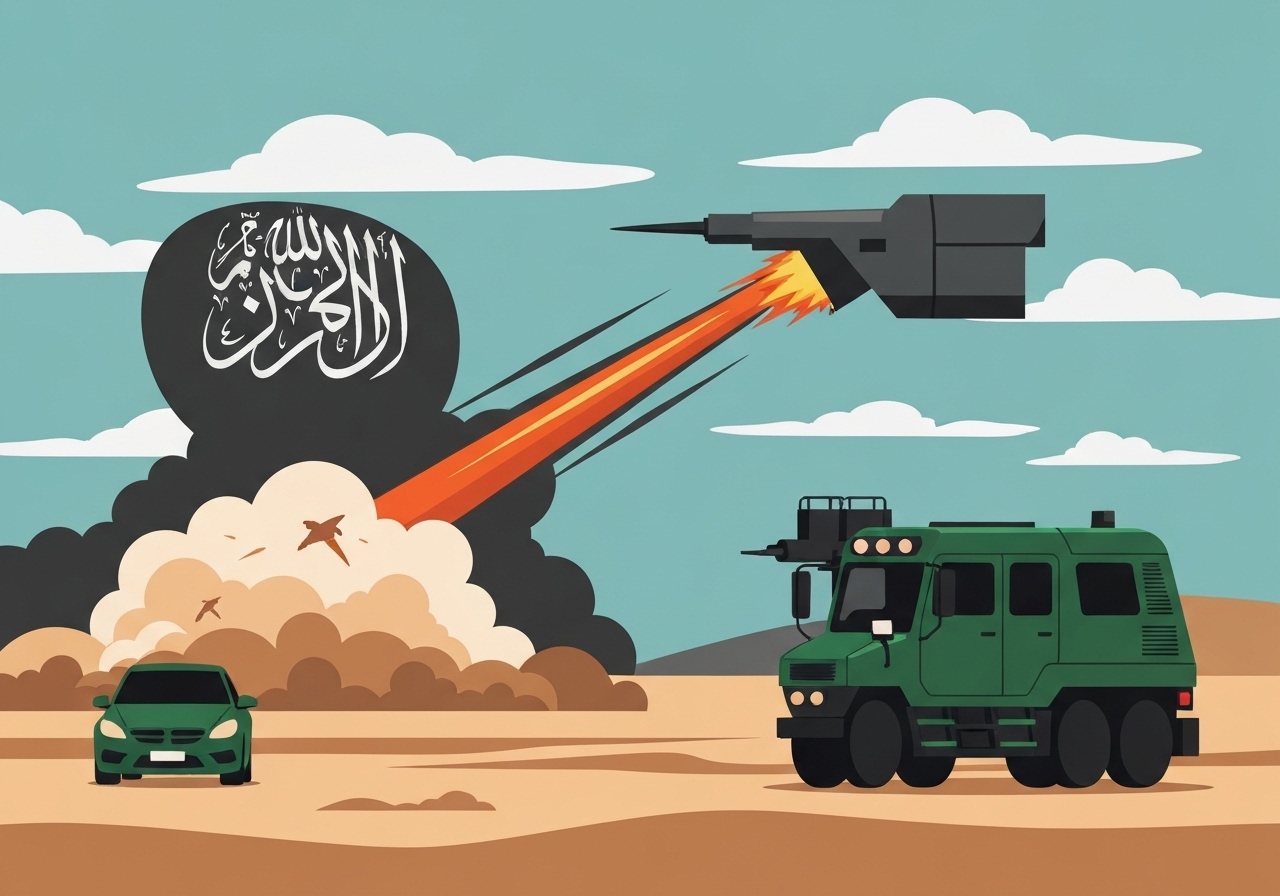
Saudi Arabia carried out airstrikes on the Yemeni port city of Mukalla on Tuesday after saying weapons and combat vehicles arrived there from the United Arab Emirates and were destined for the UAE-backed Southern Transitional Council (STC). The kingdom linked the shipment to recent STC advances in Hadramout and warned Abu Dhabi that its actions were “extremely dangerous.” Yemen’s anti-Houthi coalition forces declared a state of emergency, ordered Emirati forces to leave within 24 hours and imposed a 72-hour ban on most border, airport and seaport crossings in areas they control. Saudi officials said the limited strike targeted offloaded weapons and vehicles and was timed to minimize collateral damage.
Key Takeaways
- Saudi airstrikes struck Mukalla, Hadramout governorate, on Tuesday targeting weapons and military vehicles that Saudi statements said had been offloaded from two vessels.
- Tracking data show a roll-on/roll-off vessel identified by analysts as the Greenland (flagged to St. Kitts) was in Fujairah on Dec. 22 and arrived in Mukalla on Sunday before the attack.
- Yemen’s anti-Houthi coalition declared a state of emergency, ordered UAE forces to evacuate within 24 hours and issued a 72-hour ban on most crossings in held areas.
- Saudi officials publicly tied the UAE to the STC’s recent territorial gains for the first time and warned Abu Dhabi its actions threatened regional stability.
- There were no immediately confirmed casualty figures and it was unclear whether any other militaries participated in the strike.
- Analysts and local videos cited by risk firms and media showed armored vehicles moving through Mukalla after the ship’s arrival, suggesting the deliveries were redistributed on land.
- The strike follows earlier Saudi strikes on Friday aimed at slowing the STC’s advance in Hadramout and Mahra governorates.
Background
Since 2014 Yemen has been fractured by a conflict that pits the Iran-backed Houthi movement against a loose coalition of southern and northern anti-Houthi forces supported by external partners, including Saudi Arabia and the UAE. The Southern Transitional Council, backed by the UAE, has pressed for greater autonomy or secession for parts of southern Yemen and has consolidated control in several coastal governorates in recent weeks. Riyadh and Abu Dhabi have long been partners in the anti-Houthi coalition but have also competed for influence across the region, including in Yemen and Sudan, complicating coordination on the battlefield.
Recent STC advances in Hadramout and Mahra heightened tensions between the partners; Saudi officials publicly warned the separatists to halt their push and withdraw from those governorates. The UAE’s role in supporting local southern forces has shifted over the past decade from direct deployments to backing proxy groups and local councils, creating opaque lines of supply and influence that have drawn scrutiny. The Red Sea region is already strained by separate clashes and political moves—such as shifting recognitions and proxy support—that make unilateral actions by coalition partners riskier for broader strategy against the Houthis.
Main Event
Saudi state media published a military statement saying the strikes followed the arrival of two ships from Fujairah, an Emirati port on the east coast, and alleged their crews had disabled tracking devices before unloading “a large amount of weapons and combat vehicles” in Mukalla. The statement framed the deliveries as an “imminent threat” and described a “limited airstrike” that specifically targeted offloaded materiel rather than population centers. Saudi authorities said the operation was timed overnight to avoid collateral harm, but they did not immediately release casualty counts or list other participants.
AP tracking analysis identified one of the vessels as likely the Greenland, a roll-on/roll-off ship flagged to St. Kitts that was recorded in Fujairah on Dec. 22 and arriving to Mukalla three days later. A second ship involved has not been publicly identified. Local videos compiled by analysts and a Yemen risk adviser appeared to show new armored vehicles moving through Mukalla after the ships’ reported arrival; Saudi state television later aired footage, reportedly from surveillance aircraft, showing vehicles being staged inland.
The Southern Transitional Council acknowledged airstrikes struck areas around Mukalla but provided few operational details. Earlier Saudi strikes on Friday had aimed to check the STC’s takeover of parts of Hadramout and Mahra and to push back forces affiliated with the Saudi-backed National Shield Forces. Mukalla sits roughly 480 kilometers (about 300 miles) northeast of Aden, the interim seat of anti-Houthi authorities, making its capture by the STC a significant tactical and symbolic gain.
Analysis & Implications
The strike marks a notable escalation in tensions between Saudi Arabia and the UAE because it represents an overt Saudi response to what Riyadh framed as UAE-enabled transfers to a partner militia. Publicly linking Abu Dhabi to the STC’s advance could complicate already fraught bilateral relations at a moment when both states are recalibrating regional influence through economic and security initiatives. If the Saudis press the allegation diplomatically, it could prompt a wider crisis between the two Gulf powers beyond battlefield consequences in Yemen.
Operationally, the attack could constrain the flow of hardware to the STC: Saudi control of regional airspace and the willingness to strike shipments may deter overt sea-borne deliveries. However, the STC has local logistical networks and popular support in parts of the south, so arms and materiel could still move overland or be rerouted through less visible channels. The risk is that intra-coalition friction will undermine unity among anti-Houthi forces, potentially easing pressures on the Houthi front or fragmenting the anti-Houthi command and supply chains.
Regionally, the incident adds strain to a Red Sea arena already marked by proxy competitions—most notably in Sudan, where Saudi and Emirati-backed actors support opposing sides. Diplomatic fallout could ripple into trade, maritime security cooperation and broader Gulf Coordination Council initiatives. International actors seeking to de-escalate Yemen may face harder negotiating conditions if partners publicly accuse each other of destabilizing behavior while local proxies consolidate territory.
Comparison & Data
| Item | Date/Timing | Note |
|---|---|---|
| Vessel presence in Fujairah | Dec. 22 | Tracking data show Greenland in Fujairah |
| Arrival in Mukalla | Sunday (prior to strike) | Analysts report Greenland arrived before offloads |
| Saudi airstrike | Tuesday | Targeted offloaded weapons and vehicles |
| Mukalla–Aden distance | — | ~480 km (300 miles) northeast of Aden |
The small table summarizes the chain of events as reconstructed from ship-tracking records and official statements. While tracking signals provide hard data points, ship movements alone do not prove cargo intent or final recipients; corroborating on-the-ground evidence and manifest records are limited or contested. Analysts flagged the Greenland based on AIS records and open-source location data, but one vessel remains unidentified and several operational details remain murky.
Reactions & Quotes
Saudi and Yemeni authorities gave rapid public responses that framed the strike as a defensive and lawful action aimed at stabilizing the region.
“The kingdom notes that the steps taken by the sisterly United Arab Emirates are extremely dangerous.”
Saudi Foreign Ministry (official statement)
This brief public line signals a rare, direct diplomatic rebuke from Riyadh toward Abu Dhabi rather than the usual private consultations among allies. It elevates the incident beyond a tactical strike to a bilateral political incident.
“I expect a calibrated escalation from both sides. The UAE-backed Southern Transitional Council is likely to respond by consolidating control.”
Mohammed al-Basha, Yemen risk analyst
Al-Basha, who monitors Yemen movements, cited social media footage showing armored vehicles in Mukalla and suggested both military and political responses are probable, with the STC likely to press its gains even as supply lines come under pressure.
“We have declared a state of emergency and ordered all Emirati forces to evacuate within 24 hours.”
Yemen anti-Houthi coalition statement
The emergency declaration and evacuation order underline how quickly the incident has strained local command relationships and forced rapid operational decisions on the ground.
Unconfirmed
- Exact casualty numbers and whether civilians were harmed have not been independently verified by multiple on-the-ground sources.
- The identity and manifest of the second ship allegedly involved remain unconfirmed; owner responses were not immediately available.
- The extent of direct UAE state authorization for any alleged transfers to the STC has not been independently corroborated beyond Saudi statements.
- Open-source videos purporting to show new armored vehicles in Mukalla have limited metadata and require further verification.
Bottom Line
The Mukalla strike demonstrates how local battlefield dynamics in Yemen can rapidly escalate into diplomatic confrontation between partners. Riyadh’s public linking of Abu Dhabi to the STC’s gains breaks precedent of private coordination and signals a tougher Saudi posture toward perceived unilateral moves by a partner in the anti-Houthi coalition. The immediate operational effect may be to disrupt sea-borne deliveries to the STC, but the group’s local networks and political momentum mean supplies could be rerouted, prolonging instability in southern Yemen.
Watch for several near-term indicators: official Abu Dhabi responses, STC moves to consolidate territory or retaliate politically, and any international mediation efforts to prevent broader Gulf fallout. The incident also underscores the fragility of coalition coherence in multi-party conflicts and the risk that intra-coalition rivalry will complicate efforts to contain the broader Yemen war.