
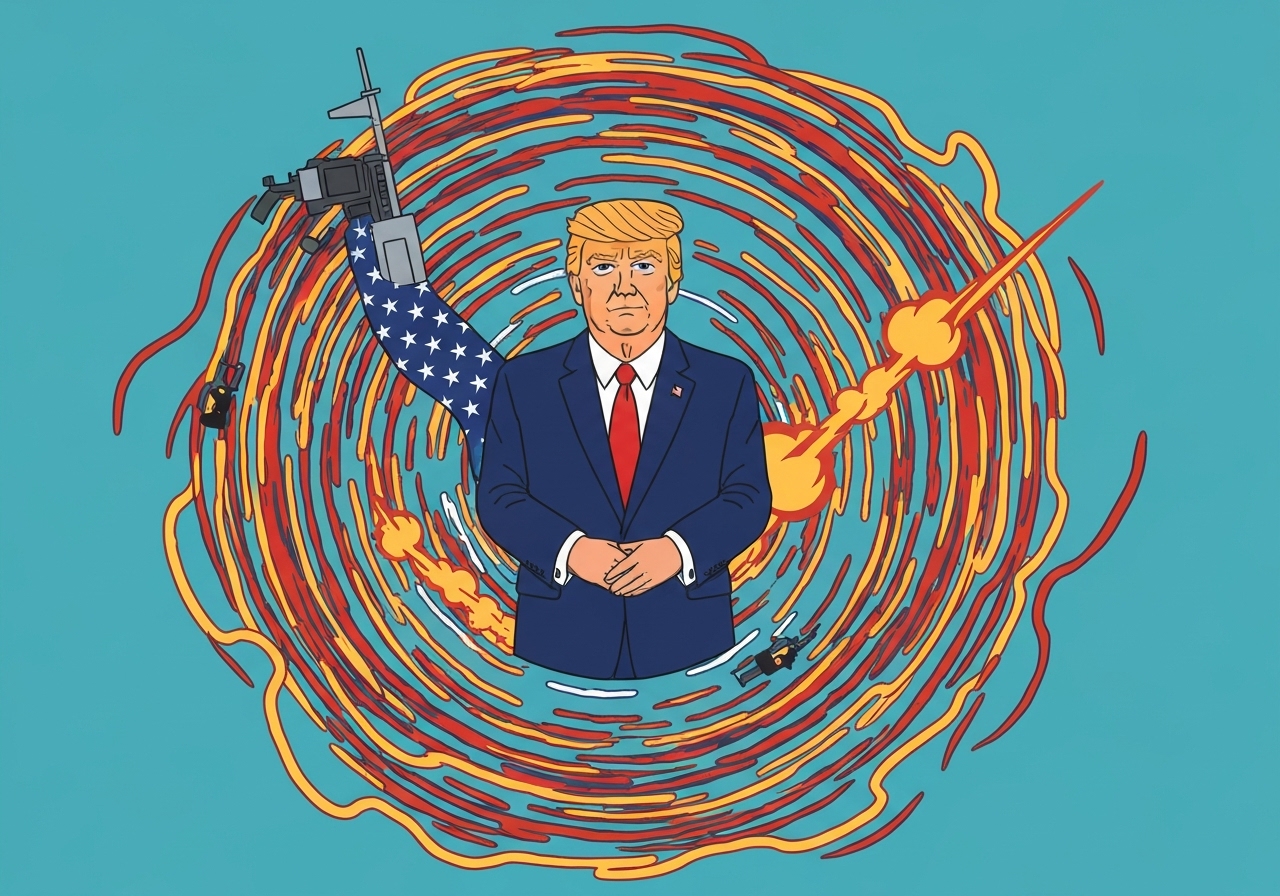
Who: US President Donald Trump; When: one day into a surprise People’s Liberation Army (PLA) live-fire exercise; Where: waters and airspace around Taiwan; What: Chinese forces launched missiles, naval and air operations dubbed “Justice Mission 2025”; Result: Trump said he was “not worried” and that Chinese leader Xi Jinping had not told him about the drills, even as Taiwan reported dozens of ships and more than 100 aircraft in the area.
Key Takeaways
- The PLA began surprise live-fire drills on Monday and continued into Tuesday with missile launches into the Taiwan Strait, including a ground-forces statement at 09:00 on .
- Taiwan’s defence ministry reported at least 14 navy vessels, 14 coastguard ships, one surveillance balloon and roughly 130 warplanes and drones detected in the 24 hours to Tuesday morning.
- Beijing described the exercises as testing sea-air coordination, submarine and maritime target neutralisation and simulating a blockade of major Taiwanese ports.
- Taiwan said impact sites were scattered around its 24-nautical-mile zone; the defence minister called the drills cognitive warfare aimed at degrading Taiwanese combat capability.
- The Chinese state media label for the drills is “Justice Mission 2025”; Taiwan and foreign analysts noted these are the sixth and largest exercises targeting Taiwan since 2022.
- The events came amid diplomatic flashpoints: a recent record $11 billion US weapons approval for Taiwan and continuing high-level contacts between US and Chinese officials.
- President Trump commented he was “not worried” and that Xi “hasn’t told me anything about it,” even as analysts warn the drills raise regional tensions and test deterrence dynamics.
Background
Beijing claims Taiwan as part of China and has repeatedly said it seeks eventual reunification, using both diplomatic pressure and periodic military demonstrations. US intelligence assessments from recent years estimate China seeks the capability to mount a large-scale invasion by 2027, prompting sustained regional concern and American arms sales to Taipei.
Since 2022 the PLA has staged multiple large exercises around Taiwan, often citing responses to perceived provocations—such as visits by foreign officials or major arms approvals. Those drills combine naval, air and missile assets to rehearse blockades, island encirclement and interdiction scenarios while signalling resolve to both Taipei and outside governments.
Main Event
The current operation began with a surprise simulation on Monday and moved into live-fire launches on Tuesday, according to official statements. Chinese accounts describe deployment of destroyers, frigates, fighters, bombers, drones and long-range missiles operating “in close proximity” to Taiwan to test integrated sea-air operations and precise targeting.
Taiwan’s defence ministry said it detected at least 14 navy vessels, 14 coastguard ships, a surveillance balloon and about 130 aircraft and drones in the 24 hours to Tuesday morning. Taipei reported impact sites dispersed around its 24-nautical-mile zone after rockets fired from Pingtan, a coastal region nearest Taiwan’s main island.
Beijing framed the drills as a response to “pro-independence forces” in Taiwan and large-scale US arms sales, asserting the exercises would also deter “external foreign interference.” State media emphasized that the drills simulated blockades of major ports and measures to repel outside intervention.
Officials in Taipei rejected the exercises as irresponsible escalation. Defence Minister Wellington Koo said the manoeuvres aim to wage cognitive warfare, eroding public confidence and depleting Taiwan’s combat capability, while President Lai Ching-te pledged responsible defence without deliberate escalation.
Analysis & Implications
The drills reinforce a pattern of calibrated coercion: China alternates offers of incentives with displays of military pressure to influence Taiwan’s political choices. Large-scale combined-arms drills serve both operational training and signalling purposes, testing logistics, command-and-control and cross-domain integration under realistic conditions.
For Taipei, the immediate effect is twofold: an operational demand to maintain heightened readiness and a political need to reassure the public and international partners. Taiwan’s reporting of specific asset counts—vessels, aircraft and an aerial balloon—illustrates both surveillance capabilities and the PLA’s intent to saturate multiple domains simultaneously.
For Washington and regional allies, the exercises test crisis-management channels and deterrence credibility. Although President Trump publicly downplayed concern, military planners and diplomats will likely treat the drills as a stress test of US commitments and coordination with partners including Japan, which has signalled potential involvement if an attack occurs.
Economically, recurrent drills raise risks to shipping, trade routes and investor confidence in regional stability. Repeated military pressure may also accelerate Taipei’s defensive procurement and deepen security ties with the US and other like-minded governments, prompting Beijing to weigh costs against perceived gains in coercive leverage.
Comparison & Data
| Measure | Justice Mission 2025 (this week) | Notable 2022 exercises |
|---|---|---|
| Naval vessels reported | 14 | Multiple carrier and task-group activities reported |
| Coastguard ships | 14 | Large patrol deployments reported |
| Aircraft & drones | ~130 | Extensive air sorties surrounding Taiwan |
| Surveillance balloons | 1 reported | Rarely reported in 2022 exercises |
| Relative scale | Sixth and described as largest since 2022 | Major regional backlash after US-Taiwan contacts |
The table summarises public counts and contextual comparisons; exact PLA unit compositions and internal objectives are not publicly disclosed. While 2022 exercises were tied to a high-profile US congressional visit, this week’s drills were linked by Chinese officials to recent US-approved arms sales valued at about $11 billion.
Reactions & Quotes
US President Donald Trump responded to questions about the drills by stressing his personal relationship with Xi and expressing little concern. His remarks highlight a presidential posture that mixes reassurance with uncertainty about Beijing’s intentions.
“I certainly have seen it … I don’t believe he is going to be doing it. Nothing worries me.”
Donald Trump, US President
Taiwanese officials framed the exercises as dangerous and coercive, arguing they target both military capacity and public morale. Defence Minister Wellington Koo characterised the drills as an attempt at cognitive warfare aimed at depleting Taiwan’s forces and sowing division.
“[The drills] clearly aim to achieve cognitive warfare and deplete Taiwan’s combat capabilities.”
Wellington Koo, Taiwan Defence Minister
China’s foreign ministry and state media presented the drills as defensive measures against “pro-independence” actions and large US arms transfers, warning also that Japan’s regional posture had attracted attention. State commentary framed the exercises as a warning to Taiwan’s Democratic Progressive Party and to outside actors who support it.
“We must resolutely oppose and forcefully counter [provocations].”
Wang Yi, China Foreign Minister
Unconfirmed
- Whether Chinese leader Xi Jinping personally notified President Trump about the drills—Trump says Xi “hasn’t told me anything about it,” but that claim is not independently verified.
- Specific operational aims beyond the PLA’s public statements (for example, precise target lists or intended duration) have not been independently corroborated.
- The extent to which Japan or the United States would move from diplomatic protest to active military involvement in a new contingency remains contingent on scenario details and formal decision-making, not publicly confirmed policy.
Bottom Line
The exercises are both a tactical rehearsal and a strategic message: Beijing is demonstrating integrated military capabilities around Taiwan while signalling displeasure with US arms sales and high-level contacts. Taipei, Washington and regional partners now face a familiar test of deterrence, crisis management and public reassurance.
President Trump’s public dismissal contrasts with Taipei’s alarm and Beijing’s stern rhetoric, underscoring ambiguous signals at the highest political levels. In practical terms, expect stepped-up surveillance, diplomatic exchanges and possible further military movements in the coming days as all sides gauge risks and options.
Sources
- The Guardian (international news outlet; primary reporting on this story).
- Ministry of National Defense, Taiwan (official; statements and operational notices).
- Xinhua (Chinese state media; official commentary and PLA-linked reporting).