
Lead
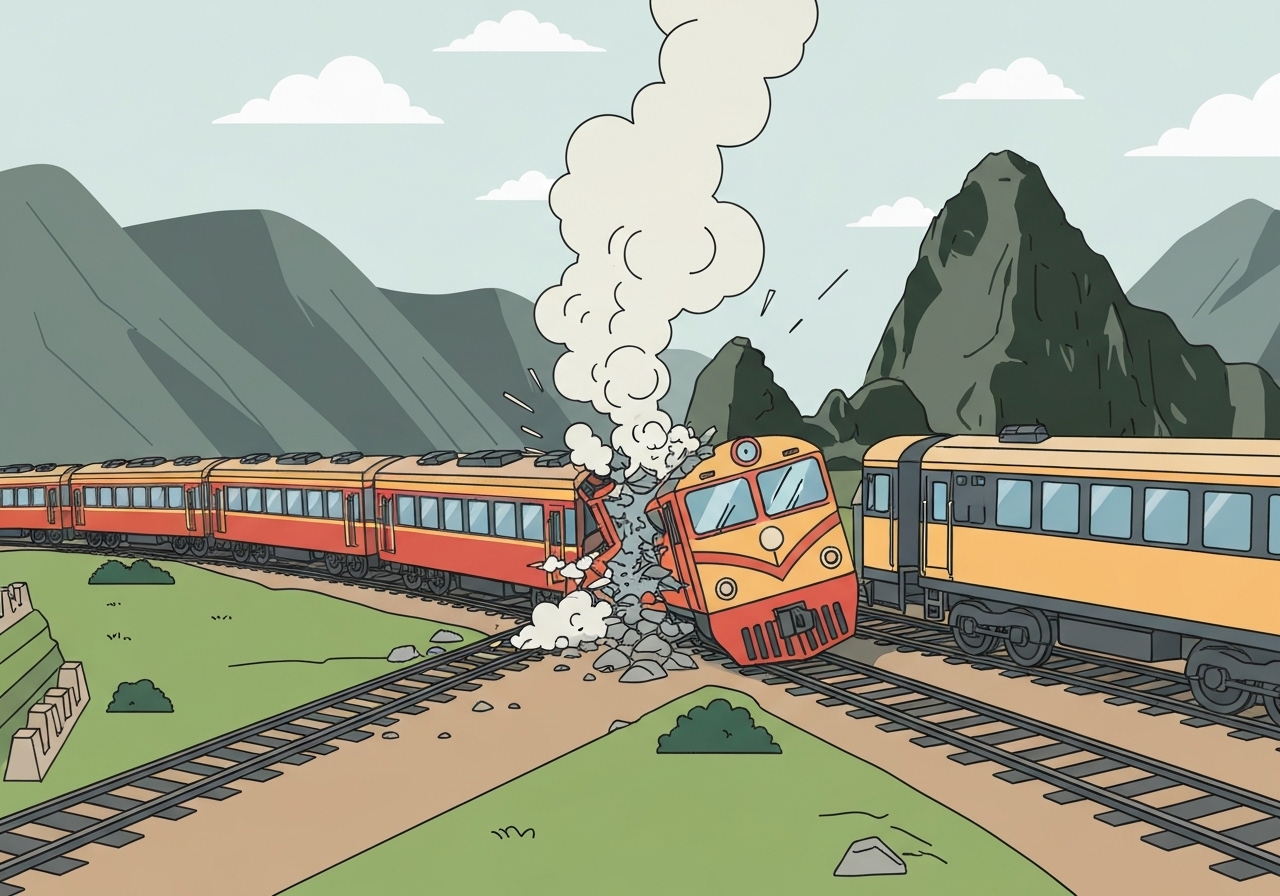
On Dec. 30, 2025, two passenger trains collided head-on on the single-track line serving Machu Picchu, killing one crew member and injuring at least 40 people, Peruvian authorities said. The fatality was identified by the Cusco prosecutor’s office as the conductor of one train. The crash occurred around midday on the route between Ollantaytambo and the Machu Picchu station in a remote Andean section with no direct road access. The U.S. Embassy in Peru said U.S. citizens were among those injured, though it did not provide numbers or injury details.
Key Takeaways
- At least one person was killed and 40 people were reported injured after a head-on collision between two trains on Dec. 30, 2025.
- The deceased was the conductor of one of the trains, the Cusco prosecutor’s office confirmed.
- The collision happened around lunchtime on the single track linking Ollantaytambo and Machu Picchu, involving trains operated by PeruRail and Inca Rail.
- A dozen ambulances and medical staff were dispatched to a remote site that lacks direct road access; videos shared with RPP showed injured passengers beside the tracks.
- The U.S. Embassy in Peru confirmed Americans were among the injured but provided no further details on counts or severity.
- Machu Picchu, a UNESCO World Heritage Site since 1983, receives roughly 4,500 visitors per day on average, many arriving by train.
Background
Machu Picchu is a 15th-century Inca citadel located at about 8,200 feet (2,500 meters) above sea level and has been a UNESCO World Heritage Site since 1983. It is reachable only by a combination of rail and road or by multi-day treks; most visitors use the rail link from Cusco valley towns such as Ollantaytambo. The railway services to the site are provided by commercial operators including PeruRail and Inca Rail, which run regular tourist-oriented services on a predominantly single-track line in steep Andean terrain.
Single-track mountain railways require coordinated scheduling and signaling to prevent opposing trains from meeting on the same segment; operational complexity increases where there are few passing loops and limited communications. The region around Machu Picchu is sparsely populated, and emergency response is constrained by narrow access paths and limited local medical facilities. Tourism contributes materially to the local economy, so disruptions to rail service can have immediate economic and logistical consequences for communities and businesses that serve visitors.
Main Event
According to statements from local authorities and rail operators, a PeruRail-operated train and an Inca Rail train collided head-on at about midday on Dec. 30, 2025, on the stretch between Ollantaytambo and Machu Picchu. Video footage shared with the RPP television channel showed injured passengers lying near the tracks and two locomotives stopped with visible damage. First responders deployed roughly a dozen ambulances and medical teams to the scene; access was complicated by the site’s remoteness and lack of direct road connections.
The Cusco prosecutor’s office identified the lone fatality as the conductor of one of the trains and opened an investigation into the incident. Rail operator Ferrocarril Transandino, which oversees the route infrastructure, confirmed the collision occurred on the single-track section but said the cause was not yet known. The U.S. Embassy in Lima issued a statement saying U.S. citizens were among the injured and that consular officials were monitoring the situation.
Local authorities coordinated evacuations and medical triage at the scene before transferring patients to regional hospitals in Cusco. Tourism ministry data indicate Machu Picchu routinely handles thousands of visitors per day; emergency services therefore faced pressure to treat both tourists and local passengers while preserving access to the historic site. At the time of reporting, rail services in the immediate area were suspended pending the investigation and clearance of the track.
Analysis & Implications
The collision highlights the operational vulnerabilities of single-track mountain railways that carry large numbers of tourists. When opposing services share one track, robust signaling, clear dispatch protocols and contingency plans are essential; a lapse in any of these elements can have outsized human and economic consequences. Peru’s tourism sector, which depends heavily on reliable rail access to Machu Picchu, may face short-term declines in visitor flows if services remain disrupted or if travelers postpone trips while safety reviews take place.
An official investigation will likely examine signaling systems, dispatcher logs, crew communications and adherence to scheduling protocols, and could prompt regulatory scrutiny of private operators and infrastructure managers. If systemic faults are identified, authorities may mandate new safety investments, revised operating procedures or temporary limits on train frequencies—all of which would affect operator revenue and local businesses that rely on steady tourist volumes.
The presence of foreign nationals among the injured adds an international dimension: affected governments may seek consular updates and press for transparent findings and improved safety standards. The strain on regional medical facilities underscores the need for coordinated emergency planning for high-traffic tourist corridors, particularly in remote mountain environments where evacuation and hospital transfer are complex.
Comparison & Data
| Metric | Value |
|---|---|
| Incident date | Dec. 30, 2025 |
| Fatalities | 1 (conductor) |
| Injured | At least 40 |
| Daily average visitors to Machu Picchu | ~4,500 |
| Site altitude | ~8,200 ft (2,500 m) |
The table summarizes core figures confirmed by authorities and agencies. The casualty tally and visitor statistics frame the incident’s human and economic scale: a single intense accident can affect dozens of travelers and ripple through a tourism-dependent local economy. Additional comparative analysis of prior rail incidents on the route will depend on the prosecutor’s findings and operator records, which are not yet public.
Reactions & Quotes
Officials and operators issued brief statements while the investigation and rescue operations were underway. The prosecutor’s office in Cusco confirmed the identity of the deceased and said probes had begun. The U.S. Embassy acknowledged American citizens among the injured and said consular officials were providing support where needed.
“The deceased has been identified as a train conductor, and prosecutors have opened an investigation into the circumstances of the collision.”
Cusco prosecutor’s office (official)
Rail companies and local agencies described emergency response efforts and emphasized that the cause remained under review. Media outlets that received passenger videos reported injured people at the scene and visible train damage, prompting immediate medical dispatches given the site’s inaccessibility by road.
“There were U.S. citizens among the injured, and embassy staff are monitoring developments and ready to assist.”
U.S. Embassy in Peru (official statement)
Operators involved acknowledged the collision on the single-track section and said they were cooperating with investigators. Further technical details about signaling or scheduling at the moment of impact had not been released.
“The collision occurred on the single track that links Ollantaytambo with Machu Picchu; the cause is under investigation.”
Ferrocarril Transandino (rail operator)
Unconfirmed
- Exact mechanical or human cause of the collision—reports say the cause was unknown and remains under investigation.
- Precise number and injury severity of U.S. citizens involved—the embassy confirmed Americans were injured but did not specify counts or medical status.
- Whether signaling failure, dispatcher error or routing miscommunication precipitated the crash—authorities have not released technical findings.
- Extent and timeline of rail service suspension for repairs and safety checks—operators have paused services locally, but full restoration timing is undetermined.
Bottom Line
The Dec. 30, 2025 head-on collision near Machu Picchu is a deadly reminder of the risks inherent to high-volume tourist transport on single-track mountain railways. One train conductor died and at least 40 people were injured, including foreign visitors, and authorities have opened a formal investigation into the causes. Emergency response teams faced logistical hurdles due to the site’s remoteness, stressing the importance of coordinated contingency planning for popular but isolated heritage destinations.
Short-term consequences will likely include local service suspensions, investigative scrutiny of operator practices and potential shortfalls in tourist arrivals while safety reviews proceed. Longer-term responses may require infrastructure upgrades, stricter operational oversight and clearer emergency protocols to restore traveler confidence and prevent similar tragedies.