
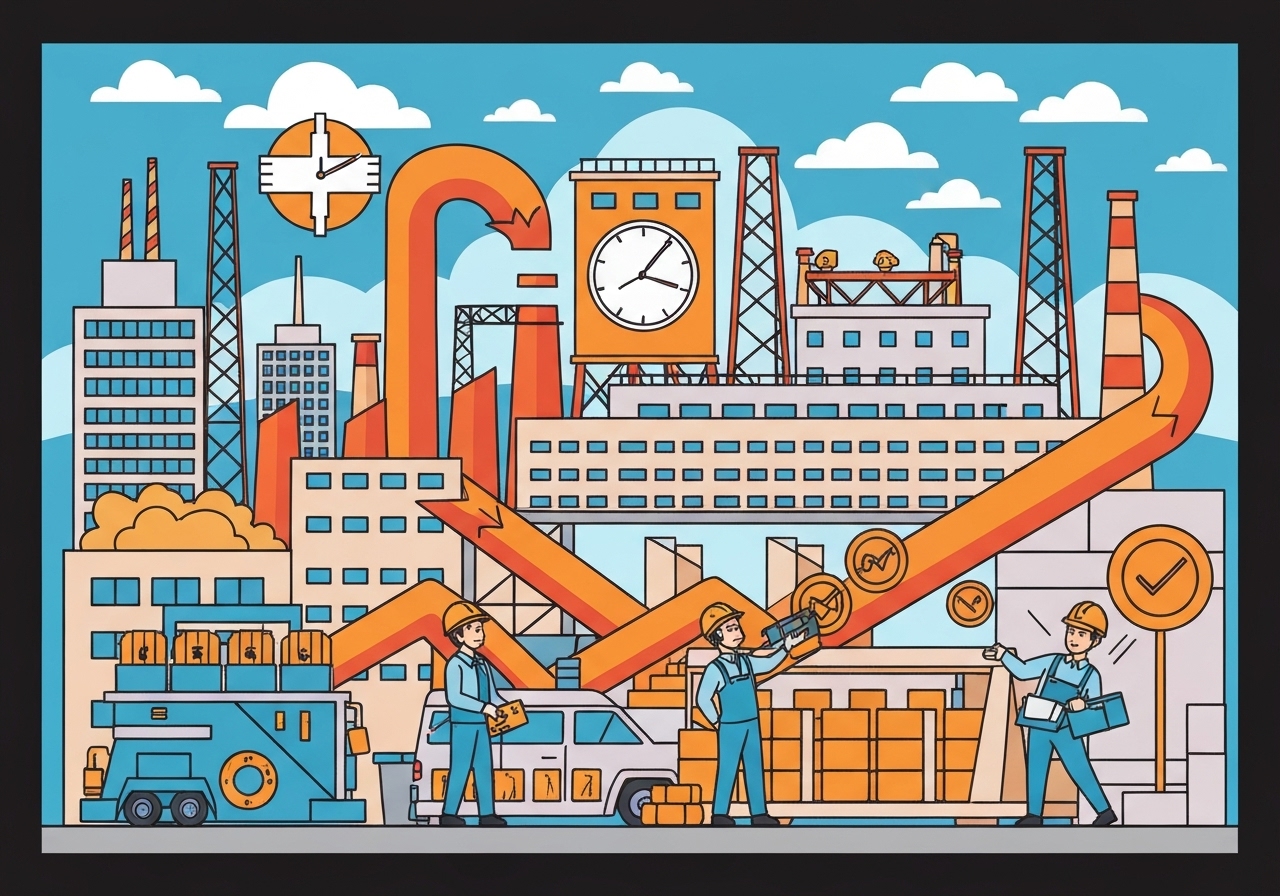
Recent official indicators show China’s factory sector moving back into growth after a record contraction in the previous reporting period, according to a Financial Times summary of government data. The rebound, modest but broad enough to lift key manufacturing gauges above the standard PMI expansion threshold, comes amid easing COVID restrictions and targeted stimulus measures. Analysts say the turnaround reduces immediate downside risk to global supply chains, though domestic demand and export momentum remain fragile. Policy choices in Beijing and external demand trends will determine whether the recovery strengthens or proves short-lived.
Key Takeaways
- Manufacturing activity has returned above the 50 PMI expansion threshold after a record contraction reported in the prior month, signaling a technical return to growth.
- The improvement follows a period of steep disruption linked to COVID-related restrictions and weak domestic demand that produced the previous record low.
- Short-term supply conditions eased, with key input shortages and logistics bottlenecks reported as having partially abated.
- Export orders remain uneven; export-oriented firms report continued pressure from soft external demand despite inventory adjustments.
- Policy support—both fiscal and targeted credit measures—has been cited by officials and analysts as a factor helping stabilize manufacturing activity.
- Market reaction was cautious: commodity prices and equity responses were muted, reflecting uncertainty over the durability of the rebound.
Background
China’s manufacturing sector contracted sharply after a wave of COVID-19 restrictions and city-level lockdowns disrupted production and logistics. The resulting slump rippled through supply chains and weighed on business confidence, with many factories operating below normal capacity. At the same time, structural headwinds—especially a prolonged property sector slowdown—dampened domestic demand for investment goods and durable consumer items. Policymakers have since deployed a mix of short-term relief and targeted stimulus to shore up employment and credit for smaller firms.
Official purchasing managers’ indices (PMIs) are closely watched for early signs of recovery because they aggregate surveys of new orders, output, employment and supplier delivery times. A reading above 50 is conventionally interpreted as expansion and below 50 as contraction. The recent move back above that threshold therefore marks a shift in the immediate momentum, though PMIs can be volatile month to month. International buyers and domestic suppliers are monitoring whether the improvement spreads beyond headline sentiment into sustained order inflows.
Main Event
The Financial Times reported that fresh data from official sources showed manufacturing activity returning to an expansionary zone after the prior period’s record fall. Release timing and market commentary followed the official publication, which flagged a pickup in output and a moderation of delivery delays. Factories in export-heavy provinces reported mixed demand: some saw order books flatten while others noted incremental restocking from buyers who had paused earlier purchases.
On the ground, anecdotal reports from industrial clusters indicated production schedules returning toward seasonal norms, though some firms continue to operate with reduced shifts or under capacity constraints. Logistics hubs that experienced congestion during lockdowns reported smoother throughput as restrictions eased and transport services normalized. Nonetheless, several manufacturers emphasized inventories remain elevated and profit margins compressed, limiting immediate new hiring and capital spending.
Monetary and fiscal signals accompanied the data release: local governments announced small-scale support for manufacturers and lenders reiterated targeted credit facilities for small and medium-sized enterprises. Analysts cautioned that while these measures help liquidity and cash flow, they do not substitute for a broader, demand-led recovery. Global customers cited trade slowdowns in key markets as the primary restraint on robust export growth.
Analysis & Implications
The immediate significance of the rebound is twofold: it reduces the risk of deeper manufacturing contraction in the near term and eases some pressure on global supply chains that had tightened during the disruption. For multinational firms relying on Chinese components, even a modest uptick in factory throughput can materially improve lead times and procurement planning. However, the rebound does not guarantee an acceleration in final demand, especially if consumer spending and business investment remain weak.
From a policy perspective, the development buys Beijing additional space to calibrate stimulus. Officials can favor targeted credit, tax relief and support for employment without committing to broad, large-scale fiscal expansion—at least initially. That approach limits risks of overheating or misallocation while addressing urgent liquidity needs in vulnerable firms. Critics argue, though, that more decisive demand-side measures will be needed to sustain growth if headwinds in property and global trade persist.
For global markets, a stabilizing China manufacturing sector could temper commodity volatility and reduce upside pressure on producer prices that feed into global inflation. Exporters to China may see slower, more gradual increases in orders rather than a sudden surge. The longer-term outlook hinges on whether domestic consumption rebounds and whether external demand recovers in tandem; absent those, improvements in manufacturing output could plateau.
Comparison & Data
| Indicator | Recent report | Prior period |
|---|---|---|
| Manufacturing PMI (headline) | Above 50 (expansion) | Record contraction (below 50) |
| Supply chain delays | Moderating | Severe congestion |
| Export order trend | Mixed / uneven | Generally weak |
The table above compares headline conditions between the most recent release and the prior reporting period. While headline PMI crossed the expansion threshold, underlying components—especially new export orders and employment—show mixed signals. Analysts note that single-month reversals are informative but not definitive; multi-month trends are required to confirm durable recovery.
Reactions & Quotes
“The latest readings indicate a tentative recovery in manufacturing activity as restrictions ease and logistics normalize,”
Chinese National Bureau of Statistics (official)
The statistics office framed the change as evidence of stabilizing production, while also warning that pressures remain in demand-side indicators.
“This is a cautious improvement rather than a broad-based rebound; firms still face weak orders and margin pressures,”
Independent economist (analysis)
Market analysts echoed that view, emphasizing the need to monitor order books and investment plans over coming months to assess momentum.
Unconfirmed
- Exact headline PMI numeric value from the most recent release (the FT summary reports a return above the 50 threshold; the precise figure should be confirmed from the official release).
- Sector-level details on which manufacturing sub-sectors drove the turnaround (full component breakdown not available in the summarized report).
- Longer-term impact of recent targeted stimulus measures on capital investment and hiring remains unclear and subject to further data releases.
Bottom Line
The latest reporting indicates China’s factories have moved back into expansionary territory after a record contraction, a development that reduces immediate downside risks for global supply chains. The improvement appears driven by easing COVID-related disruptions and short-term policy support, but core demand indicators—particularly export orders and domestic investment—remain fragile.
Policymakers now face a choice between maintaining targeted, liquidity-focused measures and deploying broader demand stimulus if activity weakens again. For businesses and international buyers, the prudent course is to monitor incoming monthly data for confirmation of the trend rather than assume a sustained recovery.
Sources
- Financial Times (paywalled news summary)
- National Bureau of Statistics, China (official statistics)