
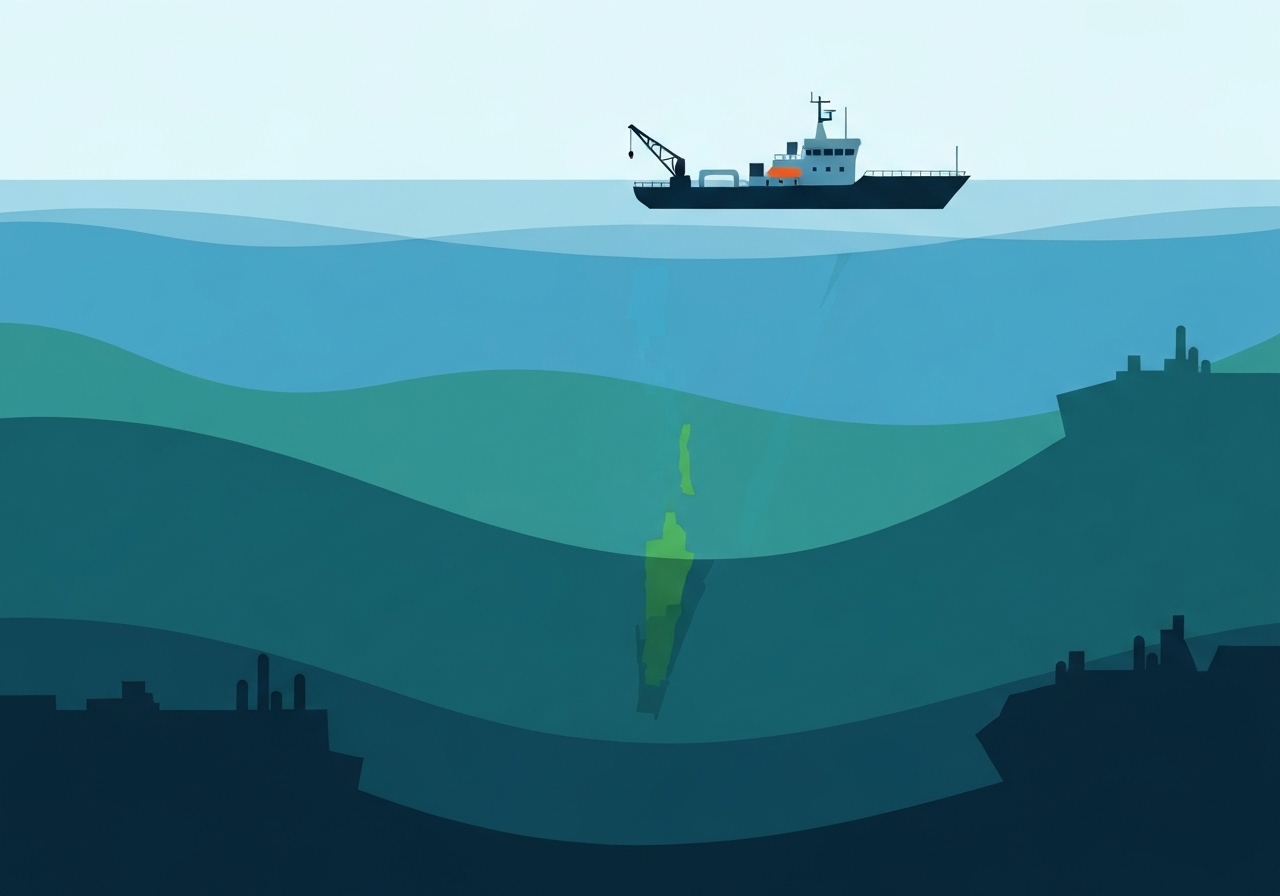
On Dec. 31, 2025, Malaysian authorities announced a renewed deep-sea search for Malaysia Airlines Flight 370 has begun in the southern Indian Ocean, more than 11 years after the jet vanished with 239 people aboard. The Transport Ministry said the vessel Armada 86 05 reached a designated search zone carrying two autonomous underwater vehicles that will scan the seabed. The exact search coordinates were not disclosed, and the government identified the ship by number rather than naming its operator. Officials said the deployment revives a multinational effort to locate the aircraft wreckage and answer long-standing questions about the flight’s final hours.
Key Takeaways
- The search began on Dec. 31, 2025, when the Armada 86 05 arrived at a sealed search area with two autonomous underwater vehicles.
- The missing plane, Malaysia Airlines Flight 370, disappeared on March 8, 2014, with 239 people on board; satellite data indicated a southern Indian Ocean trajectory.
- Malaysia previously contracted Ocean Infinity under a no-find, no-fee arrangement; the company confirmed it was resuming search operations in late 2025.
- Ocean Infinity conducted a seabed search in 2018 that located no main wreckage and briefly resumed work earlier in 2025 over a 15,000-square-kilometer area before suspending due to weather.
- No main fuselage or bodies have been recovered to date; only suspected pieces of debris washed ashore on islands and East African coasts have been linked to MH370.
- The Armada 86 05 staged its operation from Fremantle Port in Western Australia prior to entering the designated search zone.
Background
Malaysia Airlines Flight 370 vanished from radar shortly after departing Kuala Lumpur for Beijing on March 8, 2014. Satellite-derived flight path analysis later indicated the aircraft turned west and then flew south over the remote southern Indian Ocean, where investigators concluded it likely ended in a crash. The disappearance triggered one of the largest multinational search efforts in aviation history, combining government, military and private resources across several years.
Despite the scale of those operations, the main wreckage and passenger remains have never been recovered, leaving families and investigators without definitive answers about cause or final location. Small sections of debris found on Indian Ocean islands and East African shores were assessed and in some cases matched to the missing aircraft, but they did not provide a conclusive crash site. Marine technology firms and independent analysts have periodically refined search models and proposed new zones for seabed exploration.
Main Event
Malaysia’s Transport Ministry announced that Armada 86 05 arrived at a preselected sector of the southern Indian Ocean late in December 2025 and was equipped with two autonomous underwater vehicles designed for high-resolution seabed mapping. The statement did not publish coordinates or the precise size of the new search block, citing operational security and sensitivity. The vessel reportedly prepared for deployment from Fremantle Port in Western Australia, a staging point used by past searches.
Although the government did not name the contractor in its initial release, maritime tracking and industry sites have identified the craft as belonging to Ocean Infinity, a Texas-based marine robotics company that led a prior private search in 2018. Ocean Infinity confirmed it was resuming search activities under a renewed no-find, no-fee arrangement but declined additional comment, citing the operation’s sensitivity. The company has said in previous statements that it upgraded its sensor suites and refined its analysis since the 2018 search returned no definitive traces.
Ocean Infinity briefly restarted seabed operations earlier in 2025 in a new 15,000-square-kilometer area after receiving Malaysian approval, but those efforts were suspended in April because of poor weather and sea conditions. The renewed Dec. 31 deployment represents a further attempt to test refined search corridors derived from combined oceanographic modelling, drift analysis of previously recovered debris, and updated reinterpretation of satellite data from 2014.
Analysis & Implications
The resumption of a targeted seabed search more than a decade after the disappearance signals both persistent public and governmental pressure to resolve the case, and continued belief among some analysts that the wreckage lies within reach of modern underwater survey tools. Advances in autonomous underwater vehicle endurance, synthetic aperture sonar resolution, and data-processing algorithms have improved the ability to detect small or partially buried debris on rugged seabeds compared with a decade ago.
Operationally, however, the search remains difficult. The southern Indian Ocean is remote, deep and subject to rapid weather changes that can curtail mapping windows and complicate deployment of AUVs. Even with improved sensors, finding a relatively compact wreckage field on an ocean floor that can be tens of thousands of square kilometers in scale remains a low-probability task unless the search area is sharply constrained by robust prior evidence.
If this mission locates the main wreckage, it would allow forensic teams to examine the fuselage mission systems, engines and flight controls, which could answer whether mechanical failure, human action, or other causes led to the deviation from the flight plan. Conversely, another unsuccessful search would likely intensify debate about the limits of remote seabed exploration and whether further offshore expenditure is justified absent new leads.
Comparison & Data
| Search effort | Year(s) | Approx. area searched |
|---|---|---|
| Initial multinational search | 2014-2017 | ~120,000 sq km |
| Ocean Infinity private search | 2018 | Targeted zones; no wreckage found |
| Ocean Infinity limited restart | Early 2025 | 15,000 sq km (suspended) |
| Current deployment | Dec. 31, 2025 | Undisclosed, targeted sector |
The table summarizes publicly reported footprints of past and recent efforts; the initial official search reported by governments and agencies covered on the order of 120,000 square kilometers, while private contractors have focused on far smaller, higher-probability corridors. The decision to concentrate on reduced areas reflects both cost constraints and evolving analytic models that aim to refine likely impact zones.
Reactions & Quotes
The Transport Ministry confirmed the vessel had arrived at a designated area and that seabed operations would begin using autonomous underwater vehicles.
Malaysia Transport Ministry (official announcement)
Ocean Infinity has acknowledged it is resuming a search operation but declined to provide operational details because of the sensitive nature of the mission.
Ocean Infinity (company statement)
For families of the missing, any renewed search brings a fragile mix of hope and anxiety, as prospects of an answer return alongside reminders of past dead ends.
Family representative and relatives group (reaction)
Unconfirmed
- The precise coordinates and dimensions of the new search block have not been publicly released and remain unverified.
- The government statement did not explicitly name Ocean Infinity as the contractor, though industry tracking has identified the vessel by number as belonging to that firm.
- There is no public technical assessment yet indicating the probability of success for this particular search zone.
Bottom Line
The Dec. 31, 2025 deployment marks the latest attempt to resolve the lingering mystery of MH370, leveraging improved marine robotics and refined analytic models to focus on a smaller area of the southern Indian Ocean. While technological advances increase the possibility of detecting wreckage remnants, the remoteness, depth and size of potential search areas mean any discovery remains uncertain and contingent on tight scientific justification for the chosen zone.
For relatives and investigators, the operation offers renewed hope and a reminder of the case’s persistence on the global agenda. Whether this expedition yields decisive evidence or ends without a find, it will shape discussion about the feasibility and value of future deep-ocean searches for vanished aircraft.