
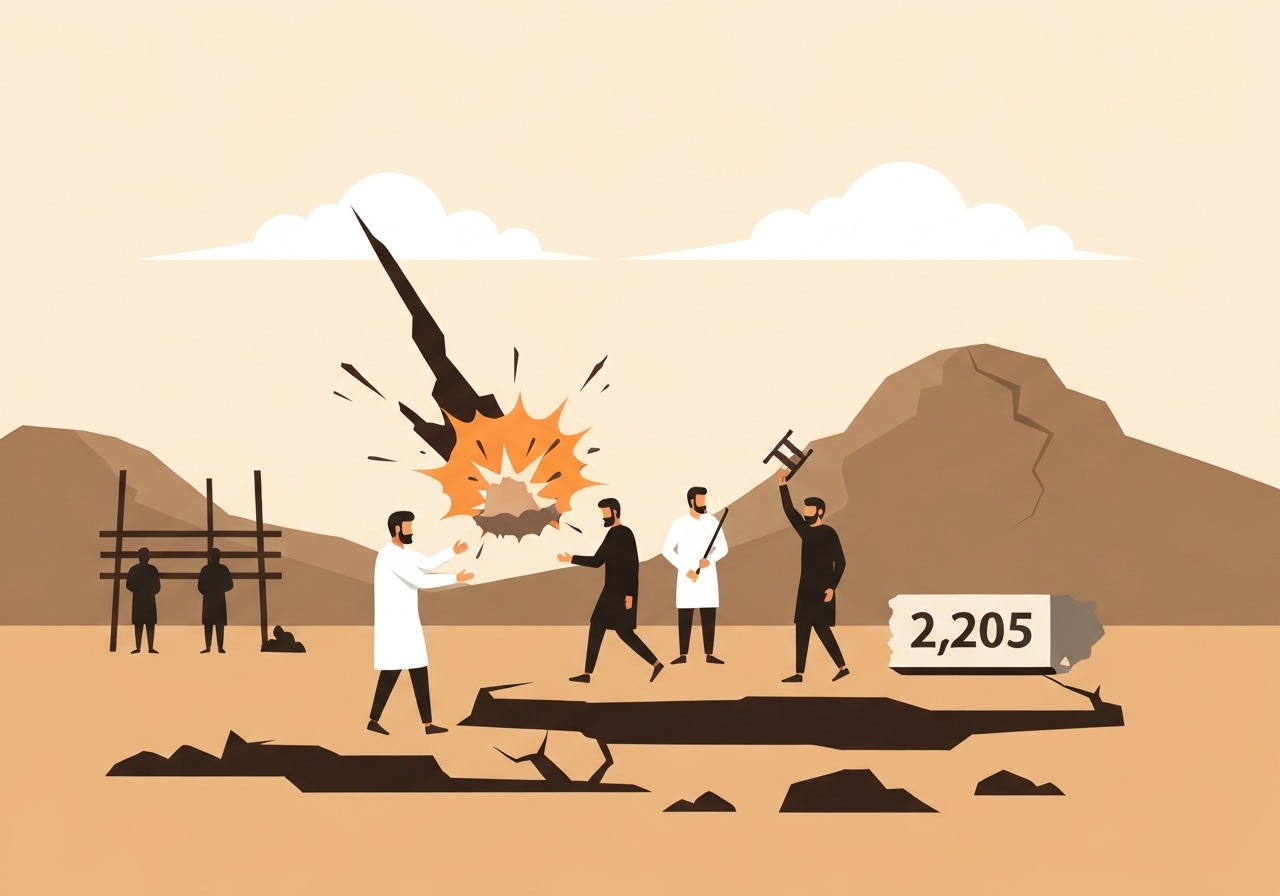
— Two strong aftershocks struck eastern Afghanistan within about 12 hours, heightening fears of further loss after a week of earthquakes that the Taliban government says have killed 2,205 people and injured 3,640 across Nangarhar and Kunar provinces.
Key Takeaways
- Two powerful aftershocks hit eastern Afghanistan within 12 hours following earlier quakes this week.
- Official counts report 2,205 dead and 3,640 injured; more than 6,700 homes have been destroyed.
- Friday’s 5.4 magnitude tremor was recorded at 10 km depth by GFZ; Thursday’s event measured 6.2.
- Rescue and relief operations are slowed by landslides, blocked roads and rugged terrain.
- WHO warns of disease risk and cites a funding shortfall of at least $4 million for health response.
- The UN has released $10 million and plans an emergency appeal as cash runs short.
Verified Facts
Rescue teams and survivors reported continuing seismic activity after a sequence of earthquakes this week. The German Research Centre for Geosciences (GFZ) recorded a magnitude 5.4 quake on Friday at a depth of 10 km, following a magnitude 6.2 tremor on Thursday night centered in Shiwa district, Nangarhar province near the Pakistani border.
The Taliban administration provided provisional casualty figures of 2,205 fatalities and 3,640 injuries as of Thursday. Local and international responders say more than 6,700 homes in Nangarhar and Kunar have been destroyed, leaving many families sleeping outdoors or in tents to avoid collapse from aftershocks.
Ambulance services reported 13 people taken to hospital after Thursday’s 6.2 quake; 10 were treated and discharged, and three remained in stable condition. Difficult mountain roads, fallen rocks and debris have delayed access to several badly damaged villages, slowing body recovery and delivery of aid.
Earlier in the week, a magnitude 6 earthquake struck just before midnight on Sunday and a 5.5 tremor occurred on Tuesday, compounding damage and complicating rescue operations in remote, steep terrain.
Context & Impact
Afghanistan’s seismic activity is concentrated in the Hindu Kush region where the Indian and Eurasian plates meet. Structures built from dry masonry, stone and timber have proven particularly vulnerable, explaining the high toll in rural districts.
Relief efforts face logistical and funding constraints. Landslides and cut roads have forced many survivors to shelter on high ground or by rivers. Overcrowded temporary camps and damaged sanitation raise immediate public health concerns.
Humanitarian agencies warn that limited funding will curb operations: the World Health Organization has identified a $4 million shortfall to run essential disease surveillance, treatment and supply distribution. The United Nations has released $10 million in initial funds and is preparing a flash appeal for additional resources.
Official Statements
“A funding gap of at least $4 million threatens to delay critical activities,” the World Health Organization said, urging rapid international support to prevent disease outbreaks and treat the injured.
World Health Organization
Unconfirmed
- Exact numbers of missing persons in the most remote villages are not yet verified.
- Comprehensive infrastructure damage assessments are ongoing; some village-level counts of destroyed houses remain incomplete.
Bottom Line
Multiple quakes and strong aftershocks have compounded a humanitarian crisis in eastern Afghanistan, causing thousands of casualties and widespread destruction of homes. Immediate needs include cash, medical supplies, tents and access repairs; international funding will determine how quickly relief can scale up.