
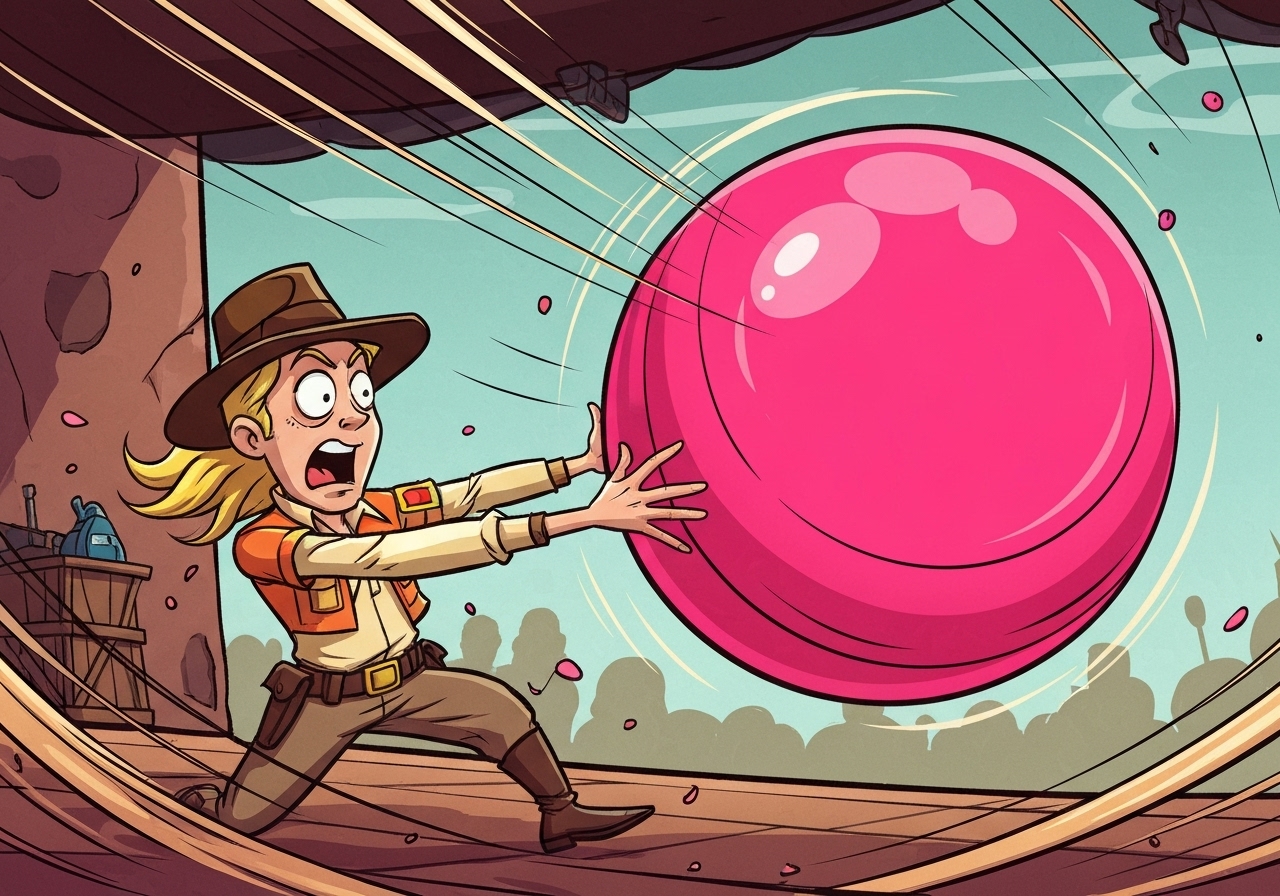
Lead: A cast member at Disney’s Hollywood Studios in Orlando was injured on Dec. 31, 2025, when a 400-pound rubber boulder used in the Indiana Jones Epic Stunt Spectacular dislodged and rolled toward the audience. The employee moved to intercept the prop and was struck and knocked to the ground; video of the incident circulated widely on social media. Disney said the cast member received immediate care and is recovering, and that the show element will be modified while a safety review is completed. Park officials and outside observers say the event has prompted renewed scrutiny of live-stunt safety standards.
Key Takeaways
- The incident occurred at Disney’s Hollywood Studios in Orlando on Dec. 31, 2025, during the Indiana Jones Epic Stunt Spectacular.
- A 400-pound rubber boulder prop dislodged from its track and rolled toward the audience; a cast member was struck while attempting to stop it.
- Video shared on social media shows the cast member raising his arms to stop the boulder before being slammed to the ground.
- Disney confirmed the cast member received immediate care and is recovering; the company said the affected show element will be modified pending a safety review.
- The boulder is described on the attraction’s official page as a 400-pound rubber prop used to simulate the film sequence.
- No reports in the cited sources indicated audience members were seriously injured; details about the cast member’s current medical status were not disclosed beyond “recovering.”
- Disney’s statement frames the response around support for the cast member and an internal safety investigation.
Background
The Indiana Jones Epic Stunt Spectacular has been a long-running live-action show at Disney’s Hollywood Studios, designed to recreate cinematic stunts for park audiences. The attraction uses large-scale props and synchronized effects to simulate chase and collapse sequences from the Indiana Jones films, relying on precise mechanical tracks and performer timing. Live-stunt shows have inherent risks, so theme parks generally combine engineering controls, rehearsals, and safety protocols to protect performers and guests.
Over the years, theme-park stunt acts have prompted occasional safety reviews after incidents at other venues, leading operators to periodically update procedures and props. Stakeholders include performers (Disney cast members), technical crews who maintain the mechanical rigs, park safety teams, and regulatory or industry bodies that set workplace-safety expectations. Audience proximity in theater-style stunt productions increases the need for fail-safes to prevent props from reaching public seating.
Main Event
On Dec. 31, 2025, during a performance of the Indiana Jones Epic Stunt Spectacular at Disney’s Hollywood Studios in Orlando, a large rubber boulder prop dislodged from its track and began rolling down the stage toward audience seating. A cast member moved to intercept the prop in an attempt to prevent it from reaching spectators. Video shared online shows the performer raising his arms as the boulder approaches, then being knocked to the ground when contact occurred.
Park staff and emergency responders reportedly provided immediate assistance to the injured cast member; Disney told local media the employee received care and is recovering. The company told WESH that safety is a core priority and that the specific element of the show will be modified while the park’s safety team completes a review. Social-media footage of the event was widely shared, fueling public attention and prompting questions about how the prop left its track.
Disney’s public statement, as provided to reporters, emphasized support for the injured cast member and a temporary change to the show’s staging pending investigation. Park operations continued in other areas, and there were no confirmed reports in the cited coverage of audience members sustaining serious injuries in this incident. Officials have not released a technical cause for the dislodgement.
Analysis & Implications
The immediate implication is operational: the show element that failed will be taken out of service or altered until mechanical safeguards and procedures are verified. For a production that depends on timed mechanical movements, even a single component failure can create a hazardous dynamic, especially when large-mass props are involved. Modifications may include redesigning the restraint or track systems, adding redundant catches, or changing performer choreography to increase separation between cast and moving props.
From an occupational-safety perspective, the incident highlights the intersection of human action and engineered systems. Cast members often rely on training and rehearsed responses when props deviate, but design that minimizes the need for human intervention is a recognized safety principle. An internal review will likely examine maintenance records, device inspection logs, recent rehearsals, and whether any procedural drift contributed to the failure.
There are reputational and regulatory angles as well. High-profile incidents at major attractions can prompt regulators to scrutinize inspection regimes and may accelerate industry-wide adoption of additional safeguards for live demonstrations. For Disney specifically, repeated well-publicized mishaps could spur more conservative staging choices across similar shows and possible changes in insurance or compliance reporting.
Comparison & Data
| Item | Detail |
|---|---|
| Boulder (prop) | 400 pounds; rubber material (Disney attraction page) |
| Show | Indiana Jones Epic Stunt Spectacular — live stunt production at Disney’s Hollywood Studios |
The single available numeric datapoint from the cited sources is the prop weight: 400 pounds. That mass, while less dense than rock due to the rubber construction, still carries substantial momentum when in uncontrolled motion. The park’s official attraction description is the source for the boulder weight; additional technical specifications and maintenance history have not been published.
Reactions & Quotes
Disney provided a short public response through local media emphasizing care for the injured employee and a pending safety review.
“We’re focused on supporting our cast member, who is recovering. Safety is at the heart of what we do, and that element of the show will be modified as our safety team completes a review of what happened.”
Disney spokesperson (statement to WESH — local news)
Video and a contemporaneous social-media post from an area reporter conveyed the on-scene report of the prop dislodging and confirmed the cast member was injured while stopping the boulder.
“A 400-pound boulder prop dislodged from its track. A Cast Member was injured stopping it before it reached the audience. Disney says the Cast Member received immediate care and is recovering.”
Scott Gustin / Twitter (social media)
Public reaction in comments and reposts ranged from concern for the injured performer to questions about whether the show should continue unchanged. Park-goers and safety observers have called for transparent findings from Disney’s review, while advocacy groups for worker safety typically urge broader industry lessons from such events.
Unconfirmed
- The precise mechanical cause for the boulder’s dislodgement—whether a track failure, fastener loosened, or human error—has not been publicly confirmed.
- The full medical status and diagnosis for the injured cast member beyond the statement that they are “recovering” have not been disclosed.
- Whether any audience members sustained minor injuries or required medical attention has not been verified in the cited reports.
Bottom Line
The key fact is straightforward: a 400-pound prop left its intended path during a live stunt show and struck a cast member who intervened to protect the audience. Disney has acknowledged the incident, said the employee is recovering, and initiated a review that will result in modification of the affected show element. That sequence reflects the company’s immediate operational and public-relations priorities: care, investigation, and mitigation.
Longer-term consequences will depend on the review’s findings. If the failure is traced to mechanical wear, maintenance protocols may be tightened; if procedural gaps are found, training or staging changes could follow. For audiences and performers, the incident underscores both the tangible risks of live stunts and the industry imperative to design systems that reduce the need for last-moment human intervention.