
Lead
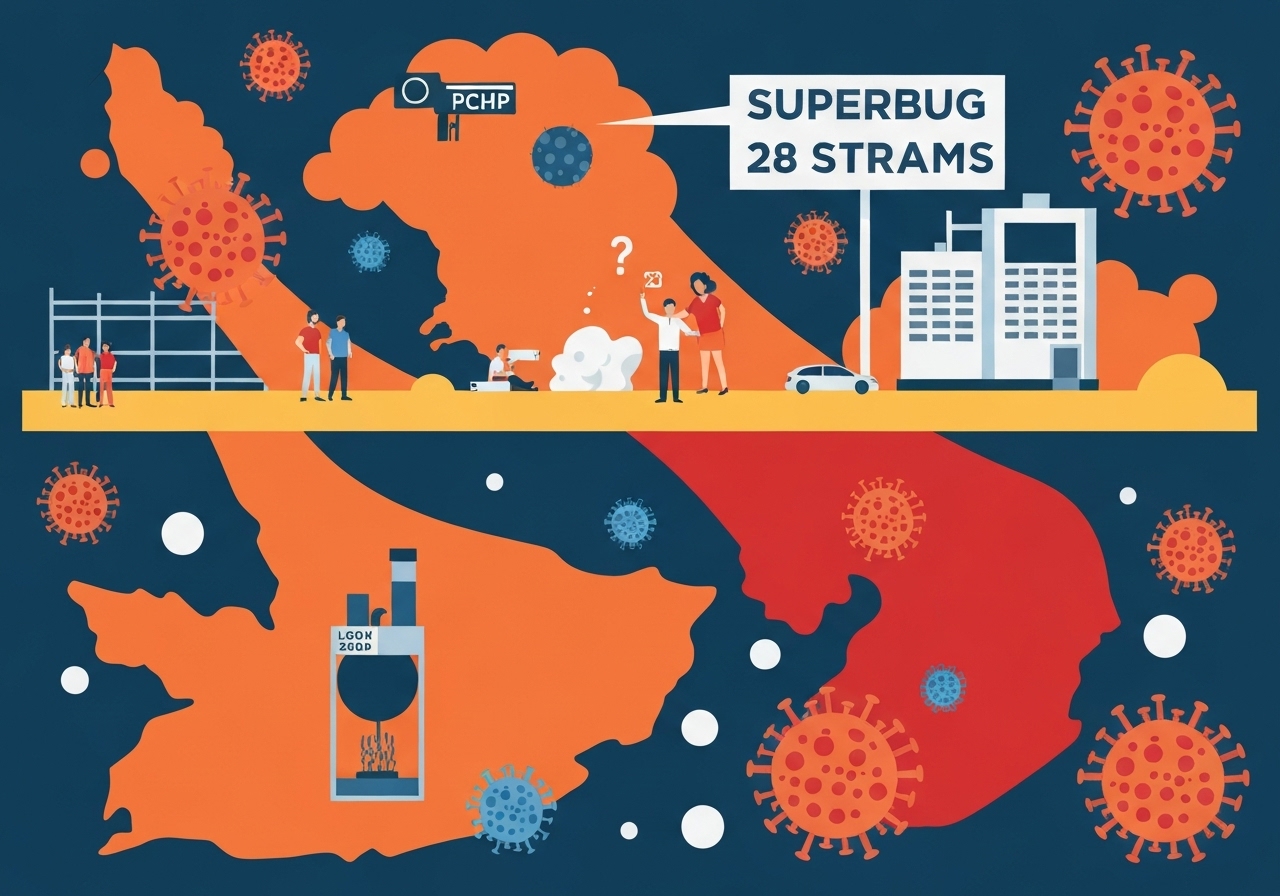
Health officials reported that the drug‑resistant fungus Candida auris spread across 28 U.S. states in 2025, with 7,046 cases recorded nationwide as of Dec. 20 and 158 cases reported in Alabama this year. Public health authorities say the organism persists on skin and surfaces, enabling transmission in health‑care settings and via contaminated equipment. State and federal agencies are prioritizing detection, reporting and infection‑control measures, especially in long‑term care facilities. Alabama’s health department said it is following CDC containment guidance while urging sustained vigilance.
Key Takeaways
- 7,046 total U.S. Candida auris cases were reported through Dec. 20, 2025, according to CDC data.
- Twenty‑eight states reported cases in 2025; Nevada was reported as having the highest total among states.
- Alabama logged 158 cases in 2025, with nursing homes and long‑term care facilities most affected, state officials said.
- Nearby states reported: Georgia 377 cases, Tennessee 189, Mississippi 108; Florida and Alabama were not listed on the CDC public tracker.
- Candida auris first identified in 2009, arrived in the U.S. in 2016 (51 cases), and exceeded 700 cumulative U.S. cases by 2020.
- The fungus can infect blood, wounds and ears; many who become infected are already seriously ill, complicating attribution of deaths.
- ADPH and CDC emphasize timely reporting, infection control, and interfacility coordination as key containment steps.
Background
Candida auris is an emerging fungal pathogen first detected in 2009 and recognized for its ability to resist multiple antifungal drugs and persist in health‑care environments. The organism’s capacity to survive on surfaces and skin for extended periods makes it difficult to eradicate from facilities without strict cleaning and cohorting practices. In the U.S., the fungus was first documented in 2016; by 2020 case counts had surpassed 700 nationwide, and surveillance has shown a steady increase since. Public health agencies have focused on surveillance, laboratory identification, and guidance for infection control to limit transmission in hospitals and long‑term care facilities.
Long‑term care settings are particularly vulnerable because they concentrate patients with chronic illnesses, medical devices and frequent health‑care interactions—factors that increase colonization and spread. Reporting systems rely on clinicians and laboratories to notify state health departments; incomplete reporting or delays can obscure the true burden. The CDC maintains a national tracker and issues guidance, while state public health departments adapt those recommendations to local networks of hospitals and nursing homes. Coordination across facilities, timely laboratory confirmation and adherence to cleaning protocols are core components of containment strategies.
Main Event
State and federal data in December 2025 showed Candida auris established in 28 states, with 7,046 cases in the U.S. as of Dec. 20. Alabama’s Department of Public Health reported 158 cases in 2025 and described an elevated concern about unrecognized transmission within and between health‑care facilities. Officials told reporters that the majority of cases are being identified through routine surveillance in long‑term care settings and hospital testing of high‑risk patients. The Alabama department said it is following CDC recommended containment measures and working with facilities to reinforce infection control.
Neighboring states reported varying totals: Georgia reported 377 cases, Tennessee 189 and Mississippi 108 during 2025. The CDC tracker did not display counts for Alabama and Florida at the time the state provided its figures to local media, producing discrepancies between state reports and the national public dashboard. Health departments say voluntary reporting by clinical labs and health‑care providers remains crucial for situational awareness and outbreak response. Where clusters are detected, public health teams focus on identifying colonized patients, strengthening environmental cleaning and limiting interfacility transfers where possible.
Health officials emphasize that many patients with Candida auris infections were already severely ill with other conditions, which complicates assessments of the fungus’s direct contribution to mortality. Clinical presentations vary by body site: bloodstream infections carry greater severity and higher mortality risk than colonization of the skin or ear. Laboratory capacity to identify Candida auris has expanded, but rapid detection remains a limiting factor in some regions, delaying infection control actions. State departments continue outreach to clinical labs to ensure proper testing and reporting pathways.
Analysis & Implications
Candida auris’s rise to 7,046 U.S. cases in 2025 marks a significant expansion since its first U.S. detection in 2016, signaling that containment remains challenging once the organism becomes established in health‑care networks. The fungus’s environmental persistence and resistance to multiple antifungal agents make eradication from affected facilities resource intensive, often requiring specialized disinfectants and repeated cleaning cycles. As the pathogen spreads across states, interfacility patient transfers create opportunities for transmission unless strict transfer screening and communication occur.
The concentration of cases in long‑term care facilities has policy implications: these settings often face staffing shortages, high patient turnover and limited infection‑prevention resources, which can hamper consistent implementation of CDC guidance. Strengthening infection prevention in these sites—through training, staffing support, and investment in environmental services—would likely reduce spread. Public health agencies may need to prioritize resources to regions with rising counts and to facilities with recurrent outbreaks.
Clinically, Candida auris’s multidrug resistance narrows treatment options and increases reliance on last‑line antifungals, raising concern about treatment failures and selection for further resistance. Expanded antifungal stewardship, improved diagnostics, and development of new antifungal agents are long‑term priorities to reduce morbidity and mortality. In the near term, enhanced surveillance, quicker lab turnaround and coordinated regional responses are the most practical levers to limit further expansion.
Comparison & Data
| State | Reported Cases (2025) |
|---|---|
| Georgia | 377 |
| Tennessee | 189 |
| Alabama | 158 |
| Mississippi | 108 |
| Nevada | Highest reported among states (exact figure not provided in local summary) |
The table highlights state‑level totals cited by state agencies and CDC summaries for 2025; national cumulative counts reached 7,046 cases by Dec. 20. Differences between state reports and CDC public dashboards reflect reporting lags and varying timelines for data submission; some states (including Alabama and Florida in this reporting window) were not listed on the CDC tracker. Interpreting trends requires attention to reporting completeness, changes in laboratory testing capacity, and local outbreak investigations that can temporarily inflate case counts in a given jurisdiction.
Reactions & Quotes
State and federal officials framed the response around containment and prevention in vulnerable settings.
“Each year, we have seen increases in our case counts, which underscores the need for sustained vigilance,”
Alabama Department of Public Health (statement to local media)
ADPH emphasized following CDC guidance, timely reporting and close collaboration with health‑care partners to prevent further spread and limit outbreaks.
“Timely identification and rigorous infection control are central to our efforts to limit transmission,”
Centers for Disease Control and Prevention (guidance summary)
In public comments, long‑term care representatives and infection‑prevention experts urged additional resources for environmental cleaning and staff training to maintain recommended practices and reduce transmission risk.
Unconfirmed
- Exact case count for Nevada in the CDC public summary was described as the highest among states, but a specific number was not provided in the available local summary.
- The degree of community transmission outside health‑care settings in 2025 remains unclear from public data and requires further investigation.
- Attribution of individual deaths to Candida auris versus preexisting conditions is often unresolved in public reporting.
Bottom Line
Candida auris has expanded its footprint in the U.S., with 7,046 cases reported by Dec. 20, 2025, and presence in 28 states. The pattern—concentrated in health‑care and long‑term care settings—underscores persistent challenges in infection control, surveillance and laboratory detection. Health departments stress that prompt reporting, strengthened infection‑prevention practices and interfacility coordination are essential to slow further spread.
For policymakers and health systems, the immediate priorities are resourcing high‑risk facilities, harmonizing reporting, and ensuring rapid laboratory confirmation. Over the longer term, investments in antifungal research, diagnostic capacity and regional outbreak response will determine whether the trajectory of Candida auris can be reversed.
Sources
- AL.com — local news report summarizing state health department comments and case counts (news)
- Centers for Disease Control and Prevention — national surveillance data and guidance (official public health)
- Alabama Department of Public Health — state health department statements and guidance (state public health)