
Lead
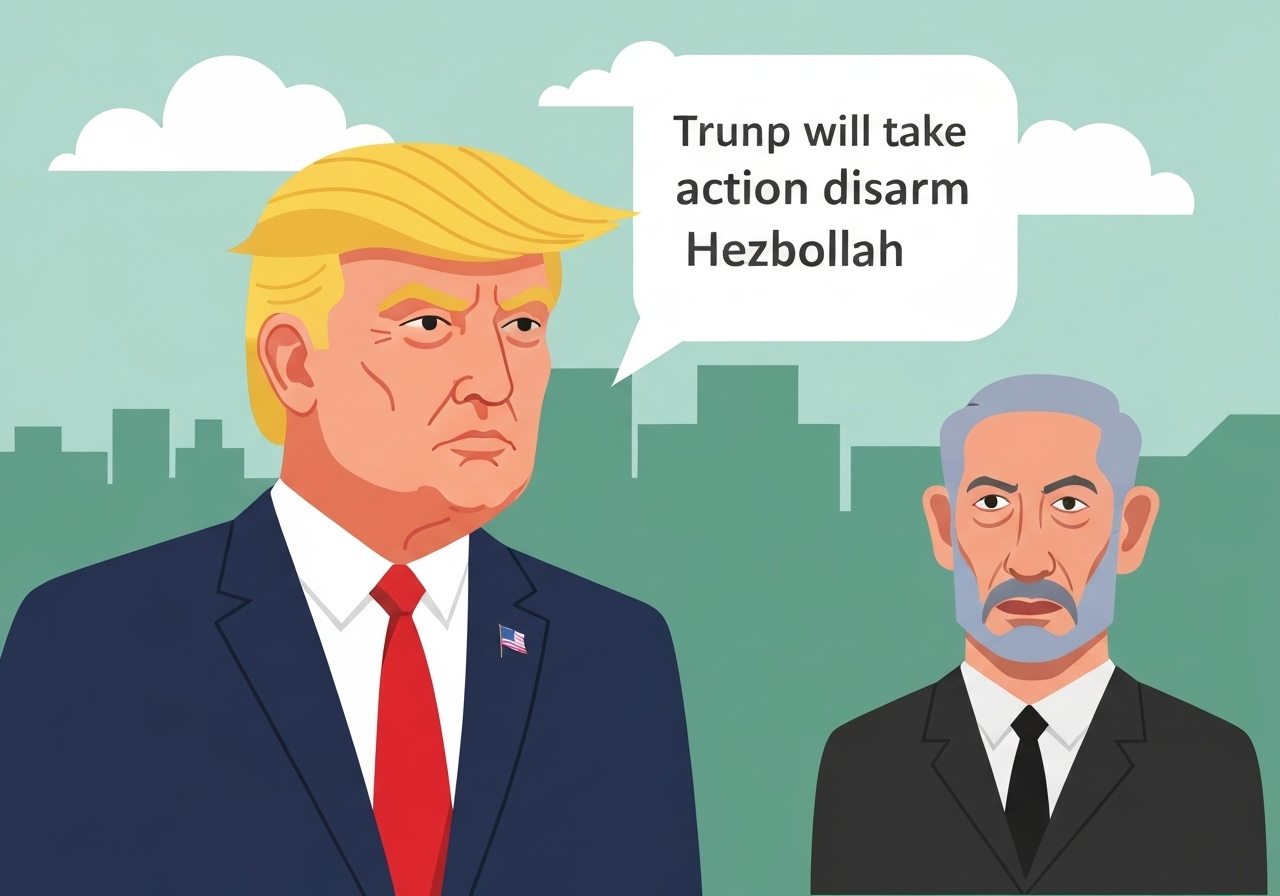
On at Mar-a-Lago in Palm Beach, U.S. President Donald Trump told Israeli Prime Minister Benjamin Netanyahu he would support Israeli measures aimed at dismantling Hezbollah’s military capabilities. The exchange, described by attendees and later reported by The Jerusalem Post, included a pointed message from Mr. Trump that “Hezbollah must be disarmed.” The meeting signals closer U.S.-Israeli alignment on confronting Hezbollah but also raises questions about timing, military commitment and regional escalation risks. Israeli officials said the conversation reinforced diplomatic backing from Washington even as operational details remain undeclared.
Key Takeaways
- Meeting date and place: President Trump met Prime Minister Netanyahu at Mar-a-Lago on , according to a Jerusalem Post report.
- Direct pledge: Trump told Netanyahu he would back Israeli action aimed at disarming Hezbollah and emphasized that Hezbollah must be neutralized.
- Political alignment: The interaction points to closer U.S.-Israeli coordination on Lebanon-related security policy, at least rhetorically.
- Operational uncertainty: No public timeline, troop commitments or specific military plans were announced following the meeting.
- Regional risk: Analysts warn the prospect of Israeli strikes on Hezbollah-controlled areas in Lebanon could widen into a cross-border confrontation.
- Historical context: The last full-scale Israel–Hezbollah confrontation in 2006 lasted roughly 34 days and ended with UN Security Council Resolution 1701.
- Diplomatic stakes: Any Israeli steps against Hezbollah would likely trigger urgent international diplomacy, including pressure from European and Arab states for restraint.
Background
Hezbollah, a Lebanon-based armed group and political movement, has been a persistent security concern for Israel since the 1980s. The group fought a major conflict with Israel in 2006 that produced widespread damage in Lebanon and northern Israel and concluded with UN Security Council Resolution 1701, which sought to limit hostilities and place Lebanese forces and an expanded UNIFIL presence in parts of southern Lebanon.
Since 2006, Israeli officials have repeatedly cited Hezbollah’s growing arsenal of rockets, tunnel infrastructure and precision-strike capabilities as an existential threat to northern Israel. Lebanon’s complex domestic politics — including Hezbollah’s parliamentary role and patronage networks — complicate any straightforward attempt to dismantle the group by force without broader instability.
U.S. policy toward Hezbollah has historically combined sanctions, diplomatic pressure, and military cooperation with Israel, while avoiding open endorsement of large-scale cross-border military operations that could spark a wider war. The new public backing signaled at Mar-a-Lago marks a notable rhetorical shift toward explicit support for Israeli action to degrade or remove Hezbollah’s military capacity.
Main Event
According to accounts of the meeting, Mr. Trump and Mr. Netanyahu held a private discussion followed by a short joint appearance in which the U.S. president reiterated his view that Hezbollah must be disarmed. The encounter occurred at Trump’s Mar-a-Lago club and was photographed by media; attendees described the tone as direct and focused on security matters rather than economic or domestic topics.
Israeli aides said Mr. Netanyahu welcomed the affirmation of U.S. support but did not disclose any operational plans publicly. Officials present at Mar-a-Lago declined to provide specifics about whether the U.S. would offer intelligence, logistical assistance, weapons, or any other material support tied to a potential campaign against Hezbollah.
Regional capitals reacted cautiously. Some governments signaled concern about possible escalation; others emphasized the legitimate right of states to defend their territory while urging restraint and adherence to international law. Within Israel, the message bolstered political arguments for taking a hard line toward Hezbollah, though military and diplomatic planners will face difficult choices about timing and proportionality.
Analysis & Implications
First, the public U.S. endorsement of Israeli aims to disarm Hezbollah narrows Washington’s diplomatic wiggle room and increases expectations in Jerusalem that follow-through will be possible. That shift could encourage Israeli leaders to accelerate contingency planning, but planners must weigh the risks of a protracted campaign and civilian harm in southern Lebanon.
Second, military action against Hezbollah would not be limited to an immediate tactical phase; it carries the risk of prolonged low-intensity conflict across a contested border, disruption to Lebanese governance, and a humanitarian toll that would draw international scrutiny. Neighboring states and global powers may be compelled to engage diplomatically to prevent wider regional escalation.
Third, American backing — even if initially rhetorical — could affect Hezbollah’s calculus and deterrence posture. The group may respond by increasing its readiness and forward deployments, raising the probability of incidents along the Blue Line between Israel and Lebanon. Intelligence-sharing or materiel support from the U.S. would amplify Israel’s operational options but also complicate Washington’s relations with other actors in the region.
Finally, domestic politics in both countries shape the outcome. In Israel, public appetite for decisive action against Hezbollah varies by constituency and is influenced by recent conflicts and economic conditions. In the U.S., presidential messaging ahead of the 2026 cycle could motivate declarations of support without committing to long-term military involvement, creating a gap between rhetoric and implementable policy.
Comparison & Data
| Conflict | Year | Duration | Major Diplomatic Outcome |
|---|---|---|---|
| Israel–Hezbollah war | 2006 | About 34 days | UN Security Council Resolution 1701 |
The 2006 confrontation remains the most recent full-scale war between Israel and Hezbollah and is a common reference point for planners and analysts. That conflict demonstrated how fast a limited cross-border exchange can escalate into a multi-week war with significant civilian displacement and international mediation needs. Current discussions must account for those precedents when evaluating the advisability and potential costs of renewed large-scale operations.
Reactions & Quotes
“Hezbollah must be disarmed,” President Donald Trump said during the meeting, according to reporting and attendees.
Donald Trump, U.S. President (reported)
Israeli officials at Mar-a-Lago described the U.S. message as a strong endorsement of Israel’s right to deal with threats along its northern border, while declining to specify operational plans.
Israeli government aides (summary)
Security analysts warned that public U.S. backing raises the stakes for regional diplomacy and could accelerate contingency planning on both sides of the Lebanon-Israel frontier.
Regional security analysts (summary)
Unconfirmed
- No public confirmation that the United States will provide offensive military assets, specific intelligence packages, or a timetable for action.
- There is no verified announcement of an Israeli operational plan, target list, or dates for any proposed campaign against Hezbollah.
- Reports do not confirm how regional partners (e.g., Lebanon, Iran, European states) will respond in operational terms if hostilities escalate.
Bottom Line
The Mar-a-Lago meeting made clear that, as of , President Trump publicly signaled backing for Israeli efforts to remove Hezbollah’s military threat. That rhetorical alignment narrows diplomatic options and raises the prospect that Israel may feel politically enabled to pursue tougher measures in the near term.
However, significant unknowns remain about the scale, timing and material support for any campaign. Policymakers in Washington, Jerusalem and regional capitals will now face heightened pressure to manage escalation risks, shape post‑conflict arrangements, and prepare for humanitarian and diplomatic consequences should hostilities expand beyond the border.