
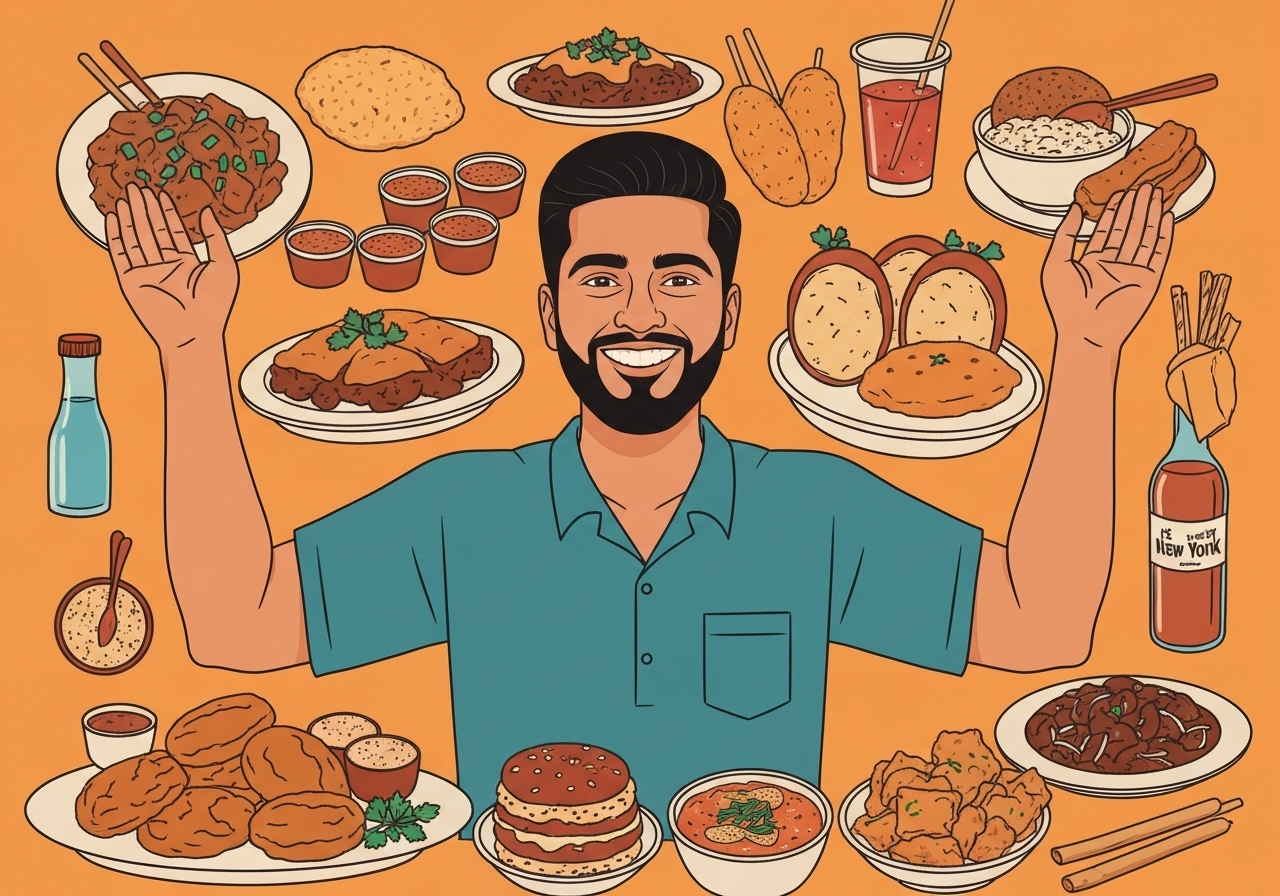
— In his inaugural address as mayor of New York City, Zohran Mamdani foregrounded the city’s cuisines as symbols of both identity and economic security. Speaking on Thursday, he moved between personal memories and policy commitments, praising the workers who prepare the city’s dishes while proposing city-owned supermarkets to lower the cost of staples. His language placed everyday food and the people who produce it at the center of a broader vision for a more equitable city. The speech set an early tone for an administration tying cultural celebration to concrete affordability goals.
Key Takeaways
- Zohran Mamdani delivered his inaugural address on Jan. 1, 2026, emphasizing food as a civic and economic touchstone.
- He referenced specific New York foods — including chicken biryani, beef patties, picanha, pastrami, bagels and lox, and sancocho — to illustrate the city’s diversity and daily life.
- The mayor highlighted small-scale food workers, mentioning halal cart vendors and cooks who use “a thousand spices,” underscoring labor and cultural value.
- Mamdani proposed creating city-owned supermarkets to make pantry staples more affordable as part of his economic program.
- The speech wove personal scenes — powdered doughnuts at A.Y.S.O. games, oversized Koronet pizza slices — into public appeals about belonging and stewardship.
- He invoked the contrast of cultural sounds and costs on the same block, including the image of paying $9 for coffee, to illustrate urban contradictions.
- Mamdani framed food both as identity and a lever for egalitarian policy, linking culinary references with plans for affordability.
Background
During his campaign, Mamdani frequently used food to humanize policy and connect with voters, often naming favorite local spots and dishes to highlight the city’s multicultural fabric. That rhetorical pattern continued into the inaugural, where culinary references served not merely as color but as shorthand for the lives and labor of New Yorkers who keep the city functioning. The policy nod to city-run supermarkets fits within a longer municipal debate over food affordability, food deserts, and how city government can intervene without displacing small businesses.
New York’s foodways have long been political terrain: from immigrant-run delis and halal carts to long-standing Jewish delis and Caribbean bakeries, the city’s eateries are both cultural institutions and livelihoods for thousands. Past mayors have occasionally celebrated New York’s culinary scene in speeches, but Mamdani made food a central frame for questions about who should share in the city’s prosperity. Key stakeholders include small food vendors, restaurant workers, community groups concerned with food access, and neighborhood grocers potentially affected by new public initiatives.
Main Event
On the inaugural podium, Mamdani shifted between anecdote and agenda, naming dishes and locales that anchored his life in the city. He recalled meals from childhood and adolescence — powdered doughnuts at local youth soccer games and oversized slices at Koronet Pizza — as formative experiences that tied him to the neighborhoods he represents. He also singled out a favorite: the chicken biryani at Kabab King in Jackson Heights, Queens, a restaurant he has frequented since high school, using that personal detail to humanize policy priorities.
The mayor repeatedly acknowledged the labor behind the food: he mentioned halal cart workers whose knees ache from long shifts and cooks who blend countless spices, framing their labor as civic contribution deserving of respect and economic consideration. That rhetoric led into his policy proposal: city-owned supermarkets intended to reduce the price of pantry staples, part of a broader affordability platform he has advanced. Mamdani tied these measures to fairness for those who operate subways, rake parks, and feed the city.
He also used evocative contrasts to make a political point, asking rhetorically where else one could hear the sound of a steelpan, smell sancocho, and still pay $9 for coffee on a single block. Those images served to highlight both the city’s cultural wealth and the uneven distribution of its costs. The speech closed as an invitation for New Yorkers to see their shared life through food — a call for stewardship and mutual responsibility.
Analysis & Implications
Framing food as both cultural capital and economic policy is a deliberate political strategy: it makes abstract questions about inequality tactile and relatable. For many voters, references to neighborhood foods and vendors translate policy into everyday terms, potentially broadening appeal across communities that recognize those tastes and labor. That rhetorical choice can amplify support for concrete measures like subsidized groceries, but it also raises questions about implementation and market impact.
The proposal for city-owned supermarkets aims to lower staple prices, but delivering savings at scale requires answers about funding, management, and competition with existing private grocers. If implemented, public supermarkets would need capital and an operating model that balances affordability with long-term viability; otherwise, they risk becoming short-term relief without structural change. The approach echoes other municipal experiments in public provisioning, yet the unique density and diversity of New York complicate direct comparisons.
Politically, anchoring policy in cultural symbolism can strengthen a mayor’s early mandate but also invites scrutiny from small-business owners and budget hawks. Stakeholders such as corner-store owners and food-service workers will watch specifics closely: where stores open, who runs them, and how labor will be treated. On the other hand, community groups focused on food access could view the initiative as a meaningful step if it measurably reduces costs for low- and moderate-income households.
Comparison & Data
| Dish | Cultural/Geographic Association |
|---|---|
| Chicken biryani | South Asian communities, Jackson Heights |
| Beef patties | Caribbean cuisine |
| Picanha | Brazilian churrasco |
| Pastrami on rye | Jewish deli tradition |
| Bagels and lox | Jewish-American breakfast |
| Sancocho | Latin American/Caribbean stews |
This table maps items Mamdani named to their broad cultural associations in New York. The list illustrates the city’s culinary pluralism and why food can serve as both identity marker and policy touchstone. While not exhaustive, the selections underscore geographic neighborhoods where these cuisines are concentrated and signal constituencies for whom food policy has immediate relevance.
Reactions & Quotes
Officials and observers are likely to parse Mamdani’s culinary framing for both symbolism and substance; supporters will see a mayor linking culture to policy, critics will press for implementation details. The following excerpts from the inaugural speech capture the rhetorical core.
“We are the stewards of something without equal in our world.”
Mayor Zohran Mamdani
This line framed the speech’s central claim that New York’s cultural richness creates a shared public responsibility. Mamdani used that assertion to justify active city intervention aimed at ensuring more residents can participate in and benefit from the city’s offerings.
“Halal cart vendors whose knees ache from working all day”
Mayor Zohran Mamdani
The image called attention to the physical labor behind everyday food service, connecting individual hardship to policy priorities on wages, benefits, and affordability. It also signaled an intention to uplift workers often invisible in policy debates.
Unconfirmed
- The precise locations, funding sources, and timeline for the proposed city-owned supermarkets were not specified in the inaugural address and remain unannounced.
- How the proposal would interact with existing small grocers, supply chains, and union contracts is not yet clear and has not been formally detailed.
Bottom Line
Mamdani’s inaugural speech intentionally tied the sensory and social life of food to a policy agenda aimed at affordability and inclusion. By invoking specific dishes and the workers who serve them, he made an early bid to define his mayoralty through attention to everyday economic issues as well as cultural celebration. Whether that framing translates into effective programs will depend on budget decisions, operational plans for any municipal markets, and negotiations with local businesses and labor groups.
What to watch next: the mayor’s budget proposals, official plans or pilot programs for city-run supermarkets, and reactions from neighborhood grocers and community organizations. Those developments will determine if the food-forward rhetoric becomes durable policy or a symbolic motif for an administration still early in its tenure.
Sources
- The New York Times (media)