
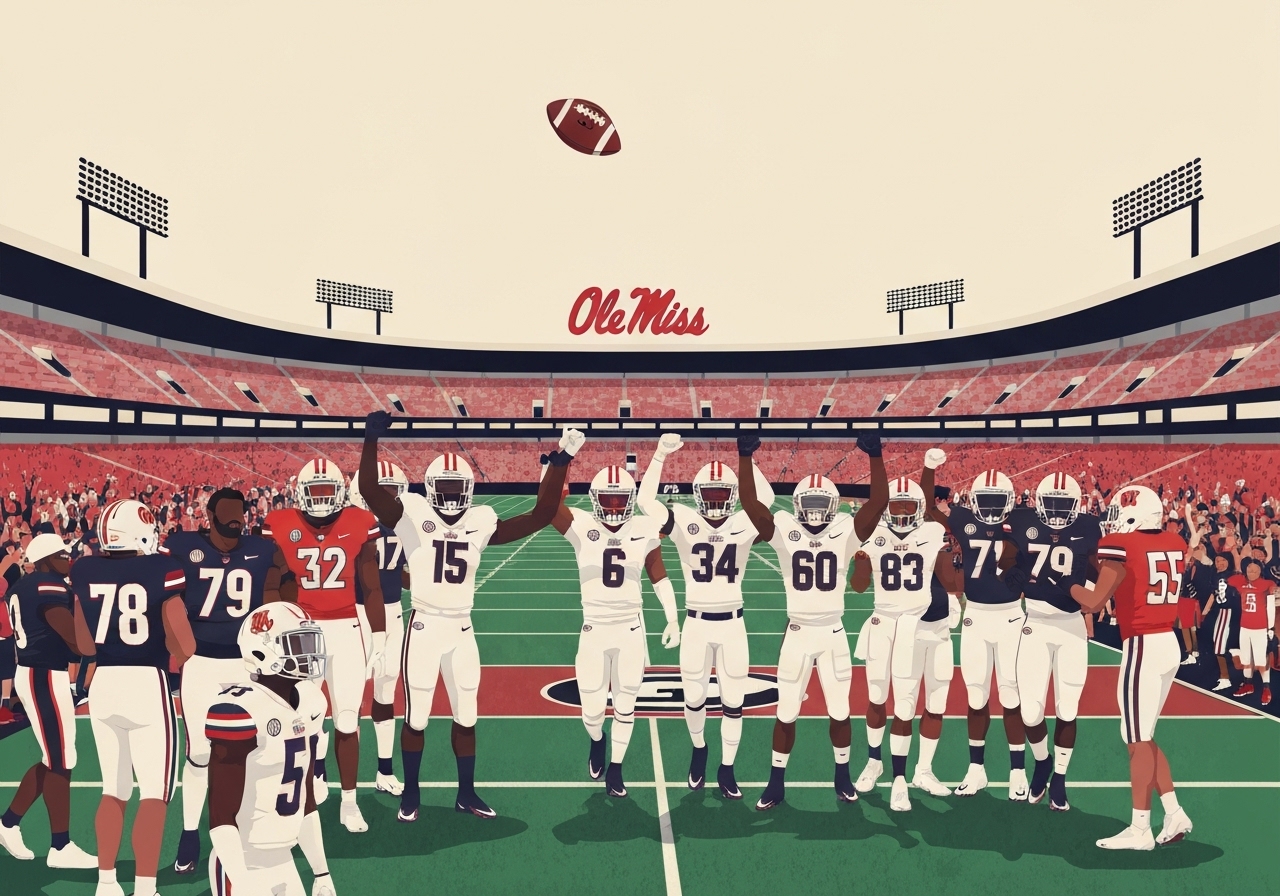
On Jan. 1, 2026 in New Orleans, Lucas Carneiro drilled a 47-yard field goal in the closing seconds to lift Ole Miss to a 39-34 victory over Georgia in the Sugar Bowl, sending the Rebels to the College Football Playoff semifinals. The game ended when Ole Miss recorded a safety on a kickoff late in the closing sequence, cementing the score. Ole Miss (13-1) will meet the Miami Hurricanes (12-2) in the CFP semifinal at the Fiesta Bowl on Jan. 8 in Glendale, Arizona. Miami reached the final four by defeating Ohio State in the Cotton Bowl on New Year’s Eve.
Key Takeaways
- Final score: Ole Miss 39, Georgia 34; the game-deciding field goal was a 47-yarder by Lucas Carneiro in the final seconds.
- Ole Miss improved to 13-1 overall and is in the 12-team CFP for the first time; Georgia finished 12-2.
- Quarterback Trinidad Chambliss was named Sugar Bowl offensive MVP after completing 30 of 46 passes for 362 yards and two touchdowns.
- The Rebels added a late safety on a kickoff to end scoring and provide breathing room after Carneiro’s kick.
- Pete Golding, serving as acting head coach after Lane Kiffin’s Nov. 30 departure to LSU, is 2-0 as head coach following a 41-10 first-round win over Tulane.
- Miami, the No. 10 playoff seed, has won six straight games since a Nov. 1 loss at SMU and entered the semifinal as a DraftKings 2.5-point favorite.
- Georgia became the third team with a first-round bye to lose its opening CFP game this season; Indiana (the No. 1 seed) remains the only bye team to advance.
Background
The Sugar Bowl matchup followed a regular season that left both programs with high expectations and some late changes. Ole Miss went 11-1 in the regular season but lost coach Lane Kiffin to LSU on Nov. 30; defensive coordinator Pete Golding took over for postseason play. Georgia, which beat Ole Miss earlier in the season on Oct. 18 in Athens, entered the Sugar Bowl as one of the top SEC programs with a 12-1 mark before the loss.
Miami’s path to the semifinal was shaped by a 5-0 start that propelled the Hurricanes to a No. 2 AP ranking and by midseason turbulence that included two losses in three games. A victory over Ohio State in the Cotton Bowl on Dec. 31 secured Miami’s spot in the final four and extended a late-season winning streak that began after the Nov. 1 loss at SMU.
Main Event
The Sugar Bowl in New Orleans was a back-and-forth affair, with both teams trading scores and momentum swings throughout. Ole Miss leaned on a balanced attack; Trinidad Chambliss completed 30 of 46 attempts for 362 yards and two touchdowns, pacing the Rebels’ aerial offense. Georgia answered with timely plays from its offense and special teams, keeping the game within reach until the closing minute.
In the final sequence, Lucas Carneiro — who had been called upon in a high-pressure moment — converted a 47-yard field goal with only seconds remaining to put Ole Miss in front. On the ensuing kickoff, a quick sequence resulted in a safety for the Rebels, removing any realistic chance for a Georgia comeback.
Golding, making his head coaching debut in the playoff bracket after stepping in for Kiffin, relied on adjustments by his defense to stymie Georgia on several late downs. The Rebels’ defense forced critical stops and pressured Georgia’s quarterback on pivotal plays, creating those late opportunities for special teams to decide the outcome.
Georgia coach Kirby Smart acknowledged the tight nature of the contest, noting the quality of competition in the College Football Playoff and crediting Ole Miss for making marginally more plays in critical moments.
Analysis & Implications
Ole Miss’s advancement underscores how midseason staff changes do not necessarily derail postseason outcomes when a roster is deep and well-coached. Pete Golding’s quick transition from defensive coordinator to interim head coach has been framed as effective: his unit produced a dominant first-round win over Tulane (41-10) and then executed under pressure in New Orleans. For the program, the victory is both a milestone and a test of stability as the school prepares for decisions about coaching structure after the CFP run.
For Georgia, the loss raises questions about in-game adjustments and closing execution in high-leverage situations. Despite finishing 12-2, the Bulldogs’ inability to close this matchup after an earlier-season win in Athens highlights the parity at the top of college football and the razor-thin margins in playoff settings. Georgia’s season nevertheless produced a strong body of work, but the Sugar Bowl defeat halts their quest for another CFP semifinal appearance.
Miami’s upcoming matchup with Ole Miss will be a stylistic contrast: the Hurricanes bring a recharged offense and a six-game winning streak, while the Rebels are riding momentum from a dramatic Sugar Bowl finish. Matchup factors likely to determine the Fiesta Bowl include quarterback play, pass protection, defensive pressure packages, and special teams — areas both teams showed they can swing to their advantage during the season.
Comparison & Data
| Team | Record | CFP Seed | Key Player (Sugar Bowl) |
|---|---|---|---|
| Ole Miss | 13-1 | No. 6 | Trinidad Chambliss — 30/46, 362 yards, 2 TDs |
| Georgia | 12-2 | No. (bye) | Defensive/special teams plays late |
| Miami | 12-2 | No. 10 | Won Cotton Bowl vs. Ohio State |
The table summarizes season records, playoff seeding and the immediate statistical storylines. Context: Ole Miss avenged an Oct. 18 loss to Georgia and is making its first appearance in the 12-team CFP; Miami’s late-season surge and Cotton Bowl win secured its No. 10 seed and a semifinal berth.
Reactions & Quotes
Coaches and players framed the game as emblematic of the playoff’s high stakes and small margins.
“It was a back-and-forth game… I give credit to Ole Miss. They made more plays than we did.”
Kirby Smart, Georgia head coach
Smart’s comments recognized the competitive balance and singled out Ole Miss for decisive plays in key moments.
“I’m just so excited for our players, the adversity that they’ve been through.”
Pete Golding, Ole Miss head coach (interim)
Golding highlighted the team’s resilience following a midseason coaching change and praised his players’ response under pressure.
“I just have to give all of Ole Miss a ‘thanks’ for letting me come here to play ball.”
Trinidad Chambliss, Ole Miss quarterback
Chambliss accepted the Sugar Bowl offensive MVP and credited teammates and the program for his opportunity and performance.
Unconfirmed
- Short-term betting lines may shift between now and Jan. 8; the DraftKings 2.5-point line reported immediately after the Sugar Bowl is subject to change.
- The long-term leadership and staffing decisions at Ole Miss following the CFP run are still unresolved and will depend on university decisions beyond postseason results.
Bottom Line
Ole Miss’s 39-34 Sugar Bowl victory is a defining moment for a program navigating a late-season coaching change and marks the Rebels’ first appearance in the 12-team CFP semifinals. The win was decided by special teams and late-game execution — areas that will be tested again against a surging Miami squad in the Fiesta Bowl on Jan. 8.
For Georgia, the loss closes a 12-2 season with questions about late-game adjustments; for Miami, the semifinal offers a matchup against the SEC’s remaining team and a chance to extend a late-season renaissance. The Fiesta Bowl will turn on quarterback play, pressure packages and special teams execution — the same margins that determined the Sugar Bowl.
Sources
- ESPN (media report)
- College Football Playoff (official organization)
- DraftKings (sportsbook odds)