
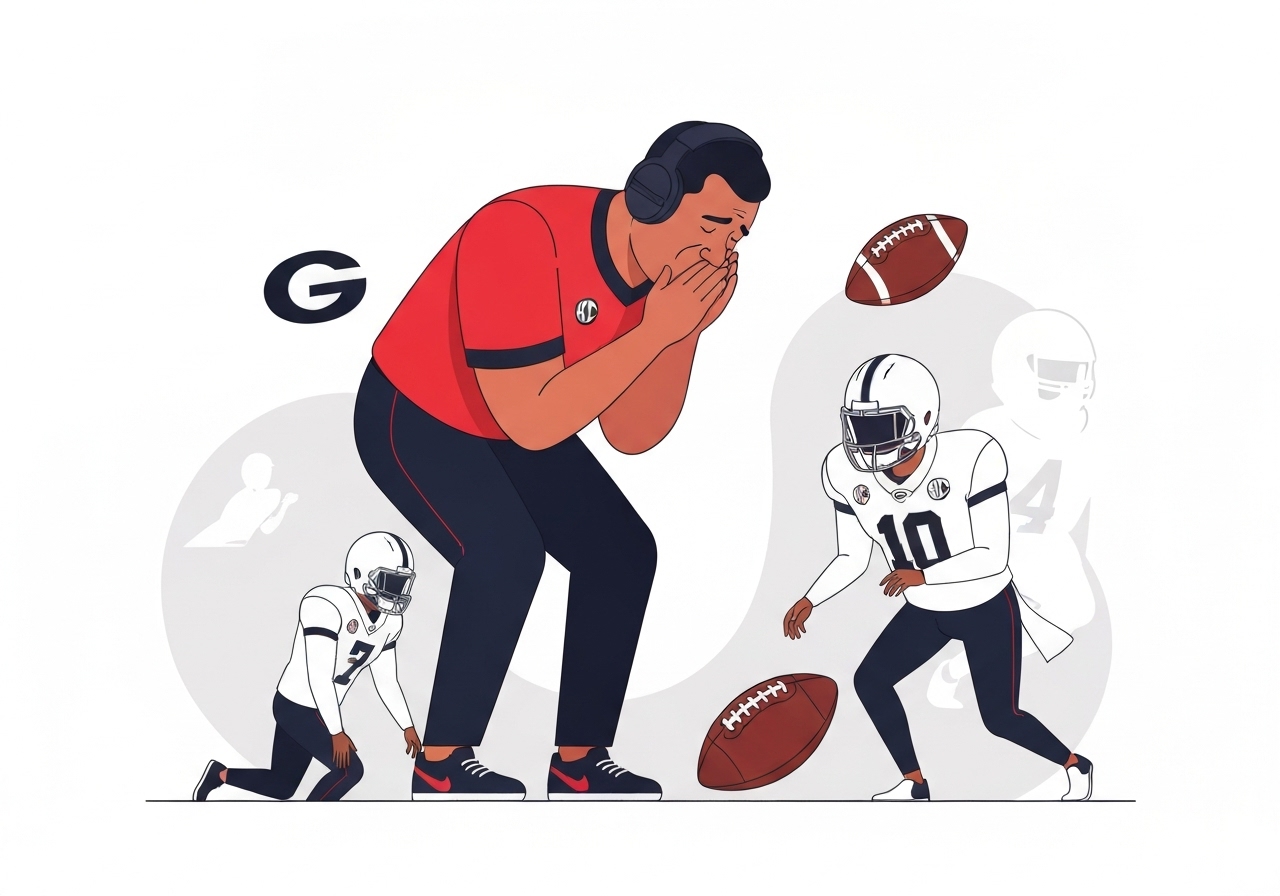
NEW ORLEANS — On Jan. 1 in the Sugar Bowl, Georgia coach Kirby Smart accepted responsibility after a decisive fourth-down blunder helped Ole Miss beat the Bulldogs 39-34. Facing fourth-and-2 at Georgia’s own 33, the Bulldogs briefly sent out their punt unit but then returned the offense to the field; a snap that wasn’t supposed to occur resulted in a sack and a two-play touchdown drive that put Ole Miss up by 10 with 9:05 remaining. Georgia rallied to tie at 34 late, but a 40-yard pass from Trinidad Chambliss set up the game-winning field goal for the Rebels. Smart called the mis-snap “on us as coaches,” while also noting analytics had favored going for it on fourth down.
Key takeaways
- Final score: Ole Miss 39, Georgia 34 in the Sugar Bowl on Jan. 1, 2026, in New Orleans.
- The critical sequence: fourth-and-2 at Georgia’s 33; an unintended snap to punter Gunner Stockton resulted in a sack by LB Suntarine Perkins and Ole Miss possession at the Georgia 23.
- Ole Miss scored two plays after the turnover on downs to extend its lead to 10 with 9:05 remaining.
- Georgia executed an earlier successful fake punt (Landon Roldan to Lawson Luckie, 16 yards) that produced a field-goal drive.
- Georgia tied the game at 34 with under a minute left, but Trinidad Chambliss’ 40-yard completion later set up the decisive field goal.
- Georgia’s defense yielded 473 yards — the second-most allowed by the Bulldogs this season.
- Smart acknowledged analytics had recommended going for it on the fourth-and-2, but said the actual snap should not have happened and placed responsibility with the coaching staff.
- The loss ended Georgia’s 75-game streak of wins when leading at the start of the fourth quarter.
Background
Georgia entered the Sugar Bowl as one of college football’s elite programs, with a consistent streak of fourth-quarter leads over recent seasons. The Bulldogs and Ole Miss had met in October, when Georgia erased a nine-point deficit entering the fourth quarter to win 43-35, a contest that highlighted the teams’ familiarity and contrasting late-game dynamics. The Sugar Bowl matchup carried extra weight: for Georgia, it was a chance to rebound after last season’s title hopes ended in the Superdome; for Ole Miss, it presented an opportunity to cement momentum under pressure in a high-stakes bowl environment.
Fourth-down strategy and special-teams calls have become focal points in modern college coaching staffs, with analytics groups often advising aggressive choices on short yardage in certain field positions. Georgia’s staff — which briefly sent out its punt unit on fourth-and-2 at its own 33 — had planned multiple options: punt, delay-of-game then punt, draw the defense offside, or, per analytics, keep the offense on the field and attempt the conversion. That layered decision-making created a window for miscommunication when play resumed following an injury stoppage and an Ole Miss player on the turf.
Main event
Late in the fourth quarter, with momentum swinging and Georgia trying to protect a slim lead, the Bulldogs faced fourth-and-2 at their own 33. After a stoppage for an Ole Miss player down, coaches put the offense back on the field with multiple contingency plans. Instead of drawing a penalty or accepting a delay before punting, the ball was snapped to Gunner Stockton — a snap Smart later called a “misfire.” Ole Miss linebacker Suntarine Perkins penetrated off the edge and sacked Stockton, giving the Rebels the ball at the Georgia 23.
Ole Miss capitalized immediately. Two plays after the turnover, the Rebels reached the end zone and pushed the margin to 10 with 9:05 to play, tilting the game’s balance. Earlier in the half, Georgia had loosened up the game with a perfectly executed fake punt: receiver Landon Roldan reverse-handled and threw a 16-yard pass to Lawson Luckie to keep a drive alive, which ultimately produced a field goal.
Georgia responded in the final minute with a drive that tied the score at 34, demonstrating resiliency despite the earlier error. But on the next Ole Miss possession, quarterback Trinidad Chambliss completed a 40-yard pass that set up the winning field goal. Smart pointed to execution across phases — offense, defense and coaching — as the decisive factors, saying his team was outplayed and outcoached in key moments.
Analysis & implications
The mis-snap on fourth-and-2 is both a tactical and organizational failure: tactically, it surrendered excellent field position in a critical phase of the game; organizationally, it exposed a breakdown in communication among the coaching staff, special teams, and the players on the field. Smart’s characterization of the play as “on us as coaches” underlines that the responsibility for unit alignment and clear contingency protocols rests with the staff, not only with the players executing the snap.
From a strategic lens, analytics advocacy for going for it on fourth-and-2 at the 33 aligns with recent trends favoring aggression when expected points are higher for conversion than for a punt from that range. But analytics are only useful if coaching commands, personnel alignment and situational clarity are synchronized. In this case, the analytics recommendation and the subsequent miscommunication became detached — the model’s advice could not be realized because the on-field decision-making fragmented.
Defensively, allowing 473 yards highlights schematic and execution gaps Georgia must address in the off-season. Whether the yardage came via explosive plays, sustained drives, or schematic mismatches, the total is an outlier relative to Georgia’s season performance and signals specific areas for personnel review, scheme adjustments, and potential play-calling revisions against tempo and vertical passing attacks.
Programmatically, the loss has reputational and recruiting implications. Ending a 75-game streak of winning when leading at the start of the fourth quarter is a statistical marker that rivals and recruits will note; how the staff responds publicly and in offseason programing — clarifying decision protocols, refining special-teams communication, and presenting a coherent approach to fourth-down strategy — will influence perceptions of Georgia’s readiness to close tight games going forward.
Comparison & data
| Metric | Georgia (Season) | Sugar Bowl |
|---|---|---|
| Yards allowed (game) | — | 473 |
| Fourth-and-2 decision | Multiple fourth-down choices | Turnover after unintended snap at own 33 |
| Key big play vs Ole Miss | Oct. meeting: Georgia late surge | Chambliss 40-yard completion set up winning FG |
The table highlights game-specific outcomes versus season trends: the 473 yards allowed stands out as an unusually high total for Georgia this season (second-most allowed). The fourth-down sequence contrasts with earlier successful trick-play execution (the 16-yard fake punt completion). Interpreting these numbers shows a pattern of situational volatility — Georgia can produce creative, game-extending plays, but it also experienced critical lapses in situational control.
Reactions & quotes
“We had a misfire there. The ball was not supposed to be snapped in that situation. That’s on us as coaches.”
Kirby Smart, Georgia head coach
Smart framed the error as a coaching responsibility rather than a player-only mistake, emphasizing decision protocols and in-game communication as areas for reflection.
“I see the ball, I go.”
Princewill Umanmielen, Ole Miss defensive lineman
Umanmielen succinctly explained the defensive perspective: when a play materializes, defenders react without regard for who initiated the confusion.
“That felt like a road game — they were loud and made plays when it mattered.”
Kirby Smart (on Ole Miss crowd and Chambliss)
Smart credited Ole Miss’ crowd and clutch execution as contributing factors, acknowledging external influences on momentum and performance.
Unconfirmed
- The precise internal wording and thresholds used by Georgia’s analytics group that led to the “go for it” recommendation have not been publicly released.
- It is not independently verified whether the mis-snap resulted from a coaching signal error, a player timing mistake, or a combination of both.
- Whether Georgia would have successfully converted fourth-and-2 had the intended play been executed remains speculative.
Bottom line
This Sugar Bowl loss hinged on a moment when strategy, communication and execution diverged: analytics suggested an aggressive call, but a misapplied snap turned the sequence into a turnover that Ole Miss promptly converted into points. The result was a five-point defeat, a snapped long-standing streak of fourth-quarter-leading wins, and a clear action list for Georgia’s staff — tighten in-game decision protocols, reinforce special-teams communication, and address defensive vulnerabilities exposed by 473 yards allowed.
For Georgia, the immediate focus will be internal reviews rather than recrimination. The program’s response over the next weeks — adjustments in coaching processes, transparent lessons shared with players, and targeted offseason corrections — will determine whether this game becomes an isolated, teachable failure or the start of a trend in late-game execution under pressure.