
Lead
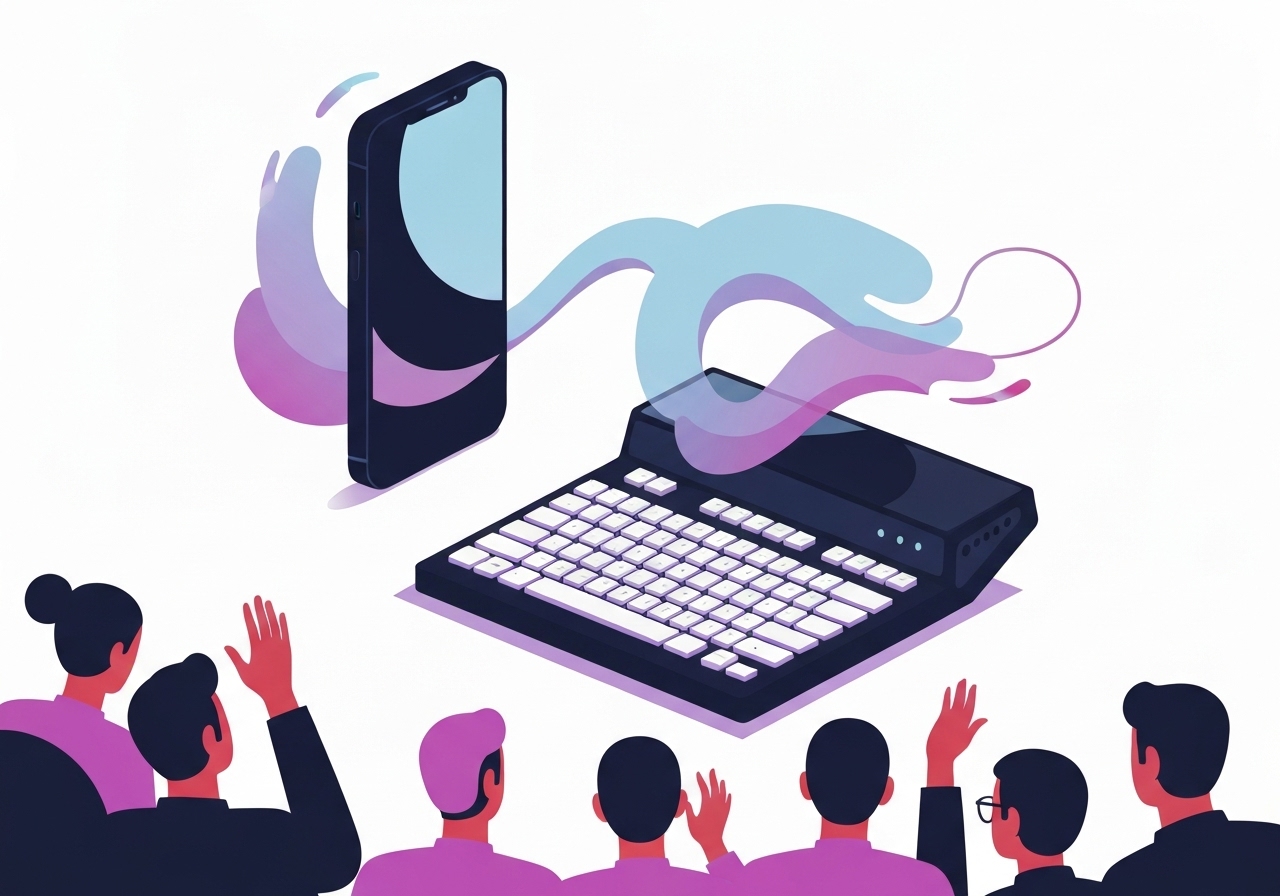
At CES 2026, Clicks unveiled its first smartphone, the Communicator, and a companion MagSafe-compatible accessory, the Power Keyboard. The Communicator is a 4-inch, Android 16 handset built around a tactile physical keyboard and hardware-level encryption, positioned as a ‘communication, not consumption’ secondary device. Clicks opened reservations for the phone at $399 (rising to $499 on February 27) and announced pre-orders for the Power Keyboard on January 2 with spring availability. Both products lean heavily on nostalgic design cues while packing modern features such as a 50MP main camera, microSD expandability and wireless charging.
Key Takeaways
- The Clicks Communicator features a 4.0-inch OLED display, Android 16 software and hardware-level encryption for user data.
- Camera hardware includes a 50MP rear sensor and a 24MP front-facing camera despite Clicks positioning the device as a messaging-first phone.
- Physical I/O: a 3.5mm headphone jack, NFC for Google Pay, Bluetooth and Wi‑Fi; storage expands via microSD up to 2TB.
- Battery and charging: a 4,000 mAh battery with USB-C wired charging and wireless charging support.
- Distinctive hardware: tactile keyboard with fingerprint sensor embedded in the spacebar and a customizable Signal LED for contact- or app-specific alerts.
- Pricing and timing: Communicator reserved at $399, rising to $499 on 2026-02-27; Power Keyboard retails at $110 (early-bird $80), pre-orders open 2026-01-02 and shipping expected in spring.
- The Power Keyboard attaches via MagSafe or Qi2, includes a 2,150 mAh battery and works over Bluetooth with iOS, Android and other Bluetooth-capable devices.
Background
Physical keyboards on phones evoke devices such as the original BlackBerry and Palm models, both of which shaped early mobile productivity expectations. In recent years a small but visible market has re-emerged for tactile, distraction-limited devices as some users push back against constant feeds, algorithm-driven engagement and notification overload. Clicks has built a product line around physical keyboard accessories; bringing those designs to CES continues a strategy of courting users who prefer tactile typing and focused communication.
The ‘secondary phone’ concept — a dedicated device used largely for messaging and calls while leaving media capture and heavy apps to a primary handset — has been tried in multiple forms, from pared-down feature phones to companion devices. That positioning appeals to users seeking ‘digital minimalism’ but raises practical questions about dual subscriptions, handset management and the convenience of carrying two numbers or plans. Clicks frames the Communicator as a privacy- and focus-oriented alternative rather than a flagship replacement.
Main Event
Clicks introduced the Communicator at CES with a compact 4-inch OLED screen paired to a tactile QWERTY keyboard. The company emphasized hardware-level encryption and a lightweight Android 16 interface designed around messaging workflows, positioning the device for users who want fewer distractions and greater control over communication. Despite that focus, the hardware includes modern multimedia components: a 50MP main camera and a 24MP front camera, plus NFC to enable Google Pay transactions.
Hardware details aim to blend retro ergonomics with present-day conveniences. The phone retains a 3.5mm headphone jack and accepts microSD cards up to 2TB, a choice that signals a prioritization of user-controlled storage. Clicks also incorporated a fingerprint sensor into the spacebar for biometric unlocking and added a customizable Signal LED to visually flag specific contacts or apps, a nod toward low-friction notification management.
Clickable accessories extend the concept. The Power Keyboard is a battery-equipped, MagSafe- and Qi2-compatible keyboard that attaches to modern phones and supports both horizontal and vertical device orientations. With a 2,150 mAh battery it can help top up a connected phone, and Bluetooth pairing broadens compatibility to tablets, smart TVs and VR headsets. Clicks set pre-orders for January 2 and a spring ship window, with the keyboard priced at $110 and an $80 early-bird option.
Analysis & Implications
Clicks is tapping a clear niche: consumers who want the tactile feel of a physical keyboard and fewer software distractions. By building on Android 16 and providing hardware-level encryption, the company attempts to balance privacy and usability — a proposition that could attract security-conscious users and professionals who prefer text-driven workflows. That said, offering a 50MP camera signals Clicks does not expect users to fully give up media capture on the device, creating a hybrid that sits between minimalist phones and full-featured smartphones.
The secondary-device strategy faces adoption barriers. Maintaining two active phone lines can be costly or inconvenient, and many users may resist carrying a second number or managing parallel communication stacks. Clicks’ success will rely on convincing a segment of users that the benefits of distraction reduction or enhanced privacy outweigh the friction of dual-device logistics. Enterprise or regulated-industry customers could be an early adopter cohort if Clicks provides compelling device management or security integrations.
Economically, Clicks is entering a crowded accessory and niche handset market. The Communicator’s $399 reservation price undercuts many mainstream smartphones while the $499 post-February price approaches budget full-featured devices. The Power Keyboard’s $110 retail positions it as a premium accessory; bundling strategies, carrier partnerships or enterprise deals could influence uptake. Long-term viability will hinge on software updates, keyboard durability and an ecosystem that supports the device’s focus-centric rhetoric.
Comparison & Data
| Item | Clicks Communicator | Typical modern smartphone (approx.) |
|---|---|---|
| Display | 4.0-inch OLED | ~6.1–6.7-inch OLED |
| Battery | 4,000 mAh | ~4,000–5,000 mAh |
| Rear camera | 50MP | 12–108MP (varies by model) |
| Storage | microSD up to 2TB | 128GB–1TB (often non-expandable) |
| Price at launch | $399 (preorder) → $499 from 2026-02-27 | $599+ (flagship average) |
The table shows how Clicks trades screen real estate for keyboard-centric input and user-controlled storage. Compared with typical modern phones, the Communicator is smaller but aligns on battery capacity and camera resolution, while its price undercuts many flagship devices but overlaps budget and midrange segments.
Reactions & Quotes
‘communication, not consumption’ — our goal was to create a phone that prioritizes conversation over endless feeds,
Clicks (company statement)
Clicks framed the Communicator in these terms during its CES reveal, emphasizing messaging-first design. The phrasing encapsulates the product’s positioning while leaving open how users will adopt it in practice.
‘A dedicated messaging device can reclaim attention, but two-phone setups bring real friction for most consumers,’
Independent mobile industry analyst
An industry analyst noted that the behavioral benefits of separation must be weighed against the practical costs of running two active devices and lines. Adoption will likely be gradual and piecemeal across niche groups.
Unconfirmed
- Real-world battery endurance under typical mixed use for the Communicator has not yet been independently measured.
- Carrier compatibility details (e.g., support for specific U.S. carriers, dual-SIM options) were not fully disclosed at announcement.
- Actual camera image quality in varied lighting conditions remains to be verified by hands-on reviews.
- Whether Clicks will offer bundled phone-plan solutions or enterprise device-management integrations is not yet confirmed.
Bottom Line
Clicks’ Communicator and Power Keyboard blend nostalgic hardware with modern components, aiming at users who want focused communication and tactile input. The product pair may attract those practicing digital minimalism or professionals who value typing ergonomics and hardware-controlled privacy. However, the secondary-device thesis faces practical hurdles: managing two active numbers or plans, and persuading users to carry a separate phone, will likely limit mass-market adoption.
For Clicks, success will depend on strong software support, reliable hardware, sensible pricing and clear use-cases that justify the trade-offs. Early reservations and the relatively aggressive introductory pricing create a runway for adoption, but broader traction will be determined by hands-on reviews, carrier support and how well Clicks can translate nostalgia into sustained everyday value.