
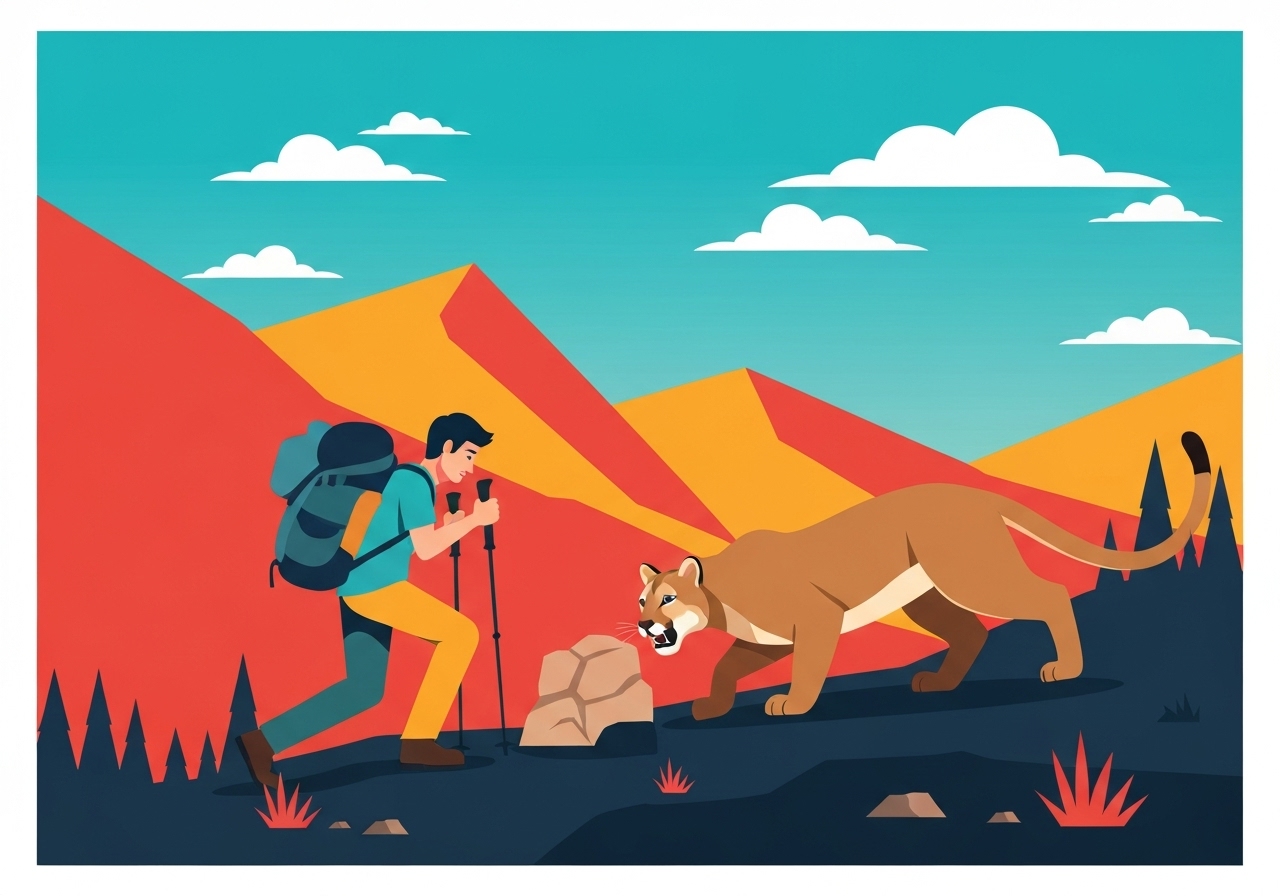
On January 2, 2026, a female hiker was fatally attacked by a mountain lion on the Crosier Mountain trail in Larimer County, Colorado, state officials said. The victim’s identity has not been released; authorities describe the incident as the first confirmed fatal mountain lion attack in Colorado since 1999. Hikers in the area reported throwing rocks at a big cat near the body, prompting the animal to flee, and Colorado Parks and Wildlife (CPW) later euthanized two mountain lions found nearby. Trails on the mountain were closed and local officials offered condolences to the family as investigators searched for any additional animals linked to the attack.
Key Takeaways
- The attack occurred on January 2, 2026, on the Crosier Mountain trail in Larimer County; the victim was a female hiker and her name has not been released.
- Colorado Parks and Wildlife said this is the state’s first fatal mountain lion attack since 1999, a gap of 27 years.
- Hikers reported throwing rocks at a mountain lion near the scene; CPW euthanized two mountain lions and is investigating a possible third animal.
- CPW estimates Colorado’s wild mountain lion population at roughly 3,800 to 4,400 animals statewide.
- The U.S. Forest Service closed trails in the vicinity as the agencies conducted field work and public-safety assessments.
- Local residents reported recent mountain lion sightings, including one account of a family group of four animals near the area of the attack.
Background
Mountain lions (also called cougars, pumas or panthers) are native across Colorado and typically range widely in search of deer and elk. Wildlife agencies say sightings grow more frequent in winter when ungulates move to lower elevations, concentrating predators and people on the same slopes. Colorado Parks and Wildlife tracks population estimates and responds to human–wildlife incidents with management steps that can include removal or euthanasia when attacks on people occur. Public land use near Estes Park and recreational pressure on trails have increased over the past two decades, raising the number of human encounters with large carnivores in certain corridors.
Fatal mountain lion attacks in North America remain rare, but the 1999 fatality in Colorado had previously been the state’s only recorded human death attributed to a cougar. That long interval shaped public expectations about risk even as Colorado’s human population, trail use, and seasonal elk and deer patterns have changed. Agencies balance public safety, ecosystem health, and legal protections for predators, complicating management decisions after serious incidents. Local communities near prime habitat — including private landowners, small-business operators, and park managers — are frequent stakeholders in those discussions.
Main Event
According to CPW and responding law enforcement, hikers discovered the victim on the Crosier Mountain trail on Thursday and reported seeing a mountain lion nearby. Multiple hikers tried to drive the animal away by throwing rocks, which the agency says caused the observed cat to flee the immediate area. CPW field teams subsequently located and euthanized two mountain lions in the vicinity; agency policy calls for removal of animals known to have attacked a person. Investigators are searching for evidence that could indicate whether a single animal or a group of animals were involved, and they are collecting forensic and scene data to clarify the sequence of events.
CPW spokesperson Kara Van Hoose told reporters that officers followed established procedures while responding and that tracking work continued to determine whether another animal remains in the area. Local emergency responders and the Estes Park Police Department secured the scene and coordinated with federal land managers, who temporarily closed trails as a precaution for public safety and to allow investigative work. Neighbors and cabin owners in the area provided witness accounts to authorities; one resident said she had previously observed multiple mountain lions together on the slope above her property. Search and removal operations were conducted in steep terrain under winter conditions, complicating both tracking and public-access decisions.
The victim’s family has been notified, and law enforcement has requested privacy while next-of-kin notifications are completed. Agency officials emphasized that their immediate priority was to ensure there was no ongoing threat to hikers, pets, or nearby communities. Crime-scene protocols have been applied because of the human fatality, but CPW officials characterized the incident as wildlife-related rather than criminal. As investigators piece together physical and testimonial evidence, updates will be released through official CPW and local channels.
Analysis & Implications
This fatal attack highlights tensions that arise when expanding human recreation intersects with stable or growing predator populations. Colorado’s hunting and conservation policies, coupled with rising numbers of hikers and tourists in mountain corridors, increase the chance of rare but severe encounters. Agencies often emphasize nonlethal prevention measures — such as keeping pets leashed, making noise on trails, and carrying deterrents — but they must also make difficult decisions when an animal injures or kills a person. The decision to euthanize attacking animals is controversial in some communities but is standard protocol for CPW in confirmed human-attack cases.
Beyond the immediate tragedy, the incident could prompt policy reviews about trail management and public education in high-use winter months when ungulate movements draw predators lower. Land managers may consider temporary seasonal closures, additional signage, or targeted outreach campaigns to reduce risky proximity. Insurance, tourism, and local economies that depend on safe outdoor recreation may press for clearer, evidence-based guidelines to maintain visitor confidence. Scientists who study large carnivores will likely seek detailed field data from this case to refine risk models and inform coexistence strategies.
At the regional level, neighbors’ reports of a family group of mountain lions raise questions about social dynamics: while cougars are typically solitary, family groups (a mother with kittens or juveniles) can be present in certain seasons. If multiple animals were involved, management choices and public messaging may differ from a single-animal event. Long-term monitoring and noninvasive genetic or camera surveys could help determine whether the animals in this area represent a transient group, a territorial cluster, or individuals drawn by concentrated prey. Any policy changes will need to weigh ecological roles of predators against immediate human safety concerns.
Comparison & Data
| Metric | 1999 | 2026 (this incident) |
|---|---|---|
| Confirmed fatal mountain lion attacks in Colorado | 1 | 1 |
| Estimated mountain lion population (statewide) | — | 3,800–4,400 (CPW) |
The table underscores the rarity of human fatalities from mountain lion attacks in Colorado: the state recorded one fatality in 1999 and now this separate, confirmed fatality in 2026. The statewide population estimate of roughly 3,800 to 4,400 animals provides context for how uncommon lethal encounters are relative to the overall number of animals. Population estimates are derived from modeling and field data and can vary year to year; localized densities — not statewide totals — most strongly affect encounter risk on particular trails. Officials will use incident-specific data to guide short-term public-safety measures and to inform any longer-term management adjustments.
Reactions & Quotes
Local authorities and community members publicly expressed condolences while urging caution and cooperation with investigators. The Estes Park Police Department posted a message of sympathy on social media and pledged to support the victim’s family during the investigation.
Our hearts go out to the victim’s family, friends, and loved ones during this incredibly difficult time.
Estes Park Police Department (local law enforcement)
CPW officials reiterated safety guidance for recreators and described the agency’s response steps, including removal of animals known to have attacked people. The agency also asked the public to report sightings and avoid the closed areas to allow safe operations.
If lions are spotted, make noise, hold objects overhead to appear larger and back away slowly; keep pets leashed and do not let them interact with wildlife.
Colorado Parks and Wildlife (state wildlife agency)
A nearby cabin owner who shared a video account with reporters said she had seen multiple mountain lions together in the area before the attack, a sighting that neighbors say has become more common in winter months.
I saw one big cat and then others coming down the mountain — four of them together, which I’d never seen before.
Kellie Mahoney (local resident)
Unconfirmed
- Whether a third mountain lion participated in the attack remains under investigation; CPW has identified a possible additional animal but has not confirmed involvement.
- The victim’s identity and details about the hiker’s background and party composition have not been publicly released as next-of-kin notifications continue.
Bottom Line
This incident is a rare but grave outcome of human contact with a large carnivore and will likely prompt renewed scrutiny of trail safety measures in winter months. Agencies have acted under established protocols by removing animals believed to be involved and closing trails while investigators work, but open questions remain about the number of animals and the sequence of events.
For the public, the immediate takeaways are to heed trail closures, report sightings to CPW, and follow recommended safety practices to reduce risk. Over the longer term, the case may influence local management strategies, outreach campaigns, and research priorities on coexistence between people and predators in Colorado’s mountain landscapes.
Sources
- ABC News (news report)
- Colorado Parks and Wildlife (official agency news/press releases)
- U.S. Forest Service (federal land manager)