
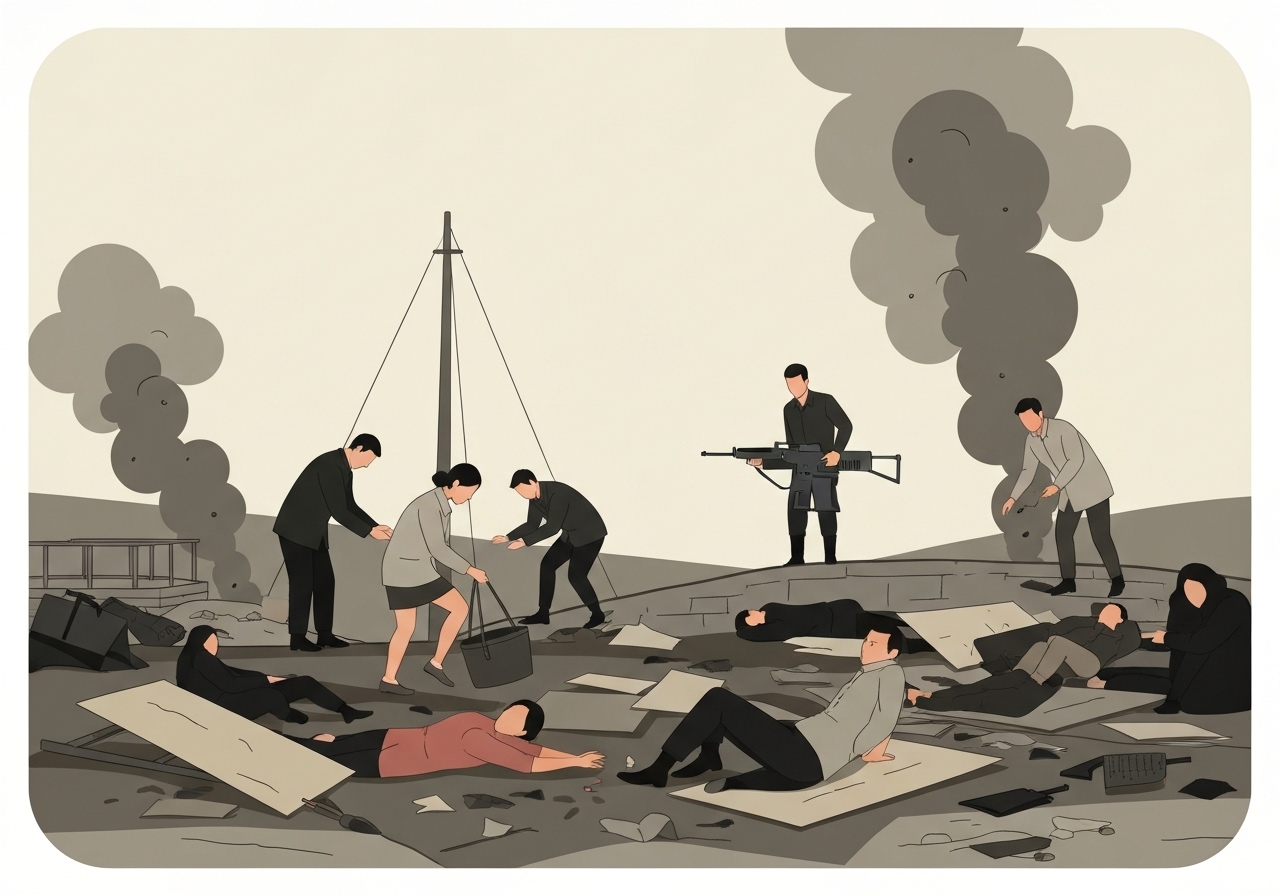
— The New York Times reported that U.S. Navy SEALs opened fire and killed North Korean civilians during a covert operation to place a listening device inside North Korea while high‑level talks between then‑President Donald Trump and Kim Jong Un were underway.
Key Takeaways
- The incident reportedly occurred in 2019 during a covert mission to install an electronic surveillance device.
- U.S. Navy SEALs are identified as the unit involved, according to the New York Times.
- The civilians were said to be on a small fishing vessel and may have been collecting shellfish when they encountered the team.
- The New York Times cited current and former military officials and unnamed sources for its account.
- A classified Pentagon review was reported to have deemed the killings justified under existing rules of engagement.
- The White House, Pentagon and the U.S. Embassy in Seoul did not immediately respond to requests for comment.
Verified Facts
The New York Times published a report on Sept. 5, 2025, saying a covert U.S. operation in 2019 resulted in the deaths of North Korean civilians after U.S. forces opened fire. The operation aimed to place a listening device inside North Korean territory while diplomatic contact between Washington and Pyongyang was active.
According to the report, the assault unit was made up of U.S. special operations personnel identified as Navy SEALs. The civilians were described as occupants of a small fishing boat who unexpectedly encountered the team as it came ashore at night.
The Times cited unnamed current and former U.S. military officials familiar with classified details. The report said a subsequent classified Pentagon review concluded the killings were justified under the rules of engagement; Reuters and other outlets carried the Times account.
Publicly available follow-up confirms that after the 2019 summits between then‑President Trump and Kim Jong Un, diplomacy stalled and North Korea continued developing its nuclear and missile programs.
Context & Impact
The episode, as reported, occurred at a sensitive diplomatic moment: U.S. and North Korean leaders had met in 2018–2019 to discuss denuclearization. Covert actions during active diplomacy raise questions about coordination between political and military channels.
If the reported sequence is accurate, the incident could complicate U.S. relations with Seoul and with other regional partners that monitor both covert operations and open diplomacy with Pyongyang.
Possible consequences include renewed scrutiny of special operations oversight, calls for transparency about classified reviews, and diplomatic fallout if Pyongyang makes the report a public issue.
- Operational oversight: review of how covert missions are approved during diplomatic talks.
- Rules of engagement: potential policy debates over thresholds for use of lethal force in peacetime clandestine missions.
- Regional diplomacy: risk of heightened tensions on the Korean Peninsula if the episode is raised by North Korea.
Official Statements
The White House, Pentagon and the U.S. Embassy in Seoul did not immediately respond to requests for comment, according to reporting.
White House / Pentagon / U.S. Embassy in Seoul
Unconfirmed
- The exact number of civilians killed has not been specified in public reporting.
- The New York Times attribution that then‑President Donald Trump personally approved the operation was based on unnamed sources and has not been independently confirmed.
- Details of the classified Pentagon review and its full rationale have not been released publicly.
- Whether the civilians were definitively gathering shellfish or engaged in another activity is reported but not independently verified.
Bottom Line
The New York Times account, echoed by other outlets, portrays a 2019 covert operation that ended with civilian deaths and a classified review finding the action justified. Key elements of the report rely on unnamed sources and a classified review; independent confirmation and official disclosures are limited. The story raises immediate questions about oversight of clandestine missions during high‑stakes diplomacy and could prompt policy and congressional scrutiny if substantiated.