
Lead
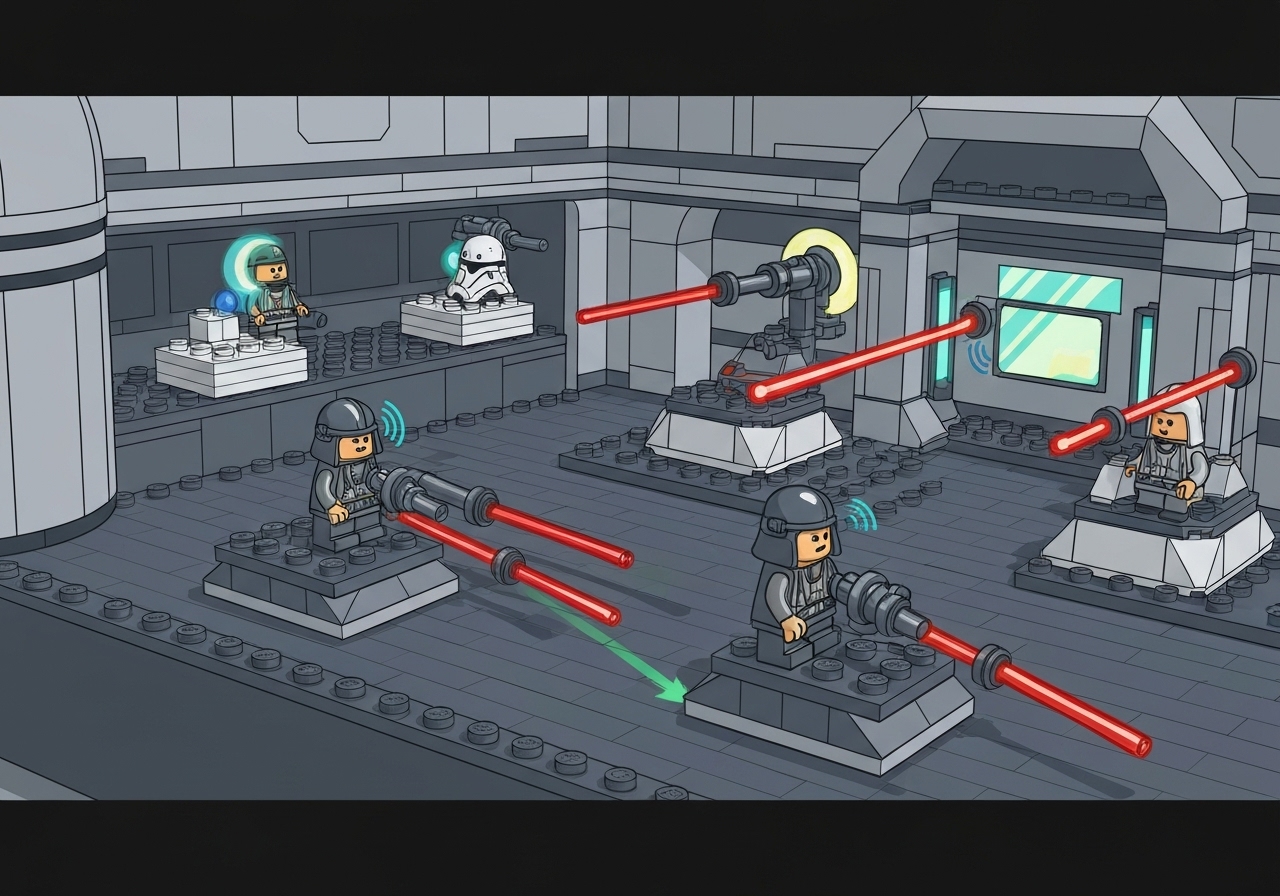
At CES 2026 in Las Vegas, Lego unveiled a new Smart Play system of sensor-packed 2×4 “Smart Bricks” that detect nearby tiles and minifigures, produce lights and sound, and network over Bluetooth. The company confirmed Star Wars Smart Play sets will ship March 1, priced from $70 to $160, with interactive smart tags and smart minifigures built in. Early demos on the CES stage showed proximity-triggered effects—ships that light up and play shooting sounds and minifigures that respond when brought close. Lego says the bricks recharge contactlessly and can form distributed networks across many elements, promising expansive play possibilities.
Key Takeaways
- The Smart Bricks are standard 2×4-sized modules containing an ASIC, accelerometer, speakers/synthesizers, ambient LEDs and Bluetooth connectivity.
- Magnetic coils in the bricks sense special Smart Tag tiles and Smart Minifigures; bricks can detect multiple tags and figures simultaneously.
- Star Wars Smart Play sets arrive March 1: a $70 470-piece TIE Fighter (1 tag, 1 smart minifigure), a $100 584-piece X‑Wing (5 tags, 2 smart minifigures), and a $160 962-piece Throne Room Duel & A‑Wing (5 tags, 3 smart minifigures).
- Demonstrations at CES showed 3D proximity recognition, color-aware placement, mirrored behavior between bricks, and activation via a small shake gesture.
- Lego advertises contactless recharging via a mat and claims the system can scale into a distributed network of bricks for games and vehicle interactions.
- The Smart Play launch focuses on experiential play rather than robotics; Lego has not announced a developer SDK or wide platform rollout yet.
Background
Lego has previously experimented with electronics inside bricks: color sensors, accelerometers and licensed interactive lines such as the Super Mario kits that combined physical builds with game logic. Those earlier products demonstrated how embedded tech can change play patterns, but were often tied to specific figure modules or game cartridges. The new Smart Bricks appear to combine sensing, audio synthesis and proximity detection into a generic 2×4 form factor that can be integrated into many builds.
That shift matters because Lego bricks have a long physical lifespan—classic sets persist for decades in secondhand markets—so adding electronics raises questions about durability, longevity and backward compatibility. Lego has positioned Smart Play as an interoperable layer that could be dropped into multiple themes, starting with a major licensed property, Star Wars, to drive early consumer adoption and visibility.
Main Event
Onstage at CES, Lego executives demonstrated how Smart Bricks identify nearby Smart Tag tiles and Smart Minifigures and respond with synchronized LEDs and generated sounds. The bricks house an application-specific integrated circuit (ASIC) plus sensors: an accelerometer tracks movement and tilt, onboard speakers and synthesizers produce effects in real time, and ambient LEDs provide visible feedback. Communication is handled over Bluetooth while magnetic coils allow proximity sensing of embedded tags.
The demo showed bricks recognizing placement on different colored bricks, mirroring behavior between linked modules, and estimating three-dimensional distance to other tagged elements. Activation in the demo often began with a small shake, suggesting a deliberate wake gesture to avoid spurious triggers. Lego also showed Star Wars-specific audio cues—ship noises, blaster sounds and lightsaber effects—that tie the Smart Tags and smart minifigures into theme-driven responses.
Star Wars Smart Play kits will bundle a mix of Smart Bricks, Smart Tags and smart minifigures. The three announced kits range from a mid-size $70 TIE Fighter to a $160 Throne Room Duel bundle; each includes a prescribed number of smart components so buyers get immediate interactive features out of the box. Lego emphasized the distributed-network concept in which many bricks and tags can connect to create emergent interactions—vehicles aware of each other’s proximity, minifigure duels that trigger sound and light, and multi-brick mirrored behaviors.
Analysis & Implications
Technically, fitting an ASIC, accelerometer, speakers, LEDs and magnetic sensing into a standard 2×4 shell is a notable engineering step: it widens where interactive logic can live inside models rather than confining it to bespoke large figures. For play design, that means more builders could embed active elements throughout a model instead of concentrating interactivity in a single hub. The distributed nature described by Lego could enable emergent games where vehicles and characters behave dynamically rather than following pre-scripted sequences.
Commercially, launching the Smart Play line with Star Wars is strategic: a marquee license accelerates visibility and justifies higher price points for themed kits. Prices announced—$70, $100 and $160—position these sets as premium but still mass-market. If Lego expands Smart Bricks across themes, it will face decisions about which SKUs include smart elements, whether entry-level sets stay passive, and how to prevent fragmentation across the ecosystem.
Longevity is a central challenge. Physical Legos last for decades, but embedded electronics have shorter lifecycles; Lego’s contactless charging mat and promises of years of play address usability, but software support, firmware updates, and replacement policies will determine whether Smart Play endures. Another open question is whether Lego will open APIs or an SDK for third-party development; an extensible platform would encourage community innovation but could complicate quality control and IP management.
Comparison & Data
| Set | Price (USD) | Pieces | Smart Tags | Smart Minifigures |
|---|---|---|---|---|
| TIE Fighter | $70 | 470 | 1 | 1 (Darth Vader) |
| X‑Wing | $100 | 584 | 5 | 2 (Luke, Leia) |
| Throne Room Duel & A‑Wing | $160 | 962 | 5 | 3 (Luke, Palpatine, Vader) |
The price-per-piece ratios and the count of smart elements indicate Lego is bundling interactive components more heavily into larger sets. The smallest kit includes one tag and one smart minifigure to demonstrate core features, while larger kits increase tag counts to enable richer multi-element interactions. This tiering suggests Lego expects consumers to pay a premium for integrated electronics rather than buying smart components separately at launch.
Reactions & Quotes
“It feels like the bricks themselves are reacting to your play—lights and sounds that map to proximity and motion.”
Lego spokesperson (CES keynote)
“Seeing ships light up and make pew-pew sounds as they pass each other took me back to playground spaceship battles—only smarter.”
CES attendee/demonstration observer
“This is a different path from robotics-focused kits; it’s about making builds feel alive through distributed sensing.”
Industry analyst (to press)
Unconfirmed
- Whether Lego will publish an SDK or developer tools for third-party creators remains unannounced and unconfirmed.
- The long-term software and firmware support timeline for Smart Bricks—how updates will be delivered and for how many years—is not yet specified.
- Exact battery life in hours of active play and degradation over multiple years has not been independently verified.
- Whether Smart Bricks will be sold à la carte after launch or remain available only inside specific sets is unclear.
Bottom Line
Lego’s Smart Bricks represent a meaningful expansion of where interactive electronics can live inside builds: by shrinking sensing and audio into a 2×4 shell, Lego opens the door to distributed, proximity-driven play that feels more dynamic than past single-hub designs. Shipping Star Wars Smart Play sets on March 1 gives the system an instantly recognizable use case and will help assess consumer appetite for embedded interactivity across price tiers.
Key questions to watch: how Lego manages software longevity, whether elements are supported and replaceable over time, and if the company provides development tools to broaden what builders and fans can create. If Lego addresses those operational and ecosystem issues well, Smart Bricks could become a long-lived platform; if not, they may join past short-lived electronic tie-ins despite strong initial novelty.