
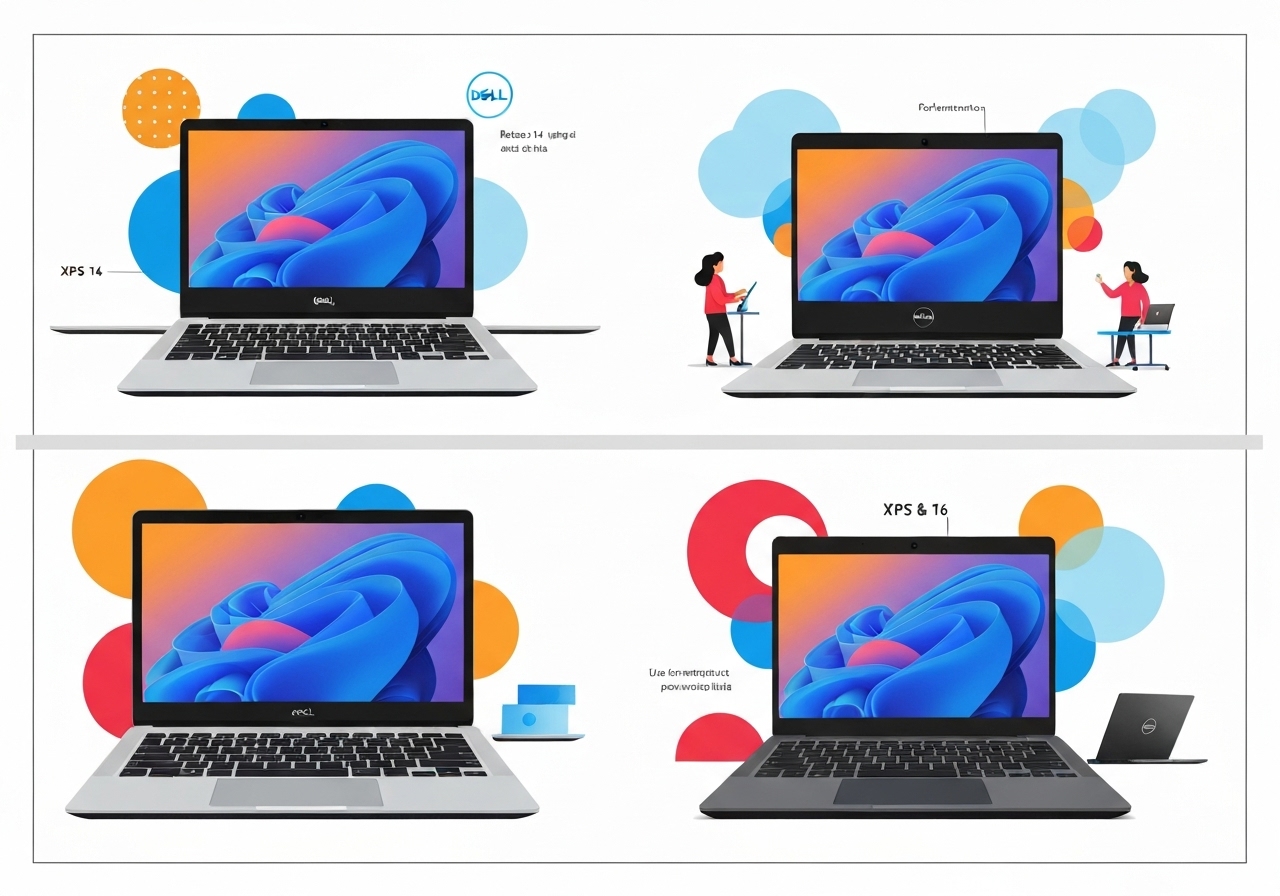
Lead: At CES, Dell announced it is restoring the XPS brand with two new notebooks, the XPS 14 and XPS 16, returning a marquee name it retired last year. The move follows a 2025 rebranding that simplified Dell’s PC names and coincided with a decline in the company’s PC market share. The new models aim to address past design complaints—notably function-row keys and trackpad feedback—while trimming weight and improving materials. Dell said the XPS 14 and 16 will be available January 6, starting at $1,650 and $1,850 respectively.
Key Takeaways
- Dell reintroduced the XPS brand at CES with two models: XPS 14 and XPS 16, signaling a strategic reversal of last year’s rebrand.
- The XPS 14 now weighs about three pounds, roughly 0.5 pounds lighter than the previous generation’s ~3.5 pounds.
- The XPS 16 is listed at 3.6 pounds, about one pound lighter than its predecessor (previous ~4.6 pounds).
- Both laptops use Intel’s Panther Lake Core Ultra Series 3 processors and offer optional tandem OLED displays.
- Design changes include a conventional function key row replacing capacitive buttons and a bordered “invisible” trackpad to improve tactile feedback.
- Dell is replacing the visible Dell badge with an XPS logo on these models to emphasize the brand revival.
- Availability begins January 6 with starting prices of $1,650 (XPS 14) and $1,850 (XPS 16); a new thinner, lighter XPS 13 is teased for later in the year.
Background
Last year Dell simplified its product names by retiring legacy sub-brands, including the long-running XPS family, in an effort to streamline its lineup. The change was intended to make product selection clearer for customers, but industry observers and some buyers found the new scheme less intuitive. Over 2025, Dell’s PC market share declined; analysts and commentators tied part of that weakness to customer confusion and weaker brand recognition after the rename. XPS has been one of Dell’s most-recognized premium laptop lines for years, associated with thin chassis, bright displays and a premium price point.
Reinstating XPS recognizes that brand equity matters in consumer electronics: customers often rely on familiar model names when making premium purchases. Key stakeholders include Dell’s consumer and commercial buyers, retail partners, and component suppliers—especially those supplying displays and chassis materials. Competitors such as Microsoft’s Surface family and Apple’s MacBook line continue to pressure PC makers on design coherence and user experience. The re-introduction therefore reflects both a tactical product update and an attempt to repair brand positioning ahead of 2026 buying cycles.
Main Event
At its CES briefing, Dell unveiled the XPS 14 and XPS 16 with a set of targeted design changes that address prior user complaints. The company restored a physical function key row, replacing capacitive controls that were reported to be unreliable or invisible in bright light. Dell retained its “invisible” flush trackpad design but added a subtle illuminated border so users can feel and find the pad edges easily.
The two models are thinner and lighter: Dell lists the XPS 14 at about three pounds (roughly 0.5 pounds lighter than the immediate past generation) and the XPS 16 at 3.6 pounds (about one pound lighter). The chassis aesthetics move toward a restrained, minimalist look—inviting comparisons to the Microsoft Surface Laptop—while keeping distinctive XPS styling cues. Both systems are configurable with Intel’s Panther Lake Core Ultra Series 3 processors and offer tandem OLED display options for higher color and contrast performance.
Dell also emphasized branding as part of the relaunch: the machines bear the XPS logo prominently across the lid rather than the broader Dell wordmark, underscoring a renewed focus on the sub-brand. The company briefly teased a new XPS 13 due later in the year, described as its thinnest and lightest XPS ever and positioned at a lower entry price than recent XPS 13 generations. Dell confirmed the XPS 14 and XPS 16 will ship on January 6 with starting prices of $1,650 and $1,850, respectively.
Analysis & Implications
Strategically, bringing back XPS is a corrective measure that acknowledges the commercial importance of established model names. Brand familiarity often shortens purchase consideration time in premium categories; restoring XPS could help Dell reconnect with customers who associate the name with high-end design and performance. However, a name change alone won’t fully recover lost share—Dell must also execute on distribution, pricing and post-sale support to regain buyer trust.
Design fixes are pragmatic and targeted: restoring physical function keys and improving trackpad tactile feedback directly respond to user pain points that affected day-to-day usability. The weight reductions (0.5–1.0 pound) are meaningful in the premium thin-and-light segment, where a few hundred grams can influence buyer preference. Offering Panther Lake Core Ultra Series 3 chips keeps Dell in step with mainstream PC performance trends, while OLED options aim to satisfy creators and professionals prioritizing display quality.
Price positioning signals a careful balancing act. Starting prices of $1,650 and $1,850 keep these models in the premium tier; the teased cheaper XPS 13 suggests Dell plans to broaden the line’s appeal. The bigger challenge will be converting interest into sales—retail marketing, reviews and enterprise procurement cycles will determine whether the brand move translates into measurable market-share gains in 2026.
Comparison & Data
| Model | New weight | Previous weight (approx.) | Weight reduction | Starting price |
|---|---|---|---|---|
| XPS 14 | ~3.0 lb | ~3.5 lb | ~0.5 lb | $1,650 |
| XPS 16 | 3.6 lb | ~4.6 lb | ~1.0 lb | $1,850 |
The table summarizes Dell’s stated reductions and pricing. Weight reductions were achieved through chassis redesign and material choices; consumers comparing models should weigh display, battery life and port selection alongside raw weight. The starting prices reflect base configurations; higher-tier CPU, memory and display options will raise system MSRP.
Reactions & Quotes
Industry and press responses were immediate, noting the symbolic and practical nature of the return. Below are short excerpts from coverage and commentary with contextual notes.
“XPS lives!”
Engadget (technology news)
Context: Engadget used this headline-style phrase to capture the return of the XPS name and the broader editorial sense that Dell reversed an unpopular decision. The quote summarizes press reaction rather than a Dell-formal statement.
“An unforced error”
Engadget (technology news)
Context: That characterization reflected earlier coverage of Dell’s 2025 rebrand decision and is used here to explain why Dell’s reversal attracted attention. It signals analysts’ view that the initial renaming hurt brand clarity.
“Available January 6, starting at $1,650 and $1,850”
Engadget (product availability)
Context: This short factual line captures Dell’s announced availability and price points for the XPS 14 and XPS 16; readers should consult retailers and Dell for configuration-specific pricing and shipping windows.
Unconfirmed
- The precise magnitude and month-by-month breakdown of Dell’s PC market share decline in 2025 are not provided in the company announcement and require third-party market data for confirmation.
- Specific release timing, exact specs and final pricing for the teased new XPS 13 later in the year have not been fully disclosed by Dell and remain subject to change.
Bottom Line
Dell’s reinstatement of XPS and the practical design changes in the XPS 14 and 16 are both symbolic and tactical: they acknowledge a misstep in brand handling and resolve concrete usability complaints. The products check key boxes for design-minded buyers—lower weight, restored physical keys, improved trackpad feedback and OLED display options—keeping Dell competitive in the premium PC segment.
Whether the move translates into regained market share will depend on execution across pricing, channel availability, and reviews from early adopters. For consumers, the immediate takeaway is clearer: XPS is back as a distinct premium family, with new models available January 6 and starting prices at $1,650 and $1,850.
Sources
- Engadget — technology news article covering Dell’s CES announcement (media).
- Dell Official Blog & Newsroom — corporate announcements and product press releases (official).