
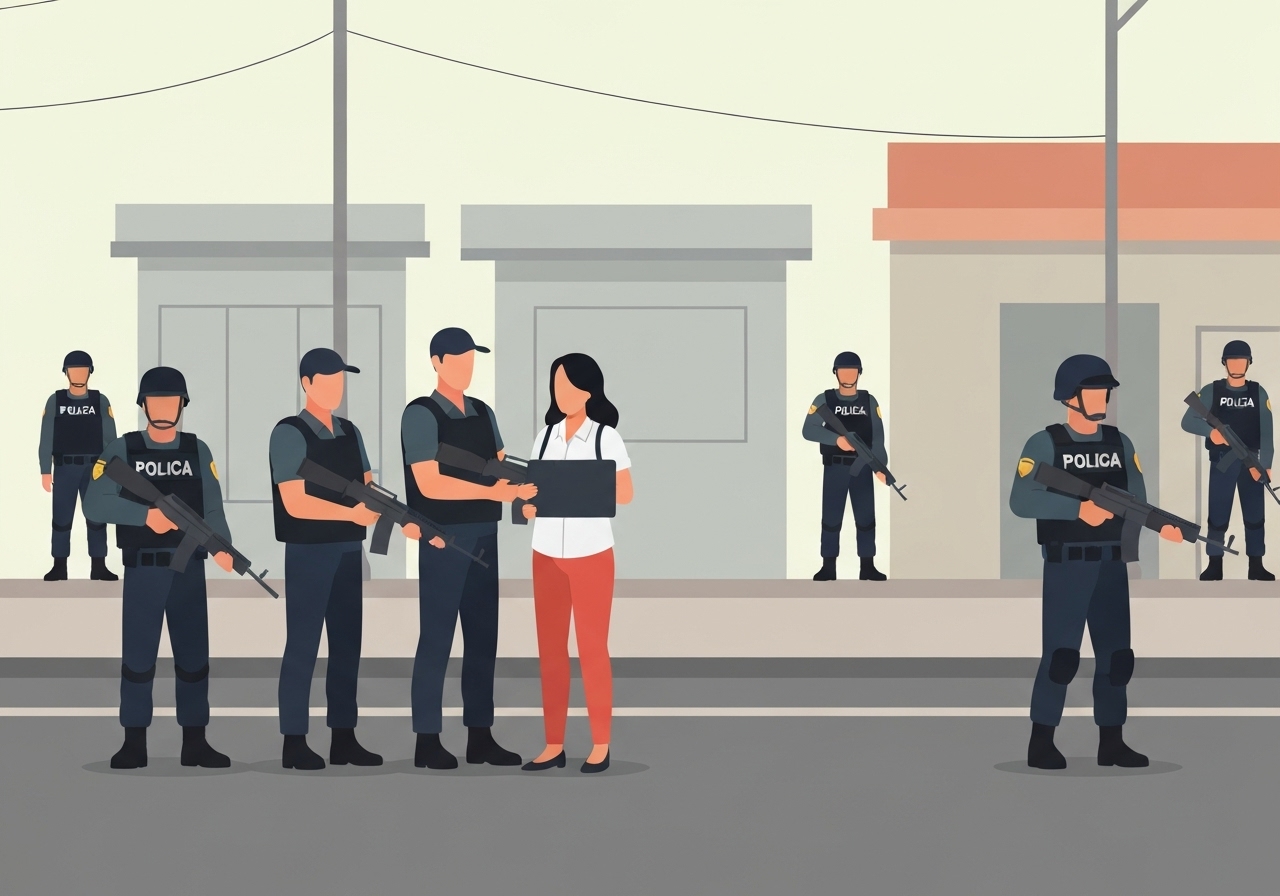
Lead: On Monday at least 14 journalists were detained in Caracas while reporting on the aftermath of an extraordinary security incident involving Venezuela’s leader. Detentions occurred near the National Assembly and in the Altamira neighbourhood, and two reporters were held for hours at the Colombia–Venezuela border near Cúcuta. Most of those taken were foreign correspondents; all but one were released the same day while one was deported. The actions took place as Delcy Rodríguez was sworn in as interim president and amid visible armed patrols across the capital.
Key Takeaways
- At least 14 members of the press were detained on Monday in Caracas while covering events after the reported seizure of Nicolás Maduro; one journalist was deported.
- The union for Venezuelan media workers said all but one detainee worked for foreign outlets; most were released later the same day.
- Detentions happened at the National Assembly, nearby areas and Altamira; two additional journalists were held briefly at the Cúcuta border.
- Some detainees were taken by agents from the military counterintelligence agency and others by the national intelligence service; equipment and phones were searched.
- Local residents reported widespread armed patrols — uniformed police, military personnel and masked pro-government “colectivos” — creating a climate of fear in neighbourhoods such as Petare.
- More than 2,000 people were arrested during protests after the 2024 presidential election, and Foro Penal reported over 800 political prisoners as of 5 January.
Background
Venezuela has for years restricted foreign news organisations’ access and limited visas for international journalists; these constraints have intensified during recent political crises. The 2024 presidential election, declared won by Nicolás Maduro by the government-controlled electoral body, provoked domestic and international dispute — opposition tallies and independent media suggested an opposition victory, triggering widescale protests and a forceful security response.
The country’s security apparatus includes multiple agencies with overlapping powers, such as military counterintelligence and civilian intelligence services, and has a record of detaining critics and monitoring digital communications. Armed pro-government groups known as “colectivos” have operated visibly in some neighbourhoods, often alongside formal security forces, which residents and rights groups say increases the risk of arbitrary stops and informal intimidation.
Main Event
On Monday, journalists covering the immediate aftermath of a reported seizure of President Nicolás Maduro were detained while working near the National Assembly and in Altamira. The union representing Venezuelan media workers said security forces stopped reporters, inspected equipment and searched phones, and read social media messages; most detainees were released later in the day. At least two journalists were taken by agents associated with Venezuela’s military counterintelligence agency, while others were handled by the national intelligence service.
At the Colombia–Venezuela border near Cúcuta, a Colombian and a Spanish reporter were held separately for hours incommunicado before being returned across the border to Colombia. One journalist detained in Caracas was deported, according to the union statement. The union also urged the release of an additional 23 media workers it said remained in custody, a claim that reflects ongoing concerns about press freedom and detention practices.
The arrests coincided with Delcy Rodríguez being sworn in as interim president, and with public displays of force by security officials. Interior Minister Diosdado Cabello posted a night-time photograph showing himself with armed police, a move critics said was meant to signal state control and deter dissent. Residents described heavy street patrols and routine phone checks by uniformed personnel and armed civilian groups.
Analysis & Implications
The detentions represent a sharp escalation in restrictions on reporting at a moment of high political volatility. When foreign journalists are targeted and their devices inspected, independent verification of events becomes more difficult; this hinders international scrutiny and may reduce the flow of reliable information both into and out of Venezuela. For foreign outlets already operating with limited visas, such incidents raise the real prospect of fewer correspondents on the ground and greater reliance on second‑hand or partisan sources.
Domestically, visible armed patrols and phone checks deepen a climate of self-censorship. Residents told reporters they fear discussing events publicly, and some have deleted social media histories after prior waves of arrests tied to the 2024 election protests. The behaviour of security forces and pro-government groups can intimidate community leaders and curtail grassroots reporting, eroding civic space even where formal legal restrictions are unchanged.
Internationally, claims that Venezuela’s leader was seized by US forces — a focal point of these events — could prompt diplomatic fallout if substantiated, and would redraw the contours of foreign engagement with Caracas. Even without wider state-to-state confrontation, repeated detentions of foreign journalists complicate bilateral relationships, invite condemnations from press-freedom bodies, and may trigger visa or accreditation retaliations.
Comparison & Data
| Event | Reported arrests/detentions | Notes |
|---|---|---|
| Monday detentions (Caracas & Cúcuta) | 14 journalists detained; 1 deported | Most released later the same day |
| Post‑2024 election protests | More than 2,000 arrests | Many later tried on political charges |
| Political prisoners (Foro Penal) | Over 800 as of 5 January | Pressure group tally |
The table places Monday’s press detentions in a broader pattern of mass arrests and political incarceration since the contested 2024 vote. The immediate number of journalists detained is smaller than the mass arrests reported after the election, but targeting media workers has outsized effects on information flow and international awareness.
Reactions & Quotes
Officials and local actors offered contrasting responses while emphasising security and order or decrying intimidation. The union for media workers framed the detentions as a serious escalation and demanded releases; community members described fear amid armed patrols.
“There are hooded men with guns patrolling, checking people’s WhatsApp statuses.”
Community leader, Petare (reported to BBC Mundo)
This comment was given to a Spanish-language BBC outlet and illustrates how informal armed actors and security forces are perceived to operate together in some neighbourhoods, contributing to an atmosphere of surveillance.
“People are not able to talk freely, with heavy police and military presence on the streets.”
José, Caracas resident (aged 60)
Residents say the combination of uniformed and masked armed groups has had a chilling effect on everyday conversation and local reporting.
“The regime is not allowing news to come out of here; there are uniformed personnel on the streets stopping people and checking their phones.”
Anonymous local source
Such descriptions align with reports of phone searches and social‑media monitoring carried out during previous crackdowns.
Unconfirmed
- The reported seizure of Nicolás Maduro by US forces is an extraordinary claim that has been widely reported in this context but requires independent confirmation from official sources.
- The union’s call for the release of 23 media workers remaining in detention is a claim from the organisation and may not yet be independently verified by official detainment records.
Bottom Line
The detention and brief deportation of journalists on Monday are part of a broader trend of constrained information space in Venezuela: even small numbers of targeted detentions can significantly limit reporting and increase self‑censorship. Visible armed patrols and phone checks amplify fear among ordinary citizens and community leaders, hampering domestic accounts of unfolding events.
For international observers, the immediate priorities are verifying extraordinary claims about the country’s leadership and monitoring whether press restrictions intensify or prompt diplomatic responses. Human-rights organisations, foreign ministries and independent media will likely press for access, documentation and accountability; how Caracas responds will shape both domestic dissent and international engagement in the coming days.
Sources
- BBC News (news report) — international news organisation
- Foro Penal (pressure group) — human rights NGO tracking political prisoners