
Lead
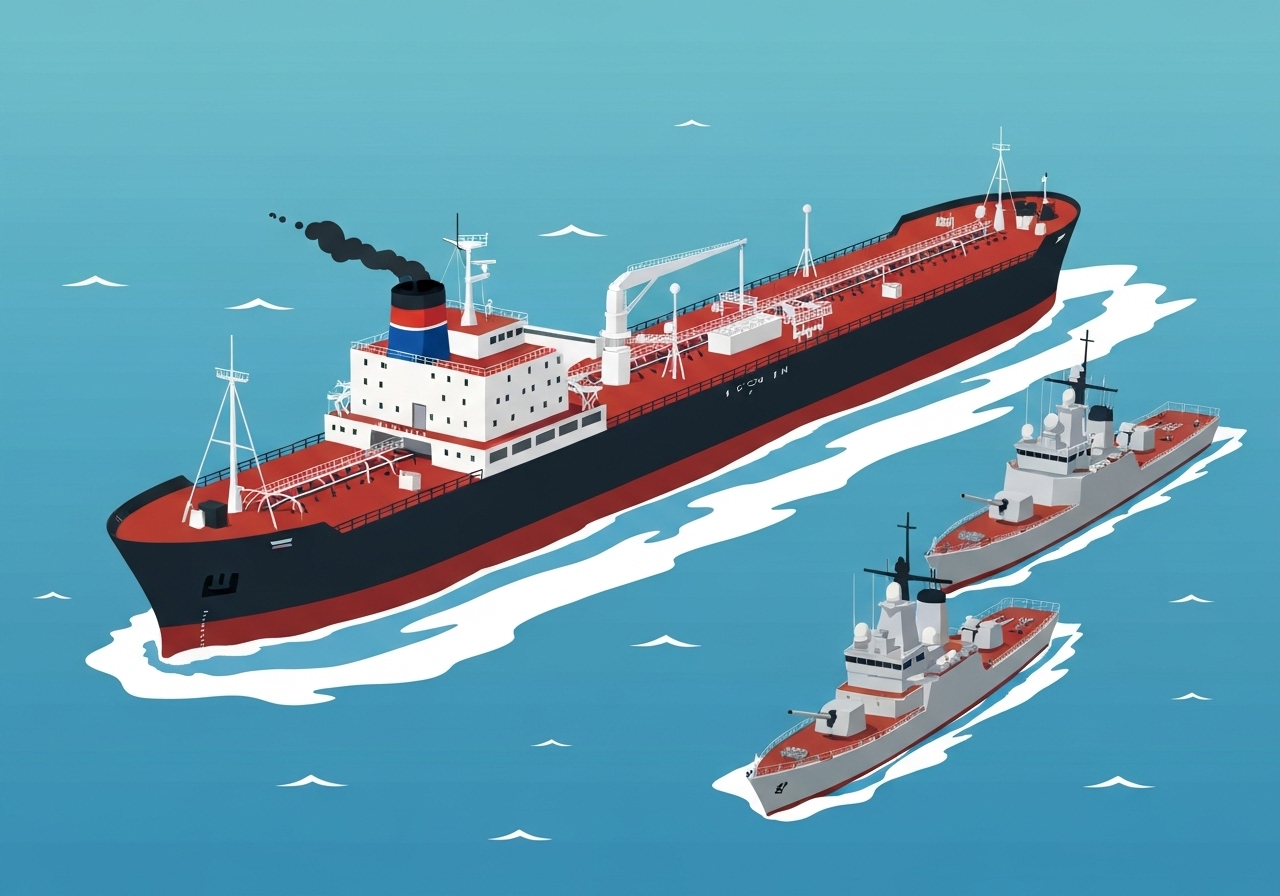
Russia has dispatched naval vessels to accompany an oil tanker that US forces have been tracking across the North Atlantic, sources reported on Tuesday. The vessel, now under the name Marinera and reportedly flying a Russian flag, was not carrying cargo and was tracked between Scotland and Iceland. US officials told CBS News they planned to board the ship and preferred to seize it rather than use force. Moscow says its ships are protecting a state-flagged vessel and voiced concern about heightened US and NATO attention.
Key Takeaways
- Russia deployed navy assets to escort a tanker that US forces have been monitoring in the North Atlantic on Tuesday.
- The tanker, historically linked to Venezuelan crude, was reported empty and tracked roughly 2,000 km west of continental Europe by AIS data.
- The ship changed name from Bella 1 to Marinera and is reported to have reflagged from Guyana to Russia after a recent Caribbean interception attempt.
- US officials told CBS News they planned a boarding operation and preferred seizure over sinking; US Southern Command said forces remain ready to support partner agencies.
- Earlier US activity included a Coast Guard attempt to board Bella 1 in the Caribbean and a seizure last month of the tanker The Skipper after it left Venezuela.
- Kpler analysts say enforcement targets the vessel’s IMO identity and ownership networks, not surface markings or flags.
- Russia’s foreign ministry described the vessel as sailing under the Russian state flag and compliant with international maritime law.
Background
The tanker at the centre of the standoff has previously carried Venezuelan crude and was implicated in sanctions-related enforcement actions. Last month the US Coast Guard attempted to board the ship in the Caribbean; authorities said they held a warrant tied to alleged breaches of US sanctions and transfers of Iranian oil. In that encounter the ship reportedly altered its course and later changed name and registry, actions that complicate identification but do not erase records such as the IMO number.
US policy toward Venezuelan maritime traffic has been assertive: President Donald Trump said last month he was ordering a “blockade” targeting sanctioned tankers entering or leaving Venezuela, a step the Venezuelan government called theft. The US has used combined Coast Guard and military operations to seize vessels it alleges violated sanctions, most recently removing The Skipper after it departed a Venezuelan port.
Main Event
On Tuesday, reporting by CBS News—working with the BBC as a US media partner—said American forces were actively tracking the tanker in the North Atlantic and planning to board it. Sources told CBS two US officials indicated a preference to seize the ship if possible rather than use destructive force. The US military’s Southern Command posted that its sea services were “vigilant, agile, and postured to track vessels of interest” and ready to support partner agencies.
At roughly the same time, Russia announced naval elements were escorting the vessel now identified as Marinera and that it sailed under the Russian state flag. Russian statements described increased attention from the US and NATO as disproportionate and repeated that the ship was acting in accordance with international maritime norms. Moscow did not provide detailed operational coordinates but said it was monitoring the situation with concern.
AIS tracking data, which can be manipulated, placed the tanker in the North Atlantic about 2,000 km (1,200 miles) west of continental Europe overnight on Tuesday, a position between Iceland and Scotland that complicates boarding due to distance and weather. US media reported the arrival of roughly 10 US military transport aircraft and accompanying helicopters in the region, movements that officials say are consistent with readiness to support interdiction operations.
Analysis & Implications
The episode highlights tensions between enforcement of secondary sanctions and the legal protections that accompany state flags. Under international law, vessels sailing under a nation’s flag are normally afforded that state’s protection, producing a diplomatic standoff if a third country seeks to board. US enforcement typically targets the vessel’s registered IMO number and ownership chain rather than visible markings, creating friction when operators change names or flags.
If US forces attempt a boarding while Russian naval elements are present, the risk is primarily diplomatic escalation rather than immediate high-intensity combat, though miscalculation could strain US–Russia ties further. Washington has signalled a preference for seizure, suggesting planners believe legal grounds and the practical ability to take control exist; Russia’s presence aims to raise the political and operational cost of such an action.
The case also underscores the limits of AIS data. Analysts warn that spoofed or falsified signals can mislead trackers about a vessel’s true position, making real-time decisions more difficult. For enforcement agencies, corroborating AIS with other intelligence—satellite imagery, port clearances, and corporate ownership records—is essential to build a seizure case that will withstand legal and diplomatic scrutiny.
Comparison & Data
| Vessel | Recent Flags | Allegations | US Action |
|---|---|---|---|
| Marinera (formerly Bella 1) | Guyanese → Russian (reported) | Sanctions-busting; linked to Venezuelan/ Iranian cargoes | Tracked; US planning boarding; Russian escort |
| The Skipper | Guyanese-flagged | Alleged sanctions violations; left Venezuela | Seized by US Marines, special ops and Coast Guard |
The table compares the current tanker with a recent seizure, showing similar allegations but different operational contexts: The Skipper was interdicted after departing Venezuelan waters, while Marinera was located in the high seas near Europe and is reportedly under Russian escort. These distinctions affect legal options and the diplomatic calculus for any interdiction.
Reactions & Quotes
US Southern Command framed its posture as support for partner agencies enforcing sanctions and maritime law, emphasising readiness rather than announcing a specific operation.
“We remain ready to support our US government agency partners in standing against sanctioned vessels and actors transiting through this region.”
US Southern Command (social media)
Russia’s foreign ministry presented the deployment as protection for a vessel sailing under its state flag and criticised what it described as disproportionate Western attention.
“Our vessel is sailing in the international waters of the North Atlantic under the state flag of the Russian Federation and in full compliance with the norms of international maritime law.”
Russian Foreign Ministry statement
A maritime intelligence analyst placed the operational focus on persistent identifiers rather than cosmetic changes, noting enforcement follows ownership and IMO records.
“US action is driven by the vessel’s underlying identity [IMO number], ownership/control networks, and sanctions history, not by its painted markings or flag claim.”
Dimitris Ampatzidis, Kpler (maritime intelligence)
Unconfirmed
- Reports that the ship is definitively under Russian state registry remain based on Russian statements and third-party tracking; independent registry confirmation is pending.
- Claims that US forces would launch an immediate boarding operation from the UK or nearby bases are unverified; any operation would likely require diplomatic notification of allies.
- Media reports of around 10 US transport aircraft in the area are consistent with readiness movements but do not confirm a specific imminent interdiction.
Bottom Line
The episode is a test case for how the US enforces sanctions at sea when a vessel adopts evasive measures and receives protection from a major power. Legal tools—IMO numbers, ownership networks and past records—form the basis for interdiction, but the presence of Russian naval assets raises the diplomatic stakes and narrows practical options.
Observers should watch whether Washington proceeds with a boarding, how Moscow responds, and whether allied capitals receive prior notification. The outcome will influence future maritime enforcement against sanctioned shipping and could reshape norms around reflagging, escorting, and high-seas interdictions.
Sources
- BBC News — UK/International news reporting (media partner)
- CBS News — US news reporting cited by BBC (US media)
- US Southern Command — Official military statement (official)
- Kpler — Maritime intelligence firm (industry analysis)