
Lead
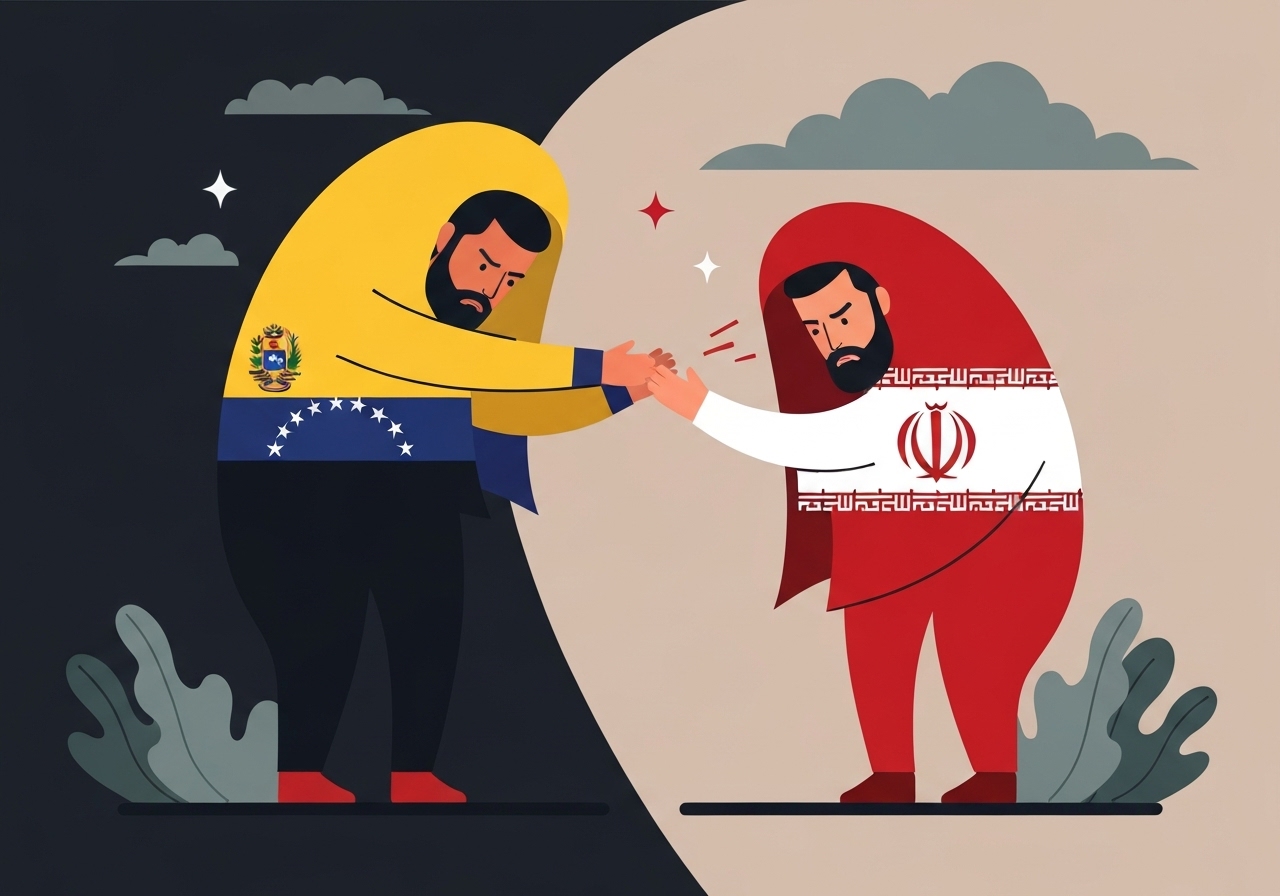
Mass protests over Iran’s collapsing currency have erupted nationwide this past week, while a dramatic U.S. military operation in Caracas — in which Venezuelan President Nicolas Maduro was seized and flown to the United States over the weekend — has amplified Tehran’s sense of threat. The dual shocks have tightened pressure on an already strained Iranian leadership trying to contain unrest at home and deter external coercion. President Donald Trump issued fresh warnings on Monday that Washington would respond if Iranian authorities kill protesters, escalating tensions. Iran’s rulers are reacting by intensifying security measures even as public anger grows.
Key takeaways
- Protests spread to 88 cities in 27 of Iran’s 31 provinces, according to the Human Rights Activists News Agency (HRANA).
- After nine days of unrest HRANA reports at least 29 protesters killed and nearly 1,200 people arrested in nationwide crackdowns.
- U.S. forces conducted a nighttime operation in Caracas over the weekend more than 7,000 miles from Tehran to detain President Nicolas Maduro and transfer him to the United States.
- President Trump reiterated threats against Iran, saying the U.S. would respond if security forces kill demonstrators.
- Iranian authorities deployed Basij paramilitaries and state security units, and security forces reportedly raided a hospital in Ilam to detain wounded protesters.
- Experts describe Iran as confronting a “triple crisis”: economic collapse, political dissent, and heightened external pressure from the U.S. and Israel.
- Tehran sees the Venezuela operation as evidence of a broader U.S. willingness to pursue regime-change tactics, increasing fears of escalation.
Background
Iran and Venezuela developed a close partnership under Hugo Chávez and continued under Nicolás Maduro, linking economies and security ties as both faced extensive U.S. sanctions. Tehran helped ship oil to Caracas and signed long-term cooperation agreements, including a 20-year deal to refurbish Venezuelan refineries and expand military cooperation.
Domestically, Iran has endured years of economic decline under sanctions and policy missteps that have eroded living standards and the currency. The government has long warned citizens that Western powers seek regime change, and the security apparatus is structured to detect and disrupt perceived foreign-backed opposition.
Last summer’s Israeli attack inside Iran — described by Iranian officials as deep infiltration and sabotage — further hardened Tehran’s posture and led to arrests and executions of suspected collaborators, reinforcing narratives about external threats to national survival.
Main event
The recent unrest began with shopkeepers protesting a collapsing rial and quickly widened as students, workers and other urban residents joined demonstrations. Initially localized and largely peaceful, the protests escalated to unrest across much of the country within days, prompting mass deployments of security forces.
Security forces, including the volunteer Basij, were sent into the streets; authorities detained nearly 1,200 people and, according to HRANA, at least 29 protesters were killed. State units also raided medical facilities — a tactic reported in Ilam where wounded demonstrators were taken into custody — deepening concerns among rights groups.
Compounding domestic pressure, U.S. forces carried out a covert nighttime operation in Caracas more than 7,000 miles away, removing President Maduro and transporting him to U.S. custody. The action reverberated through Tehran, where leaders interpreted it as a possible model for external intervention against allied governments.
President Trump used the moment to issue renewed threats to Iran, saying on Air Force One that if Iranian authorities kill protesters the United States would respond “very hard.” Iranian officials, from Supreme Leader Ayatollah Ali Khamenei to parliamentary speaker Mohammad Bagher Ghalibaf, condemned the U.S. move and reiterated that violent protesters would be punished.
Analysis & implications
The Venezuela operation has altered Tehran’s threat calculus by offering a visible example of aggressive U.S. action beyond the Middle East. Iranian leaders and security planners — who already view Washington’s posture as “maximalist” — are likely to further prioritize deterrence and rapid suppression of unrest to avoid presenting a vulnerable opening to foreign actors.
Domestically, the government’s heavy-handed response may produce a short-term reduction in street-level mobilization but risks longer-term radicalization of dissent and greater international criticism. Arrests and lethal force can suppress protests temporarily, yet they also fuel grievances that could re-emerge with different dynamics.
Regionally, Tehran’s network of proxies and its expanding missile and drone capabilities provide asymmetric options to retaliate or raise costs for any external action. Iranian officials have warned U.S. and regional forces that their assets are legitimate targets if Iran is attacked, increasing the potential for wider confrontation.
Economically, renewed instability will further deter investment and complicate sanctions relief or negotiations, constraining the government’s ability to address the grievances that sparked the protests. International actors weighing responses must balance support for human rights with the risk of actions that could validate Tehran’s regime-change narrative.
Comparison & data
| Indicator | Iran | Venezuela |
|---|---|---|
| Political system | Theocratic republic (Shiite clergy-dominated) | Socialist, secular executive-led state |
| Recent unrest (scope) | 88 cities, 27 of 31 provinces (HRANA) | Nationwide collapse under sanctions and political crisis over years |
| Reported fatalities/arrests | At least 29 killed, ~1,200 arrested | Large-scale displacement and political incarceration historically reported |
| External allies | Proxy networks, regional militias | Close ties to Iran, bilateral economic/military agreements |
The table highlights structural similarities — large resource bases, heavy sanctions, and entrenched leaderships — while also underscoring key differences in ideology and institutions. Iran’s theocratic institutions and regional proxies give it different tools and vulnerabilities than Venezuela’s civilian, party-led system. Observers say the Venezuelan operation matters less as a literal template than as a psychological shock that shapes how Tehran reads U.S. intent.
Reactions & quotes
U.S. President Donald Trump framed the issue as a warning to Tehran that violence against demonstrators could trigger a U.S. response. His remarks were delivered aboard Air Force One and aimed at deterring lethal crackdowns.
If they start killing people like they have in the past, I think they’re going to get hit very hard by the United States.
President Donald Trump
Iran’s Supreme Leader sought to draw a line between legitimate protest and what he called rioting, urging officials to suppress violent actors while portraying foreign forces as plotting regime change.
Protesting is legitimate, but protesting is different from rioting…Rioters must be put in their place.
Ayatollah Ali Khamenei (post on X)
Parliamentary speaker Mohammad Bagher Ghalibaf issued a direct warning that Iran would regard foreign military actions and nearby American assets as potential targets for retaliation, reflecting the leadership’s posture of deterrence.
All American centers and forces across the entire region will be legitimate targets for us in response to any potential actions.
Mohammad Bagher Ghalibaf, Speaker of Parliament
Unconfirmed
- Independent verification of every operational detail from the Caracas seizure — including the exact chain of custody and legal basis for Maduro’s transfer — remains limited in open-source reporting.
- Attribution of some protest incidents to foreign-linked agents is claimed by Iranian authorities but lacks corroboration from independent investigators at this time.
- Long-term political outcomes — whether the Venezuela operation will materially alter elite cohesion inside Iran or accelerate regime change — are speculative and contingent on many variables.
Bottom line
The convergence of widescale economic protests in Iran and a high-profile U.S. operation in Venezuela has intensified Tehran’s sense of vulnerability and hardened the leadership’s resolve to prevent external interference. The immediate effect has been a tougher security response that suppresses demonstrations but deepens grievances and raises the risk of further unrest.
Regionally, the episode raises the stakes for miscalculation: Tehran’s asymmetric capabilities and proxy networks give it options to raise costs for U.S. and allied forces, increasing the chance that a localized crisis could spill into broader confrontation. For observers and policymakers, the key questions are whether economic pressures and repression will produce durable change inside Iran and how external actors might influence outcomes without fueling the regime-change narrative.
Sources
- CNN — international news report summarizing events and interviews (news)
- Human Rights Activists News Agency (HRANA) — activist monitoring group reporting casualty and arrest figures (activist monitoring)
- Chatham House — think tank background and expert commentary (think tank)
- Johns Hopkins SAIS — academic commentary from regional experts (academic)