
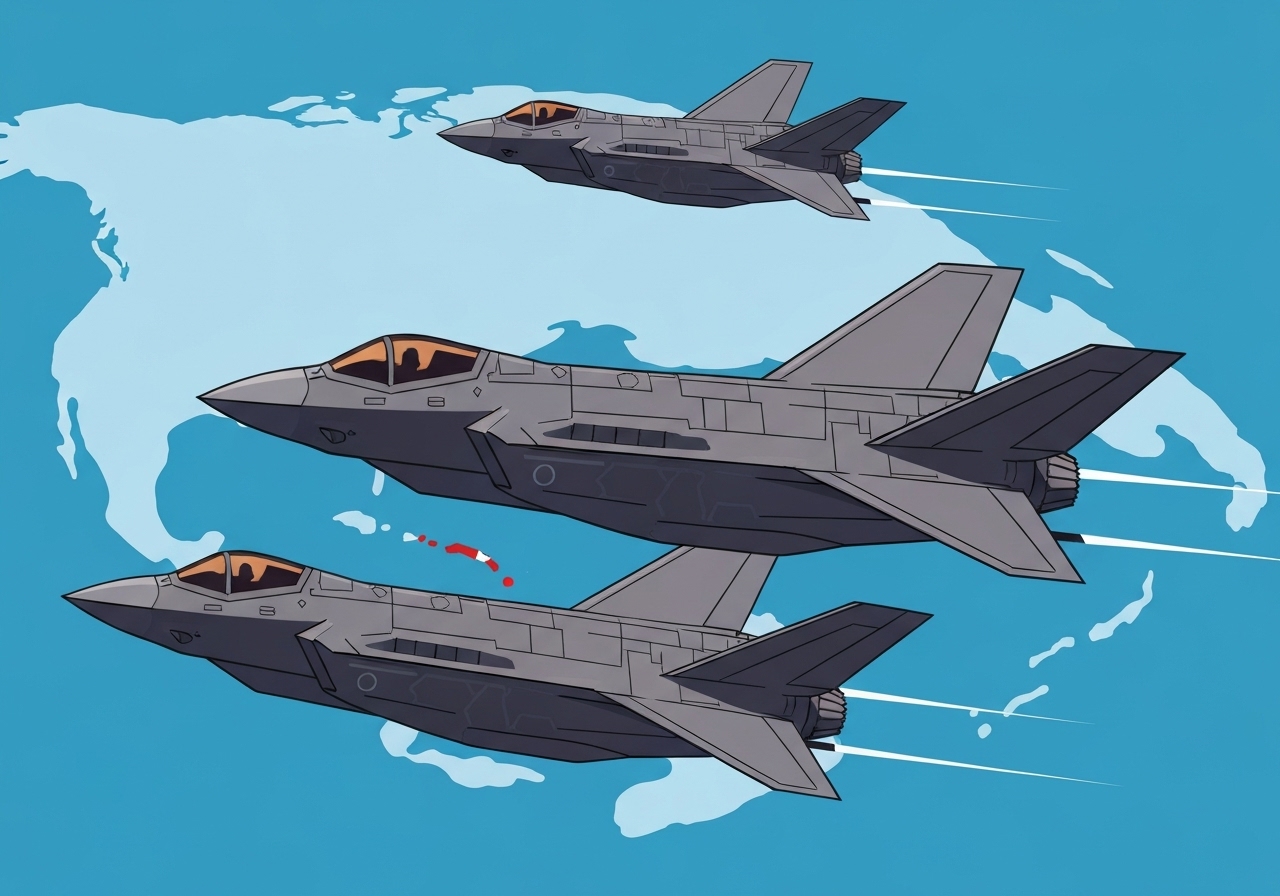
— The US has ordered 10 F-35 stealth fighters to Puerto Rico to support a military campaign against drug trafficking in the Caribbean, a move announced after a US missile strike that killed 11 people the administration described as Venezuelan drug traffickers.
Key takeaways
- Ten F-35 stealth fighters are being sent to Puerto Rico as part of an expanded US campaign in the Caribbean.
- The deployment follows a US missile strike earlier this week that killed 11 people the White House said were Venezuelan traffickers.
- Reuters reported the deployment, citing two people briefed on the matter.
- The Pentagon said two Venezuelan military aircraft flew near a US warship in international waters; the department called the action “highly provocative.”
- Senior US officials, including Secretary of State Marco Rubio and Defense Secretary Pete Hegseth, signaled more kinetic actions may follow.
- The State Department recently raised its reward for information on Nicolás Maduro to $50 million; more than 50 countries do not recognise his government.
- Analysts warn the moves risk escalating into a broader confrontation with Venezuela or prolonged regional conflict.
Verified facts
The deployment of 10 F-35 aircraft to Puerto Rico was reported on 5 September 2025 by news agencies that cited sources briefed on the operation. Officials said the jets will arrive in the US territory next week and will be used to bolster US operations against maritime and aerial drug-trafficking networks across the Caribbean.
Earlier in the week, US forces conducted a strike on a vessel in the Caribbean Sea that the administration said carried 11 Venezuelan drug traffickers; US officials described the action as a “kinetic strike”. The Trump administration has publicly asserted those killed were linked to organised criminal groups but has not released full supporting evidence in public briefings.
The Pentagon reported that two Venezuelan military aircraft flew close to a US warship in international waters and described the incident as an attempt to interfere with US counter–narco operations. The department warned Venezuela not to obstruct US activity in the region.
In recent weeks the US has also repositioned at least eight warships and other assets to the area, according to statements from US officials. Senior US figures have framed the campaign as a shift from interdiction toward direct, force-based actions against vessels and networks suspected of trafficking drugs.
Context & impact
The dispatch of F-35s marks a significant escalation: the aircraft are advanced stealth fighters capable of air-superiority missions and precision strike. US officials say the jets would be effective if faced with Venezuelan air assets such as F-16s.
Regional implications are substantial. The move increases the likelihood of direct military encounters between US and Venezuelan forces, and analysts warn it could fuel anti-US sentiment and recruit fighters for armed groups opposed to US actions.
Possible short- and medium-term consequences include:
- Heightened naval and air activity across the Caribbean and northern South America.
- Escalation of tit-for-tat military moves, including patrols and show-of-force flights.
- Political fallout with countries that view US strikes as overreach or a pretext for regime pressure in Venezuela.
“We have assets in the air, assets in the water, assets on ships, because this is a deadly serious mission for us,”
Pete Hegseth, US Defense Secretary (paraphrased)
“A highly provocative move” — description used by the Pentagon regarding Venezuelan aircraft near a US warship.
US Department of Defense statement
Official statements
Senior US officials have defended the broader campaign as necessary to disrupt flows of illegal drugs and to prevent narco-terrorism, saying kinetic options will be used when interdiction is deemed ineffective.
US administration comments (various briefings)
Unconfirmed
- The public record has not yet produced independent verification that the 11 people killed in the strike were members of the Tren de Aragua criminal group; this remains the administration’s assertion.
- Attribution of intent for the Venezuelan aircraft’s approach to the US warship — whether deliberate interference or routine transit — has not been confirmed by independent observers.
Bottom line
The deployment of 10 F-35s to Puerto Rico signals a marked intensification of US military efforts against drug trafficking in the Caribbean and raises the possibility of broader confrontation with Venezuela. Officials frame the escalation as necessary to disrupt narcotics flows; analysts warn of significant risks, including regional destabilisation and an expanded conflict dynamic.