
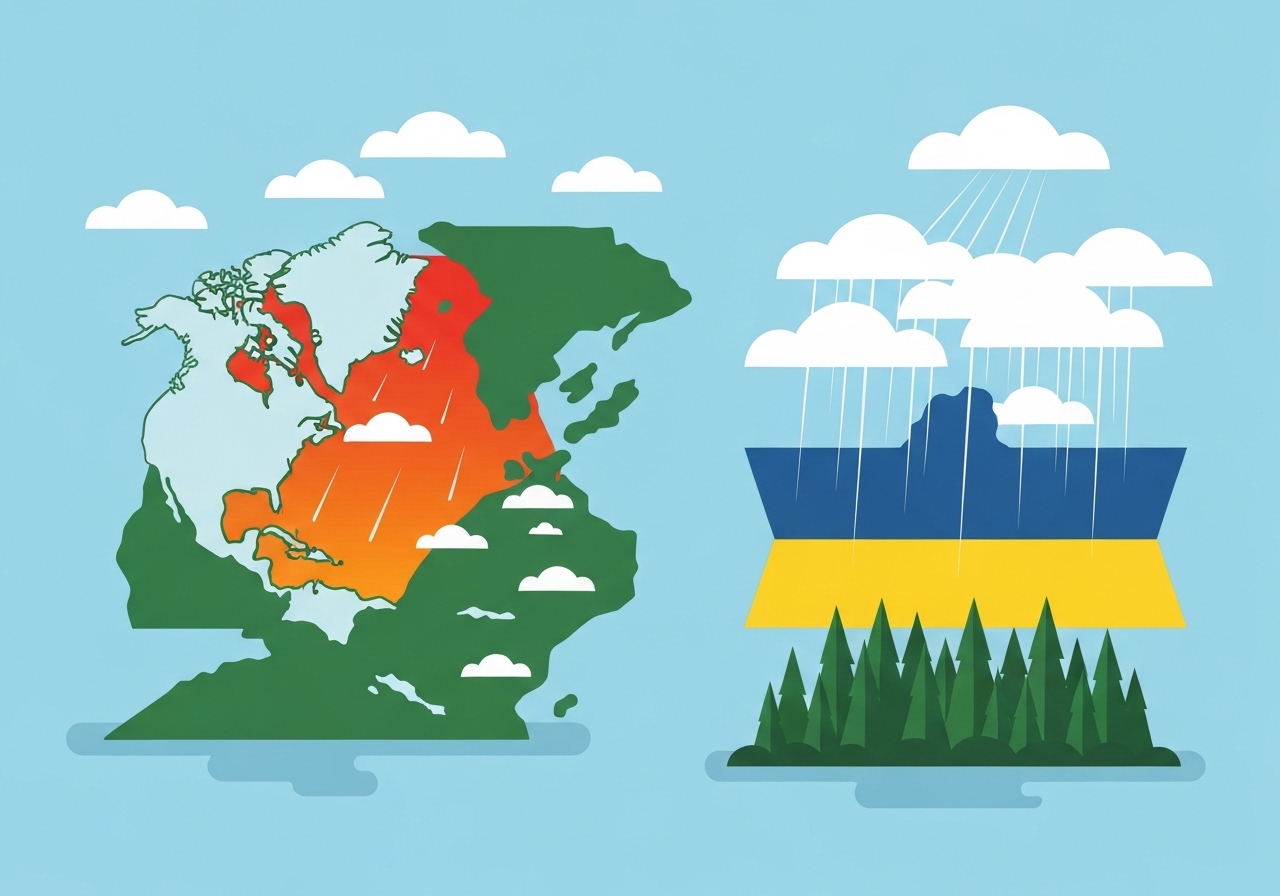
Lead: European capitals are confronting two simultaneous test cases — Greenland and Ukraine — that are forcing them to reassess how to bind the United States into the continent’s future. In recent days, diplomats and leaders have reacted to President Donald Trump’s surprising interventions on Greenland while also sensing a possible shift in Washington’s stance toward long‑term security guarantees for Ukraine. Representatives of the White House were unexpectedly present at a Paris meeting of the so‑called Coalition of the Willing, and seven European leaders publicly pushed back on Washington’s overtures over Greenland. The juxtaposition of these two developments underlines the administration’s erratic signals and leaves allies scrambling to read what comes next.
Key Takeaways
- Seven European leaders, including Sir Keir Starmer, issued a joint public statement saying Washington’s suggestions about Greenland are counterproductive and that Greenland’s future should be decided by Greenlanders.
- President Trump’s envoys, Steve Witkoff and Jared Kushner, attended the Paris gathering known as the Coalition of the Willing, an unprecedented sign of White House engagement on Ukraine diplomacy.
- European officials report cautious optimism that the US has agreed in principle to play a security role in a future Ukraine settlement, including a US‑led ceasefire monitoring and verification mechanism.
- The proposed monitoring plan would rely on US capabilities in ISR (intelligence, surveillance and reconnaissance), including drones and satellites, to verify compliance if a ceasefire is reached.
- European capitals are also weighing the prospect of ground troops from the UK and others in Ukraine, raising questions about troop numbers, duration and political sustainability.
- Diplomats warn that key questions remain unresolved: whether a durable peace can be secured and whether Ukraine would accept any territorial compromise as part of that peace.
Background
For decades Europe has tried to anchor US engagement in continental security through alliances, burden‑sharing and diplomatic incentives. That effort has been complicated by scepticism in Washington — within parts of the administration and among some US policymakers — about Europe’s strategic autonomy and its willingness to shoulder defence responsibilities. The current White House has introduced a new variable: irregular public comments and off‑the‑record manoeuvres that make allied planning more fraught.
Greenland resurfaced in diplomatic conversation after informal US interest in the Arctic territory prompted leaders in several European capitals to push back publicly. Simultaneously, Ukraine has remained a focal point of transatlantic concern since Russia’s full‑scale invasion, with European states long seeking durable security guarantees as part of any settlement. Historically, Washington has been reluctant to be tied to long‑term commitments in the same way European capitals have advocated, but recent Paris talks suggest that calculus may be shifting.
Main Event
This week saw two parallel fronts. In Paris, representatives gathered under the Coalition of the Willing banner to discuss a framework for a lasting peace in Ukraine. The presence of high‑profile White House envoys, Steve Witkoff and Jared Kushner, was described by diplomats as an unprecedented indicator that Washington might accept a direct verification role. Accompanying documents referenced a US‑led mechanism for ceasefire monitoring and verification.
That mechanism, as discussed by European and Ukrainian interlocutors, would draw on US ISR strengths — notably drones and satellite imagery — to detect violations and provide impartial reporting. Officials say documents presented so far are short on operational detail, leaving open how such a mechanism would be staffed, funded and legally authorised in peacetime or after hostilities cease.
At the same time, seven European leaders — among them Sir Keir Starmer — issued a joint statement framing Washington’s reported interest in Greenland as misplaced and counterproductive. Their language urged that Greenlanders themselves should determine the island’s future, but diplomats acknowledged privately that no one in Europe treats the White House’s intentions as mere theatre; they take the possibility seriously even while rejecting it publicly.
The prospect of boots on the ground in Ukraine also surfaced as a major unresolved issue. UK and other European planners are debating whether sending troops would be politically sustainable at home, how many would be required, and how long deployments might last. Officials emphasise that such commitments would have long‑term budgetary and force‑structure implications, extending beyond current administrations and governments.
Analysis & Implications
The simultaneity of Greenland and Ukraine as headlines exposes a deeper strategic problem for Europe: how to design partnerships that can cope with abrupt swings in US policy signals. If Washington’s engagement on Ukraine solidifies into concrete monitoring and verification roles, Europe gains a powerful technical partner for enforcement. But the unpredictability that produced the Greenland episode undermines trust and complicates coalition building.
A US role centred on ISR would change the risk calculus for enforcement of any ceasefire. Advanced surveillance can deter violations by increasing the probability of detection, yet it does not eliminate the political choices about intervention thresholds, escalation management, and legal mandates. Moreover, surveillance is most effective when paired with clear political commitments — something allies still need to clarify with Washington.
Ground forces raise another layer of complexity. Troop commitments represent the most visible form of security assurance, but they are costly and politically sensitive. Long‑term deployments would force European and UK defence planners to reallocate resources, potentially reshaping national budgets and procurement priorities for years. Public appetite for such commitments is uncertain and will depend on how the political case for them is framed and sustained domestically.
Comparison & Data
| Issue | Current status |
|---|---|
| Greenland | Public pushback by seven European leaders; debate over Greenlanders’ right to decide |
| Ukraine | Paris talks with US envoys present; proposed US‑led ceasefire monitoring using ISR |
The table highlights the contrast: Greenland is primarily a sovereignty and diplomatic flare‑up, while Ukraine involves concrete operational concepts tied to military verification and potential deployments. Both affect how Europe judges US reliability: Greenland tests political judgment and respect for regional sensitivities; Ukraine tests willingness to commit technical and possibly personnel resources to collective security.
Reactions & Quotes
European leaders formalised their stance on Greenland in a brief public message rejecting Washington’s approach and emphasising self‑determination for Greenland’s people. Diplomats said the statement was carefully worded to signal unity without escalating the row.
“Greenland’s future is for Greenlanders to decide.”
Joint statement by seven European leaders (public)
On Ukraine, a senior Whitehall source summarised the strategic rationale behind deeper commitments, stressing that security in Kyiv is treated as integral to European stability. That perspective frames any UK involvement as a long‑term commitment that will outlast current political cycles.
“A secure Ukraine is a secure Europe and a secure Europe is a secure UK.”
Whitehall official (off the record)
Experts and diplomats caution that while official signals from Paris are notable, the operational content is still sparse. Analysts emphasise the need for concrete timelines, legal frameworks and resource commitments before any monitoring posture can be considered durable.
Unconfirmed
- Whether the United States will deploy combat troops to Ukraine remains unconfirmed and subject to political and legal decisions in Washington.
- The precise scope, authorities and timelines for any US‑led ceasefire monitoring and verification mechanism have not been finalised publicly.
- It is not confirmed whether Ukraine would accept territorial concessions as part of a negotiated peace; that remains an open and sensitive question.
- The seriousness of any White House plan regarding Greenland — whether a formal proposal or exploratory comment — has not been fully substantiated.
Bottom Line
The near‑simultaneous headlines on Greenland and Ukraine encapsulate the strategic dilemma facing Europe: how to construct durable security arrangements with an American partner whose signals can be briskly changeable. Paris negotiations and the presence of White House envoys offer a window into possible US technical support on verification, which could strengthen a future settlement in Ukraine if clarified and resourced properly.
At the same time, the Greenland episode underscores how offhand or exploratory comments from the White House can force allies into defensive diplomacy, eroding trust even when substantive cooperation is possible elsewhere. For European policymakers, the immediate task is pragmatic: convert ambiguous signals into binding, transparent instruments that survive political turnover in London, Brussels and Washington.