
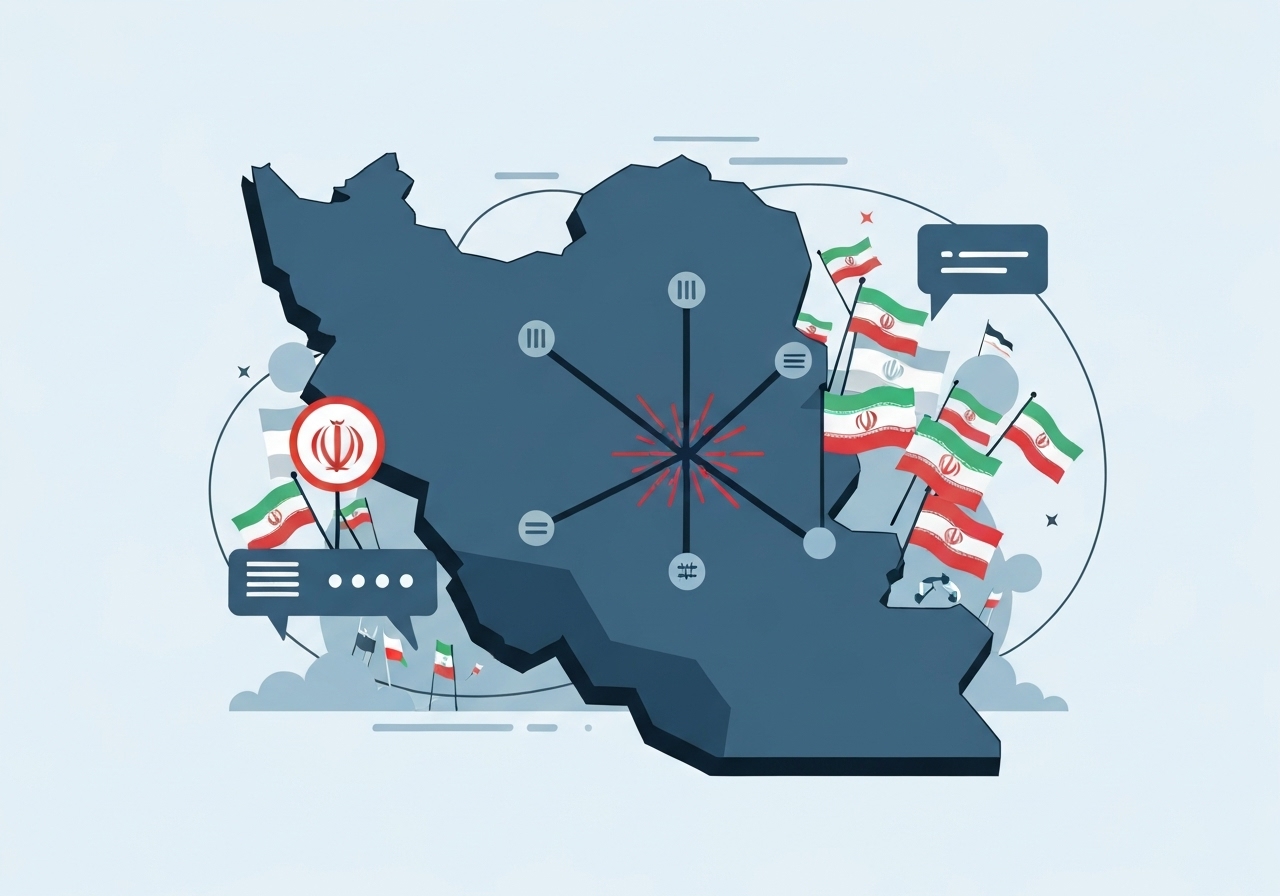
Lead: On Jan. 8, 2026, Iran experienced a widespread internet blackout as large-scale demonstrations demanding the ouster of the Islamic government spread across multiple cities, including Tehran, Mashhad, Karaj, Bushehr, Shiraz and Isfahan. The shutdown followed a public warning by the heads of Iran’s judiciary and security services that authorities would take tough measures against protesters. Witnesses described diverse crowds—men and women, young and old—chanting slogans such as “Death to Khamenei” and “freedom, freedom,” and videos show fires and clashes in several urban centers. Officials have not released a nationwide casualty tally; the situation remains fluid.
Key Takeaways
- Internet outage: Monitoring groups reported a near‑nationwide internet cutoff on Jan. 8, 2026, coinciding with the growth of street demonstrations.
- Geographic spread: Large gatherings were reported in Tehran, Mashhad, Karaj, Bushehr, Shiraz and Isfahan, with footage showing activity in affluent Tehran neighborhoods such as Shahrak Gharb.
- Public chants and targets: Protesters were heard chanting “Death to Khamenei” and “freedom, freedom,” directly challenging Supreme Leader Ayatollah Ali Khamenei.
- Escalation to violence: Videos verified by reporters show fires at government buildings and street scenes of burning cars and property, particularly in Tehran’s Kaj Square.
- Shooting reports: In Karaj, videos show demonstrators fleeing after gunshots were fired; available footage does not clearly identify the shooter.
- Official posture: The heads of the judiciary and security services announced intentions to impose strict measures on those taking part in protests the day before the blackout.
- Fear of reprisal: Many on‑the‑ground sources requested anonymity out of fear of government retaliation, limiting independent verification of some claims.
Background
Iran has a history of episodic nationwide unrest tied to economic strain, political grievances and social restrictions. Large protest cycles in 2019 and in 2022 demonstrated the capacity for localized incidents to escalate into sustained nationwide mobilization; each wave prompted internet restrictions and heavy security responses at key moments.
The state security apparatus and judicial leadership in Tehran have repeatedly framed mass protests as threats to stability, responding with a combination of public warnings, legal actions and on‑the‑ground security deployments. Control of communications infrastructure has been a recurring tactic to limit coordination among demonstrators and to slow the flow of imagery and witness testimony to international audiences.
Domestic political factions also influence how unrest is managed and presented. Hardline security officials often press for firm crackdowns, while some political actors and ordinary citizens press for reforms or regime change. This dynamic shapes both the timing of public statements and the operational choices—such as targeted internet restrictions—made during episodes of unrest.
Main Event
On the evening of Jan. 8, crowds swelled in neighborhoods across Tehran and in provincial cities. Witnesses interviewed by reporters described thousands of people filling streets to chant slogans calling for major political change. In several areas demonstrators targeted government buildings and municipal property, and video footage circulating online shows fires at multiple sites.
Initially, much of the activity appeared to be largely peaceful demonstrations. As the night progressed, however, scenes of property burning and clashes with unknown assailants were reported. In Tehran’s Kaj Square, footage verified by reporters shows dense crowds and multiple fires in the streets, with protesters remaining in the area despite the risk of confrontation.
In Karaj, west of Tehran, video verified by news teams shows people fleeing after gunshots were heard. The visual record does not conclusively identify who fired the shots; some witnesses suggested security forces, while others described confusion and sporadic violence among smaller groups within the crowds.
State authorities had warned the day before the demonstrations that they would respond forcefully to public disorder. Those statements appear to have come from the heads of Iran’s judiciary and security services, heightening public anxiety and prompting many eyewitnesses to withhold names when speaking to reporters.
Analysis & Implications
The simultaneous internet blackout and protest surge signal a state tactic to disrupt coordination and slow international reporting, while also revealing the depth of public discontent. Cutting connectivity limits real‑time organization and the sharing of visual evidence, but it also paradoxically amplifies accusations of heavy‑handed suppression when outages coincide with visible street unrest.
Politically, chants directly targeting Supreme Leader Ayatollah Ali Khamenei indicate a level of boldness and cross‑sectional participation that can broaden the movement’s appeal but also raise the perceived threat to the regime. When slogans call for the removal of the most senior figure in Iran’s political system, security institutions typically regard the episodes as existential challenges rather than isolated protests.
Economically, sustained unrest and connectivity interruptions can deepen investor unease and accelerate capital flight, especially if protests spread to industrial hubs or disrupt supply chains. Even short internet blackouts impose costs on businesses dependent on digital transactions and on remittance flows, compounding existing economic stressors that often fuel demonstrations.
Regionally, instability in Iran has the potential to affect neighboring countries through refugee flows, energy market volatility and shifts in diplomatic alignments. International responses will depend on the scope of repression, casualty figures, and whether the unrest evolves into prolonged confrontation between organized political factions and security forces.
Comparison & Data
| City | Reported Large Crowds | Reported Fires/Violence |
|---|---|---|
| Tehran | Yes (multiple neighborhoods, including Shahrak Gharb) | Yes (government buildings, Kaj Square) |
| Mashhad | Yes | Reported |
| Karaj | Yes (suburbs west of Tehran) | Yes (gunshots reported, source unclear) |
| Bushehr | Yes | Reported |
| Shiraz | Yes | Reported |
| Isfahan | Yes | Reported |
The table summarizes on‑the‑ground reporting for Jan. 8, 2026. Data are drawn from witness accounts and verified video circulated to reporters; precise numbers for participants, arrests or casualties have not been released by Iranian authorities. Comparing the geographic footprint to past nationwide waves (2019, 2022) shows a recurring pattern of multi‑city mobilization coupled with state attempts to curtail information flows.
Reactions & Quotes
“Death to Khamenei,” and “freedom, freedom” were chanted loudly enough to be heard several blocks away, according to residents.
On‑the‑ground witnesses (reported)
“Iran plunged into an internet blackout on Thursday,” observers and monitoring groups reported as protests expanded.
Internet monitoring groups / press reports
“Protesters fled after gunshots were fired in Karaj,” video shows, though the footage does not clearly identify who fired the shots.
Local witnesses and verified video
Unconfirmed
- Exact casualty and arrest figures across cities remain unreported by Iranian authorities and cannot be independently verified at this time.
- Responsibility for the gunfire seen in Karaj videos is not confirmed; footage does not clearly identify shooters or their affiliation.
- The full geographic extent and duration of the internet outage are reported by monitoring groups but are still being corroborated with additional technical data.
Bottom Line
The Jan. 8 protests and the near‑nationwide internet blackout mark a significant escalation in unrest in Iran, reflecting persistent grievances and a readiness among diverse groups to confront the political status quo. The confluence of vocal anti‑leadership slogans, physical attacks on government property, and state efforts to limit communications suggests both bold public mobilization and a heavy security posture from authorities.
Near term, the key questions are whether protests sustain momentum, how security forces respond on a wider scale, and whether internet access is restored in a way that permits independent counting of participants and verification of violent incidents. International actors and human rights monitors will likely press for transparency on casualties and detentions; the coming days will determine whether this episode becomes a short flare‑up or the start of a longer political crisis.
Sources
- The New York Times — major news organization (report on Jan. 8, 2026)