
Lead
Hundreds of thousands of mostly barefoot Filipino Catholics took part in Manila’s annual Black Nazarene procession on Friday, using the religious event to register anger over a sprawling flood-control corruption scandal. The life‑size wooden statue of Jesus the Nazarene was carried on an open carriage for nearly six kilometers through congested streets near the presidential palace while authorities maintained heavy security. Mayor Isko Moreno estimated the crowd could reach into the millions as the day progressed. Medical teams treated more than 250 people by midday, and one photographer collapsed and later died en route to hospital.
Key Takeaways
- Hundreds of thousands of devotees gathered in Manila for the Black Nazarene procession, which follows a roughly six‑kilometer (3.7‑mile) route.
- Authorities deployed about 15,000 police officers, supported by intelligence units, and imposed a gun and liquor ban along the route.
- Organizers and emergency teams treated more than 250 worshippers for bruises and sprains by midday; one photographer collapsed and later died while being transported to a hospital.
- Security measures included drone and backpack prohibitions and temporary cellphone signal jamming along parts of the route.
- Many participants chanted “jail them now” in protest of an ongoing corruption probe into flood‑control projects that implicated dozens of lawmakers.
- Several engineers and construction executives have been detained and face trials over allegedly substandard or missing infrastructure work tied to kickbacks.
Background
The Black Nazarene procession in Manila is one of Asia’s largest Catholic spectacles, tracing its origins to a 17th‑century statue believed to have survived a ship fire in 1606. For centuries it has drawn devotees who seek healing and blessings; some followers still practice folk rituals that blend Catholic devotion with local superstition. The route winds through narrow, congested streets near key government buildings, which has made the event both a religious focal point and a recurrent security challenge.
The current procession occurred amid mounting public anger over a major corruption scandal that emerged last year. Congressional hearings and witness testimony have implicated dozens of members of the House and Senate in alleged kickbacks tied to flood‑control projects, many of which critics say were incomplete, substandard or never built across the archipelago. The scandal spans multiple administrations, with allegations that some anomalies began during the previous presidency; those implicated have denied wrongdoing publicly and many have not resigned.
Main Event
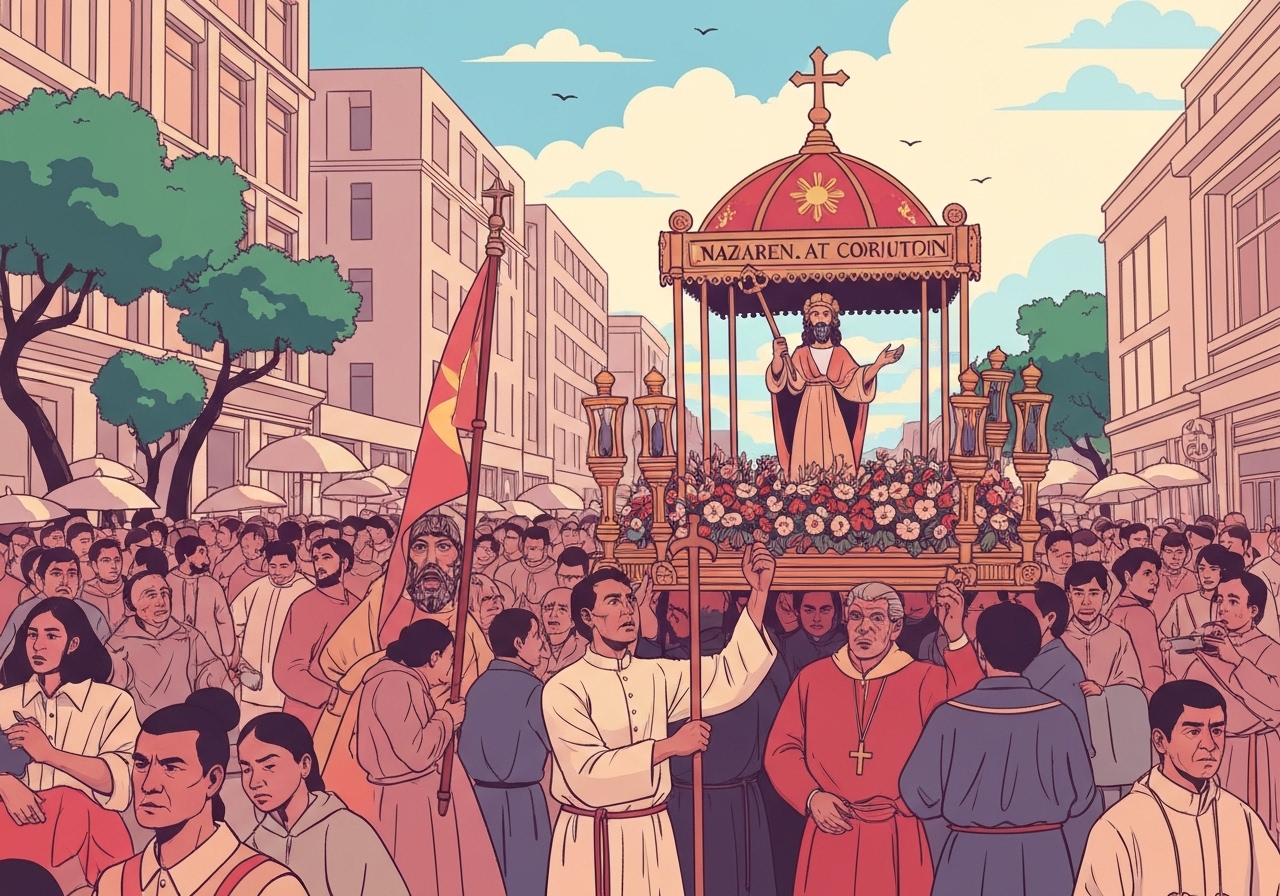
Before dawn, tens of thousands attended a midnight mass at a seaside park in Rizal Park; after the service the life‑size wooden statue was placed on a four‑wheeled open carriage and slowly set off. Devotees, many wearing maroon shirts bearing the Nazarene image, surged to reach the carriage, attempting to touch or throw towels toward the statue in hopes of blessings. Volunteers on the carriage worked to keep the statue and cross accessible while managing the crowd.
Police and security forces maintained a heavy presence along the nearly six‑kilometer route, closing some roads and enforcing prohibitions on drones, backpacks and alcohol. Authorities also said they would jam cellphone signals in parts of the route to mitigate the risk of coordinated disturbances. First‑aid tents staffed by government medics and Philippine Red Cross teams were positioned at intervals; by midday more than 250 people had received treatment for minor injuries.
The political protest element became evident as large groups repeatedly chanted “jail them now,” pressing for faster accountability in the flood‑control corruption probe. Clergy and some faith leaders referenced the scandal in homilies, linking the public’s moral outrage to demands for officials to step down or face legal consequences. Nevertheless, the event retained its devotional core for many participants, who emphasized prayer and petition alongside political slogans.
One photographer collapsed an hour before the procession began and later died while being taken to hospital, officials and journalists at the scene said. Investigators and emergency responders have not publicly released a cause of death pending further medical examination. Authorities reported no mass violence or large‑scale arrests, though crowding posed repeated safety risks throughout the day.
Analysis & Implications
The coincidence of a high‑profile religious event and a national corruption scandal amplified public visibility of the probe and placed additional pressure on political leaders. The chants and homilies show the Roman Catholic Church’s influential role in shaping civic sentiment on issues of governance and ethics in the Philippines, the largest Catholic nation in Asia. That alignment could intensify calls for prosecution and resignations, particularly as televised congressional hearings continue to air allegations.
From a security perspective, deploying roughly 15,000 police officers and imposing drone and backpack bans reflect lessons learned from past processions but also highlight the logistical strain such events place on authorities. Temporary signal jamming raises legal and practical questions about communication access for journalists and families, and it complicates independent monitoring of crowd safety. Emergency medical teams treated hundreds of minor injuries, underscoring recurrent health risks whenever such dense crowds gather.
Economically and administratively, the corruption allegations tied to flood‑control projects could prompt wider audits and shifts in procurement oversight if public and institutional pressure persists. Delays in prosecutions or perceived impunity risk deepening public cynicism and may fuel further street protests beyond religious observances. Conversely, rapid, transparent legal action could restore some trust but will require sustained political will and prosecutorial resources.
Comparison & Data
| Item | Figure |
|---|---|
| Police deployed | ~15,000 officers |
| Route length | Nearly 6 km (3.7 mi) |
| Medical treatments by midday | More than 250 people |
| Reported deaths at scene | 1 photographer (died en route to hospital) |
The table summarizes the official operational figures announced during the procession. The scale of the deployment is among the largest for a single urban religious event in the Philippines, reflecting both the procession’s size and the authorities’ concern about crowd safety and political demonstrations. Medical incidents were largely minor but a single fatality underscores the persistent hazards of dense, mobile crowds. Ongoing investigations into the corruption cases and any subsequent legal developments will determine whether political fallout affects future public gatherings.
Reactions & Quotes
“Enough is enough. Have mercy on the people. Have some shame. Step down voluntarily in the name of mercy and love.”
Bishop Rufino Sescon (homily at Rizal Park mass)
Sescon’s remarks tied moral authority to civic accountability and were echoed by many in the crowd who framed their chants as calls for justice.
“I hope those corrupt government officials will go away. They don’t deserve to be seated in power.”
Venus Lopez, 62, devotee
Lopez carried a replica of the Nazarene and said she prayed that the procession’s collective voice would spur action against alleged corruption.
“This is one of our most important religious traditions, and we must keep people safe while allowing devotion to be expressed.”
Mayor Isko Moreno (statement on security and crowd size)
The mayor emphasized balancing open worship with public‑safety measures as officials managed both devotion and protest at once.
Unconfirmed
- Claims that the procession drew “millions” of devotees are mayoral estimates and have not been independently verified by crowd‑count methods.
- The official cause of the photographer’s death has not been publicly released pending medical and coroner findings.
- Allegations that specific lawmakers directly benefited from kickbacks remain under investigation and subject to legal determination.
Bottom Line
The Black Nazarene procession remained a deeply devotional event while also serving as a visible outlet for public frustration over a large‑scale flood‑control corruption scandal. Heavy security and medical deployments managed immediate risks, but the combination of mass religious fervor and political protest reinforced the Church’s role as an amplifier of civic outrage. The underlying corruption cases, ongoing congressional hearings and possible prosecutions will determine whether street pressure translates into accountability.
For observers, the procession underscored how cultural and religious rituals can intersect with politics in the Philippines, shaping public debate and placing extra pressure on institutions to act. Close monitoring of investigations, transparent legal processes and clear safety planning for future events will be critical to both public trust and crowd safety.